GRAAALPS 2026 — the alpine adventure - Route details What to expect from an ultra-cycling gravel event in the Alps?
Introduction
From July 14 to 19, 2026, GRAAALPS returns to take riders on what is probably one of the most ambitious long-distance gravel routes ever offered.
Because here, we're not just crossing a mountain range: we're crossing THE Alps. We immerse ourselves in them. We climb, we slide, we suffer... And we come out with that rare feeling of having come close to something immense. Three routes, three ways to enter the great Alpine history: 800 km, 500 km, 300 km, three ways to surrender to the most spectacular geography in Europe.
Matos, a word from Nathalie, our race director>> "On a course like this, equipment is not optional. Tires with a minimum width of 45 mm are essential to absorb the shocks of the Italian tracks and the gravel of the South and the Alps. The drivetrain must be chosen with care: a ratio of 0.8 is essential to get over the big passes and the uneven terrain without blowing up. You need brakes, plenty of water, reliable lighting, and a sturdy repair kit. This kind of crossing must be prepared for, respected, and built up to."
BasecampBasecamp: Etroubles, KM 674
800 km — The Alpine Odyssey. A complete, primitive, and excessive crossing.
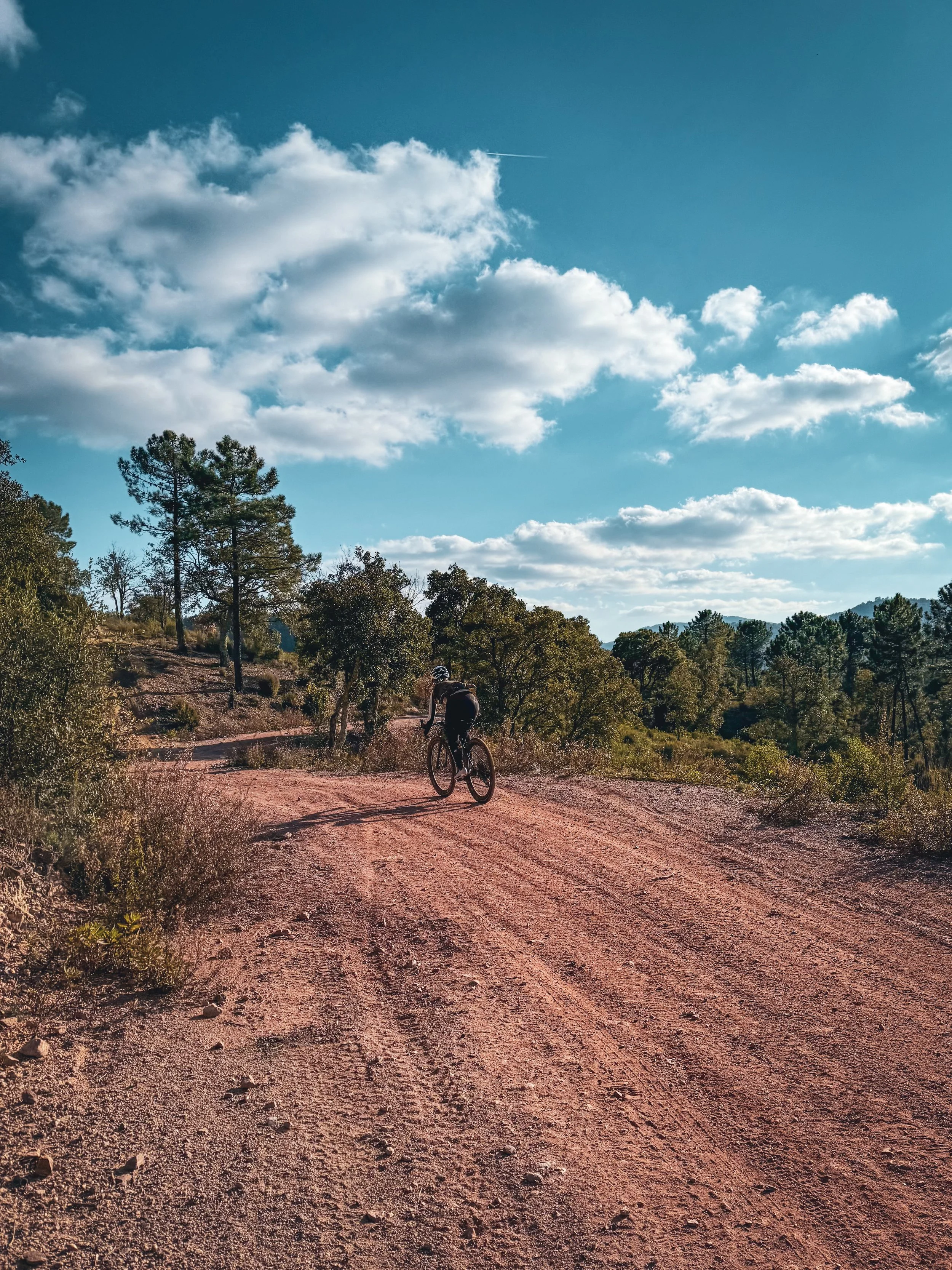
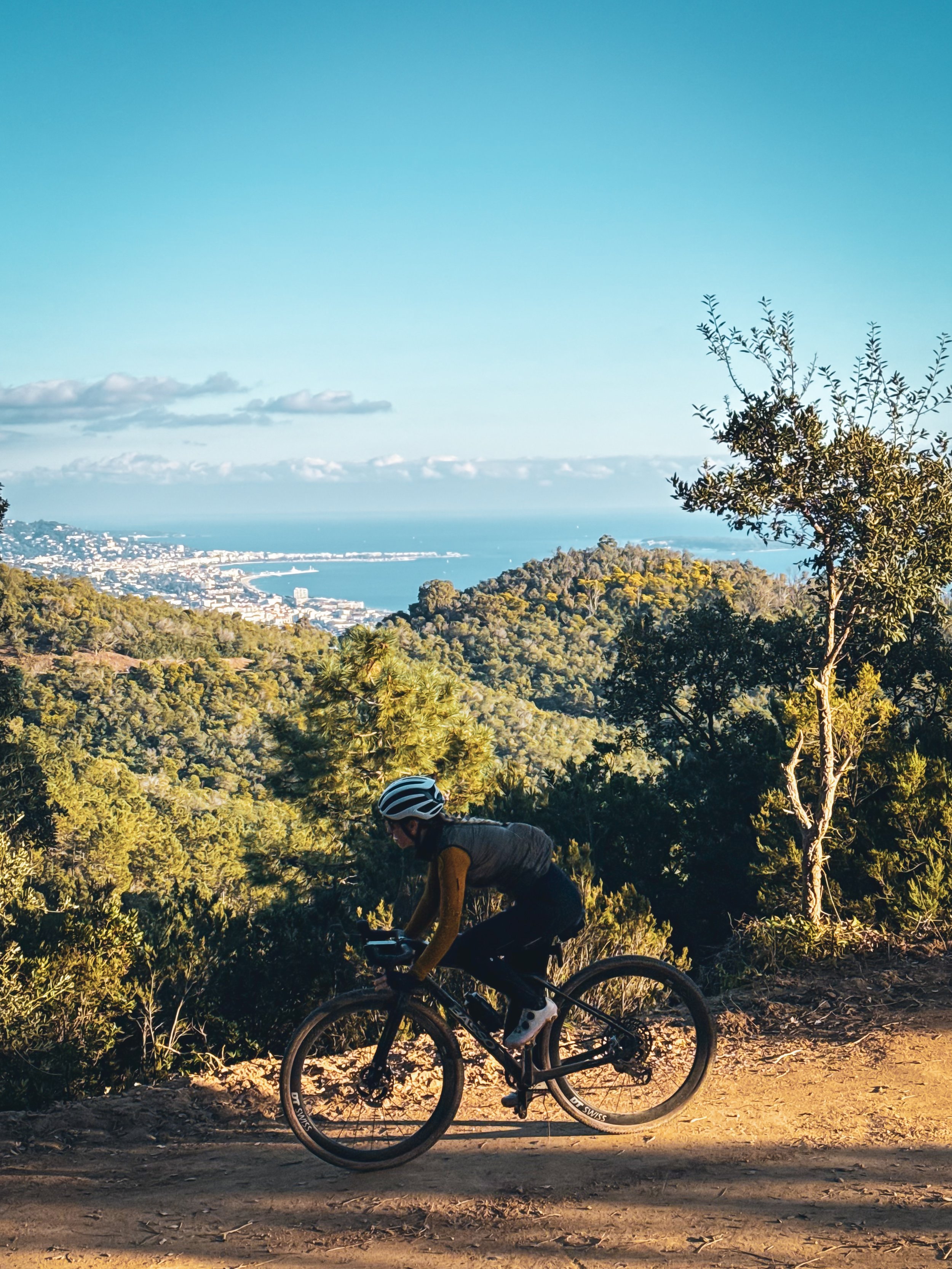
Nathalie, our race director on reconnaissance near Mandelieu
Mandelieu → Crans-Montana
806 km – 21,000 elevation gain – 88% road / 22% gravel
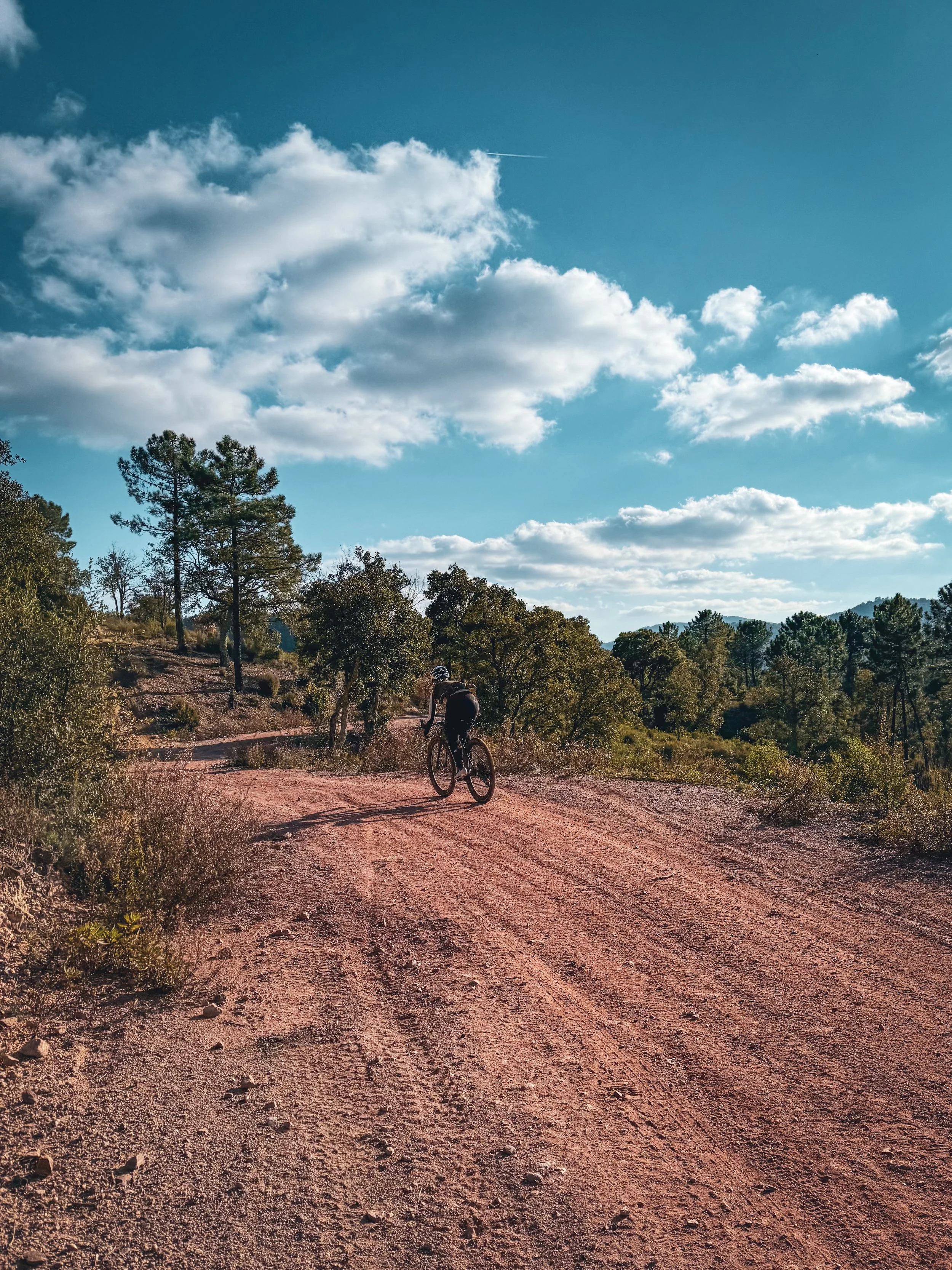
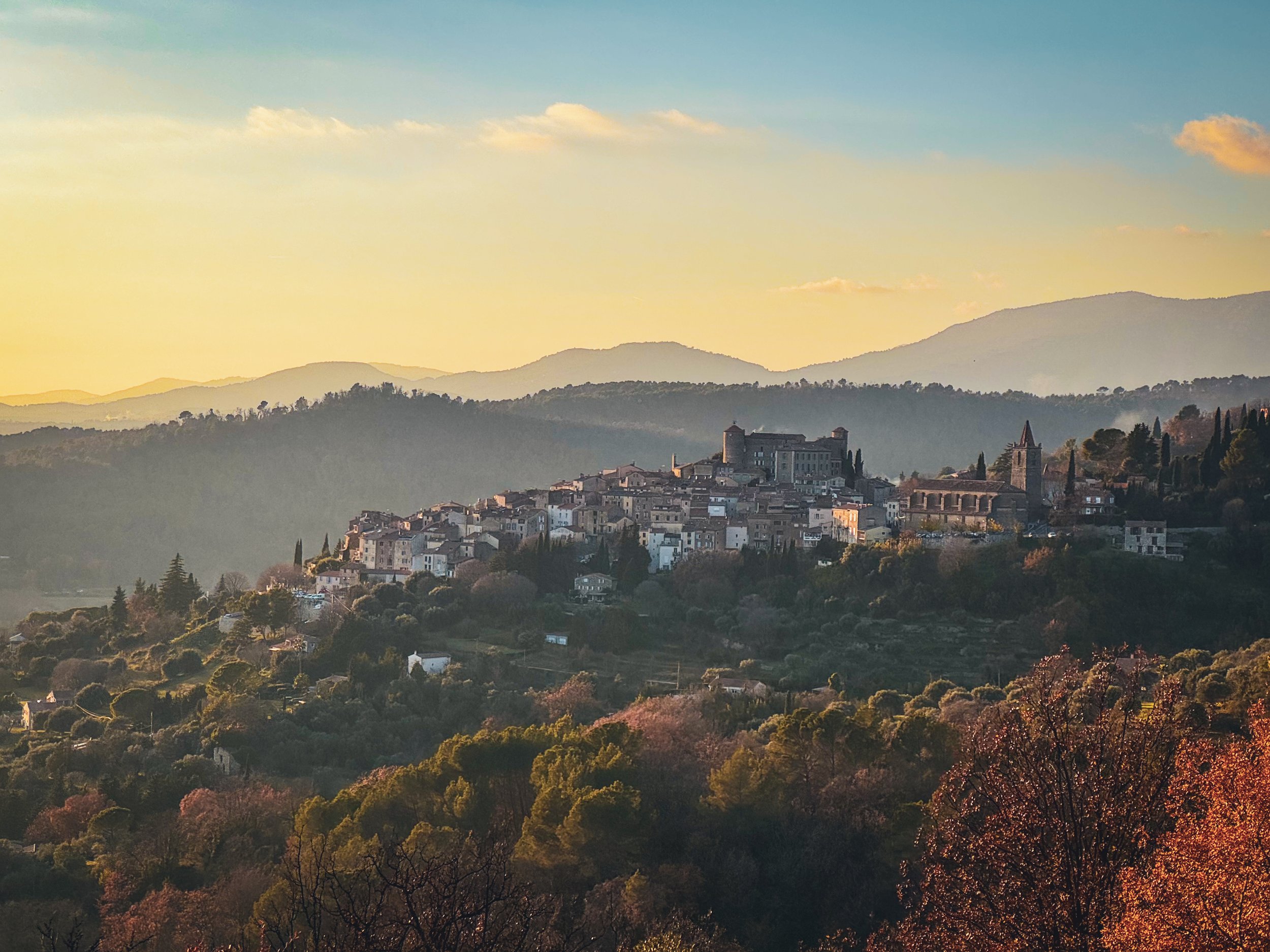
The legendary gravel roads of southern France
Mandelieu and its roads
The 800 km is a straight line into the unknown. Not just an imposing distance: a physical, mental, vertical journey. An open loop starting from the sea via the magnificent city of ultra: Mandelieu. Then valleys, peaks, and ridges, like a giant breath between two worlds, to Crans-Montana, Switzerland's jewel behind the Alps.
Prologue — The departure: when the sea recedes and the Alps rise up
The start in Mandelieu may seem gentle, with the salt of the Mediterranean still floating in the air... But very quickly, something changes, and you soon enter terrain typical of the South: dry slopes, uneven roads, a series of small passes, never very long but never really rolling.
The asphalt is often rough and grainy, and we encounter the first sections of gravelly, unstable terrain. We can feel the heat trapped in the valleys. The fragmented terrain takes its toll from the very first kilometers, even before we reach the Alps: we climb, we descend, we climb again. Patience and resilience are key. It's important not to start too fast, or you'll pay for it on the long climbs.
Act I — Southern Alps: the mineral kingdom where one measures one's willpower
Baisse de Gauthiers: entering the true alpine wilderness
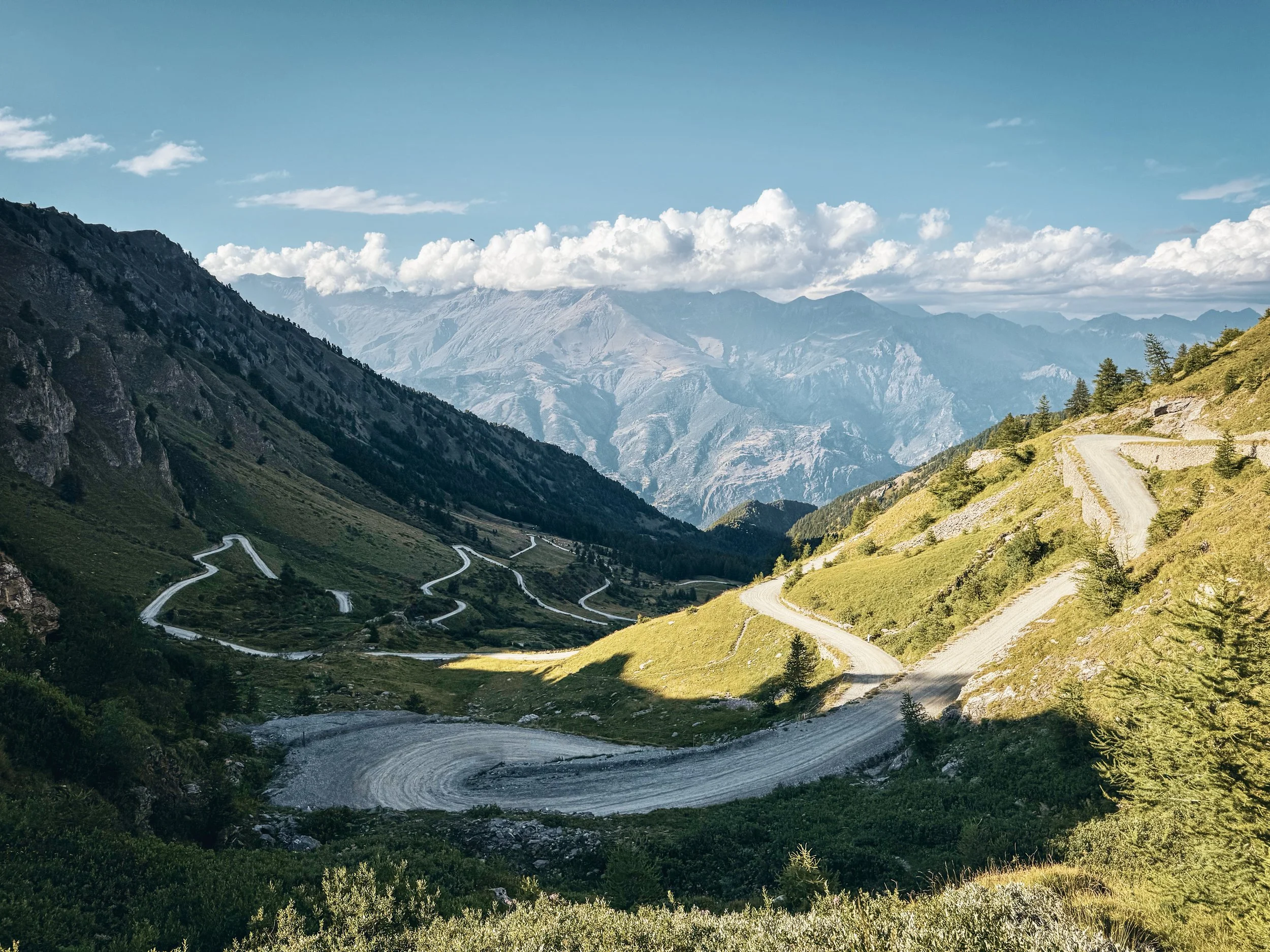
The Baisse de Gauthiers is often the first moment when participants realize what lies ahead. The trail is wild and uneven, surrounded by dry vegetation that has withstood centuries of wind. The air is already crisper, higher, harsher. Each turn opens up a new balcony overlooking the bright, still warm valleys of the south.
We drive, we climb, and the landscape gradually sheds everything that is superfluous.
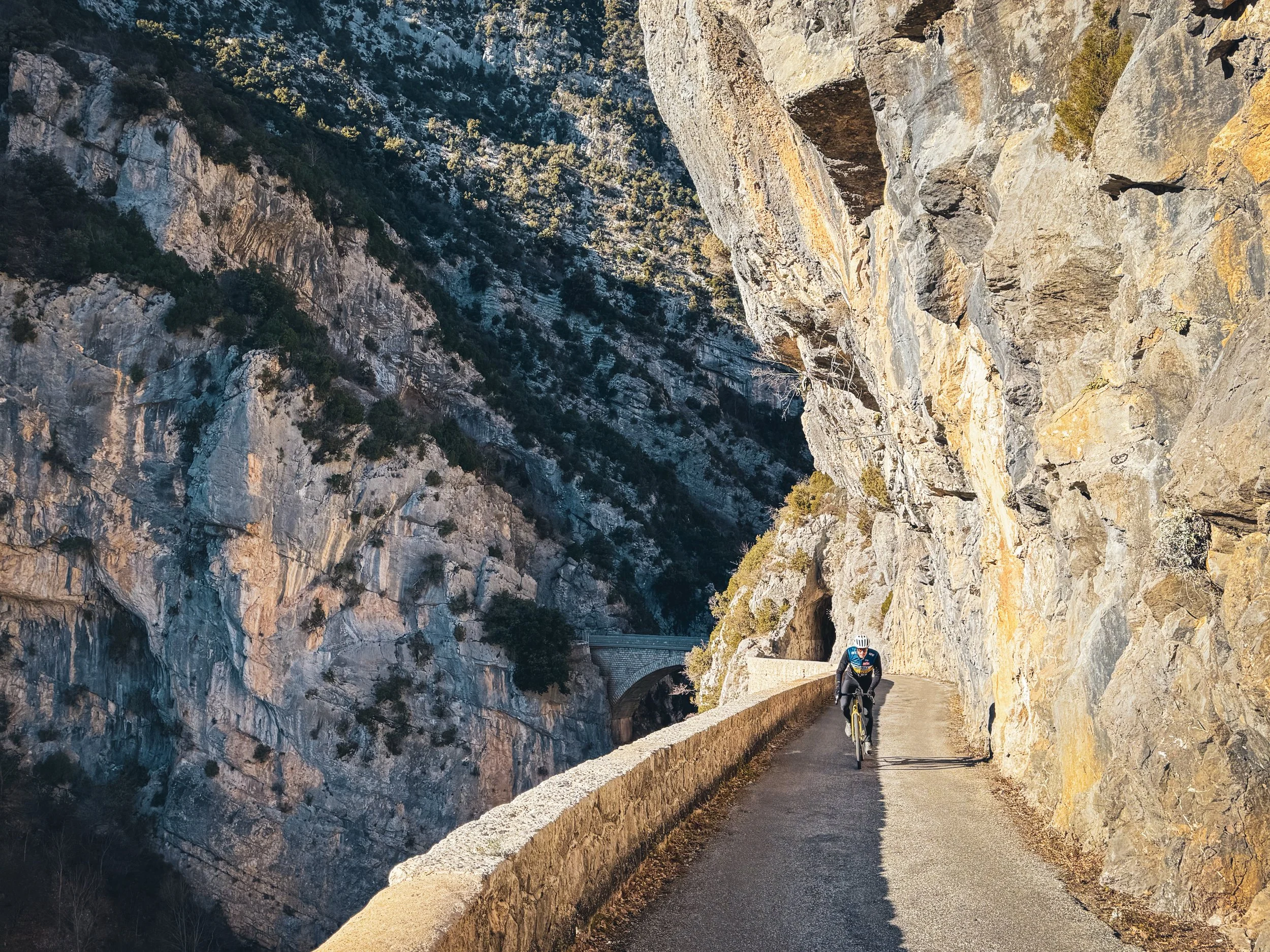
Cians Gorge: the light narrows
Here, the road seems to cling to the cliff face. We wind our way between two rock walls, with a trickle of water at the bottom of the canyon and often stifling heat. Light filters through narrow slits between the walls, sound reverberates, and we move forward as if in a natural corridor carved out by water and time.
The experience is sensory. It sets the mood: here, the Alps are raw, rugged, and unspoiled. But the Graaalps offers no free rides...
Act II — The Great Passes: A Vertical Ballet, Without Compromise
Here, we leave behind the gentle rolling hills of the south and enter into the real continuous climbs.
Col de la Moutière — where silence reigns
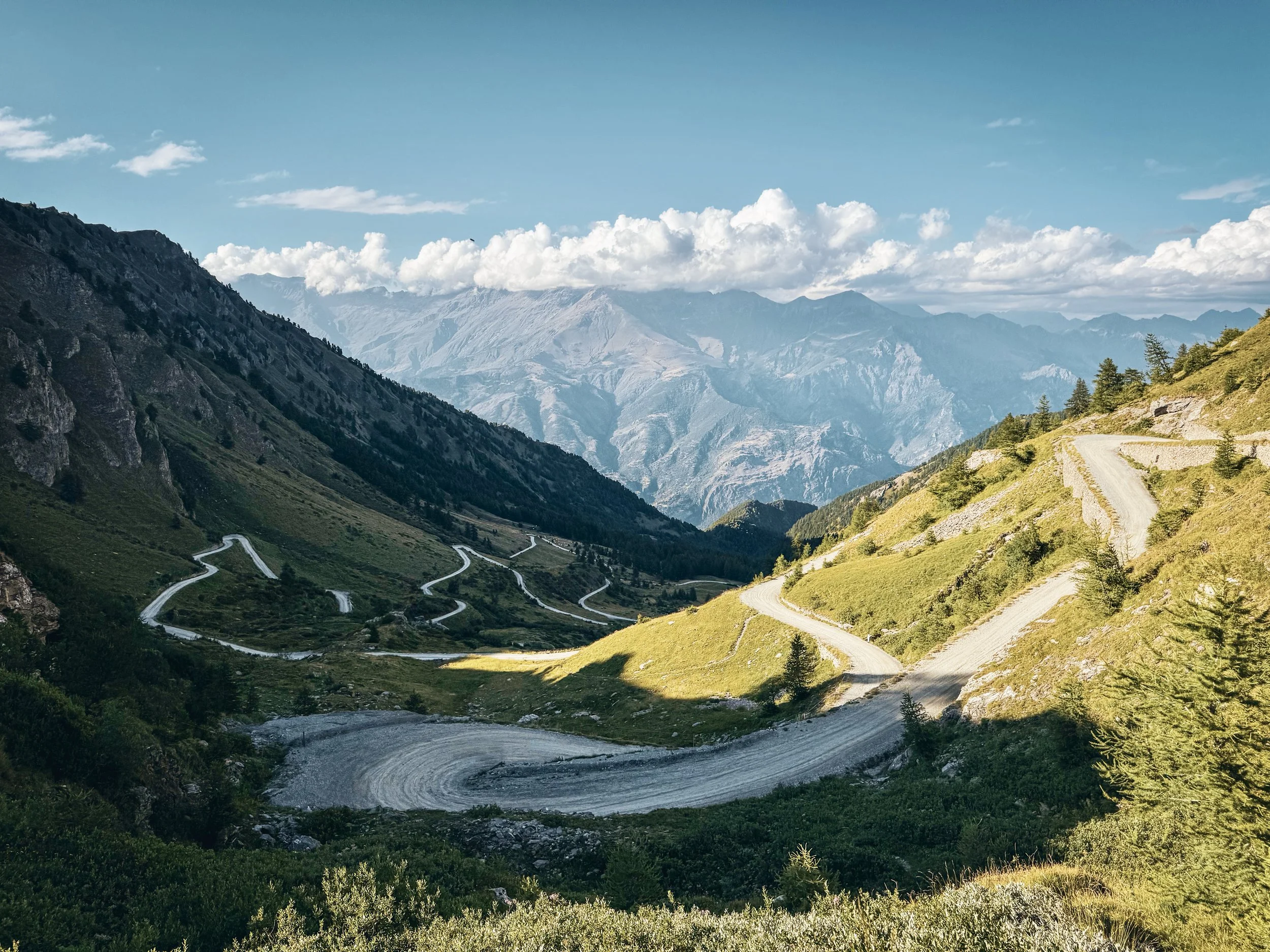
photo: @nathaliemonnier
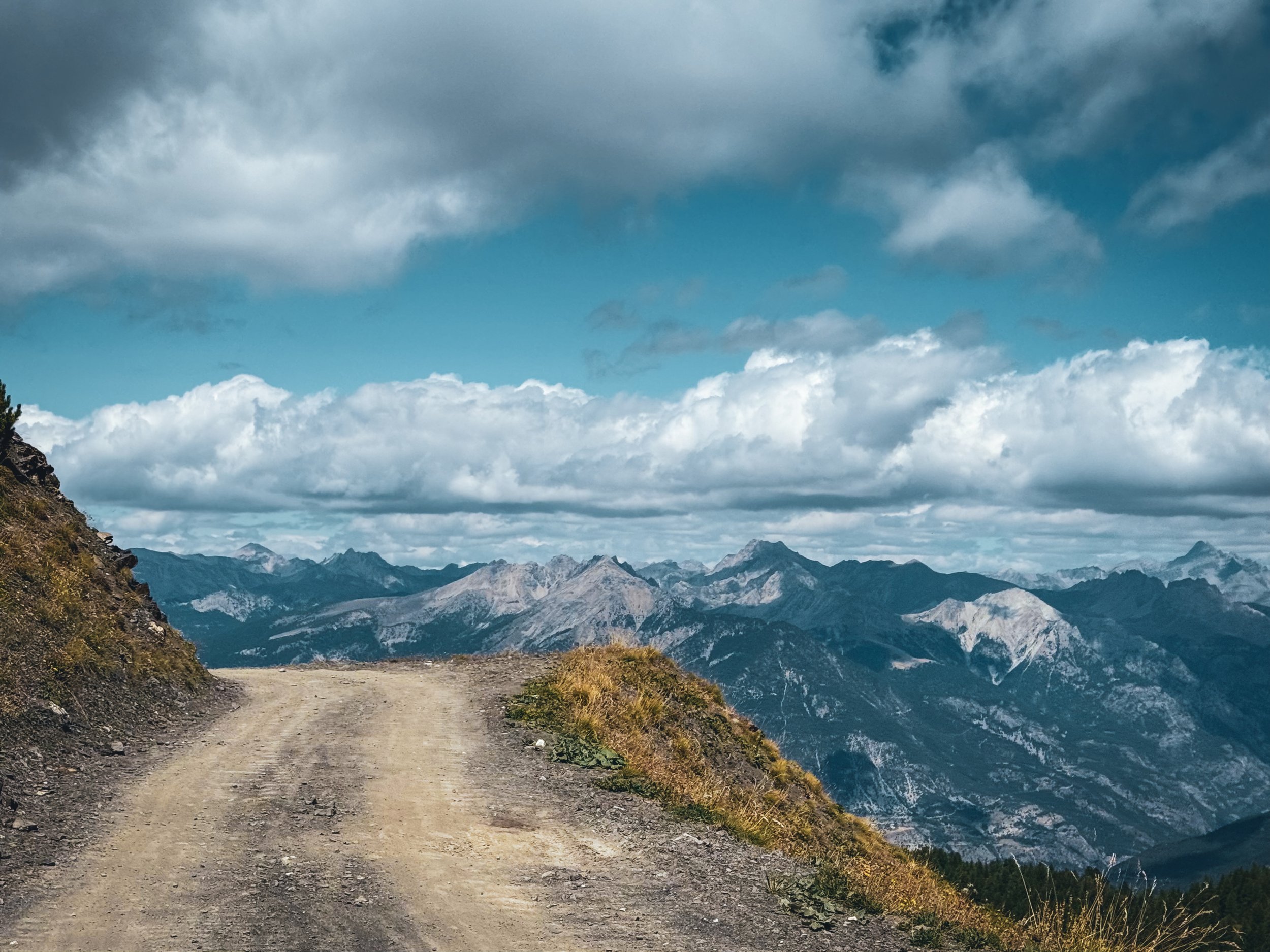
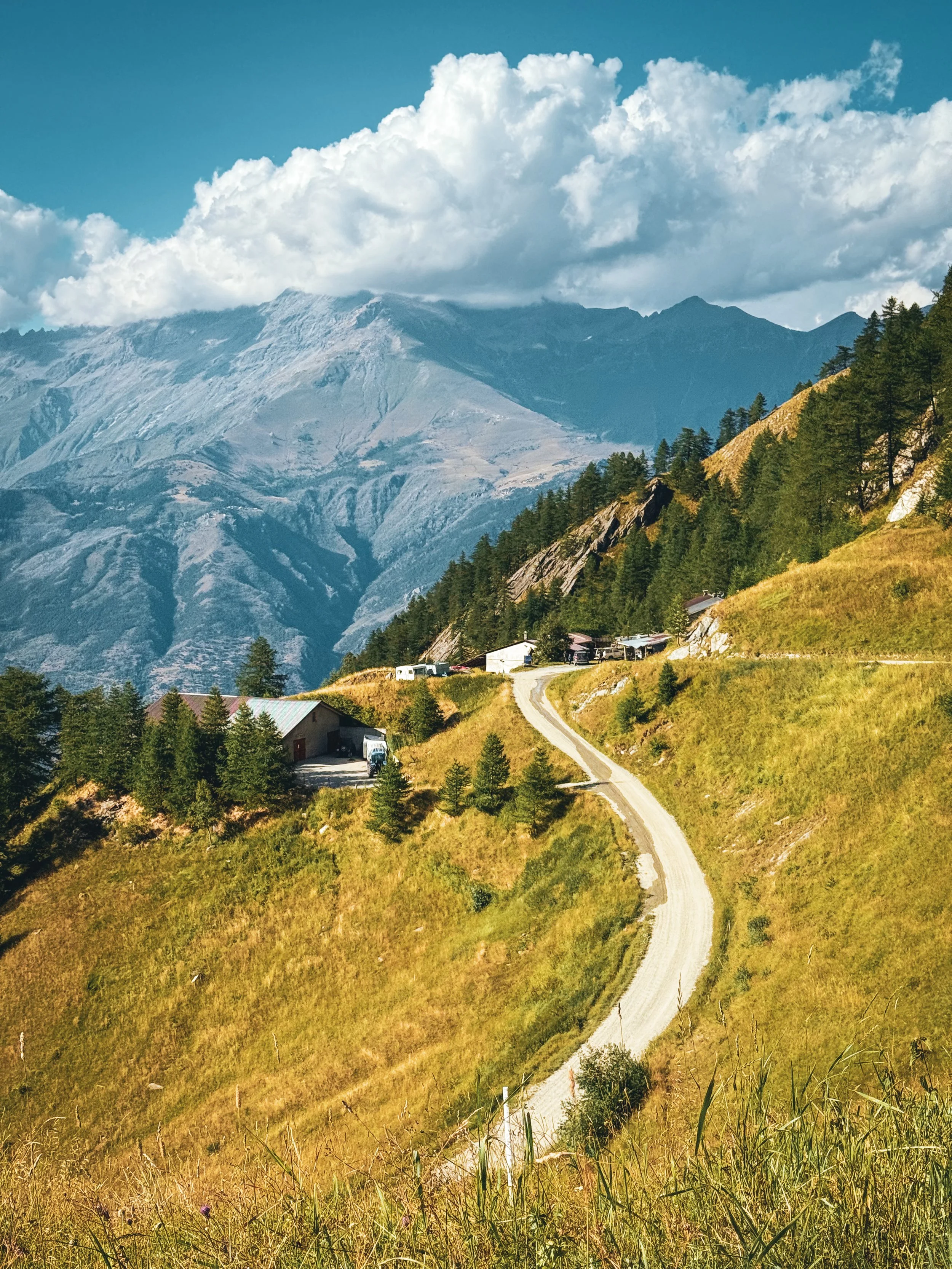
The climb up La Moutière, a little-known mountain pass, is a transition to another realm, wild and mineral. The asphalt disappears in places. The slope steepens. No more villages, no more cars, just rocks, sky, and breath. Depending on the time of day, the heat can be oppressive and opportunities to refuel are limited.
As you approach the summit, the air becomes cooler and you start to feel the altitude. The light becomes whiter. The kilometers of climbing begin to take their toll—this is where you thank yourself for choosing the right bike ;) (minimum recommended ratio of 0.8). The pass itself is not monumental, but the atmosphere is incredible: you already feel like you are riding along the spine of the Alps.
Col de Vars — wide, open, majestic
Vars is smoother and easier to ride on asphalt, but no less impressive. The valley seems to widen as you climb, and the wind often sweeps across the last few kilometers. The summit offers a vast, almost undulating view of the Southern Alps.
A transition pass that offers a little respite and comforting asphalt for your calves and arms.
Col des Vallons — a hidden giant, 2,470 m of pure effort
The Col des Vallons is a secret... One of those climbs that you won't find in tourist guides, but which leaves a lasting impression.
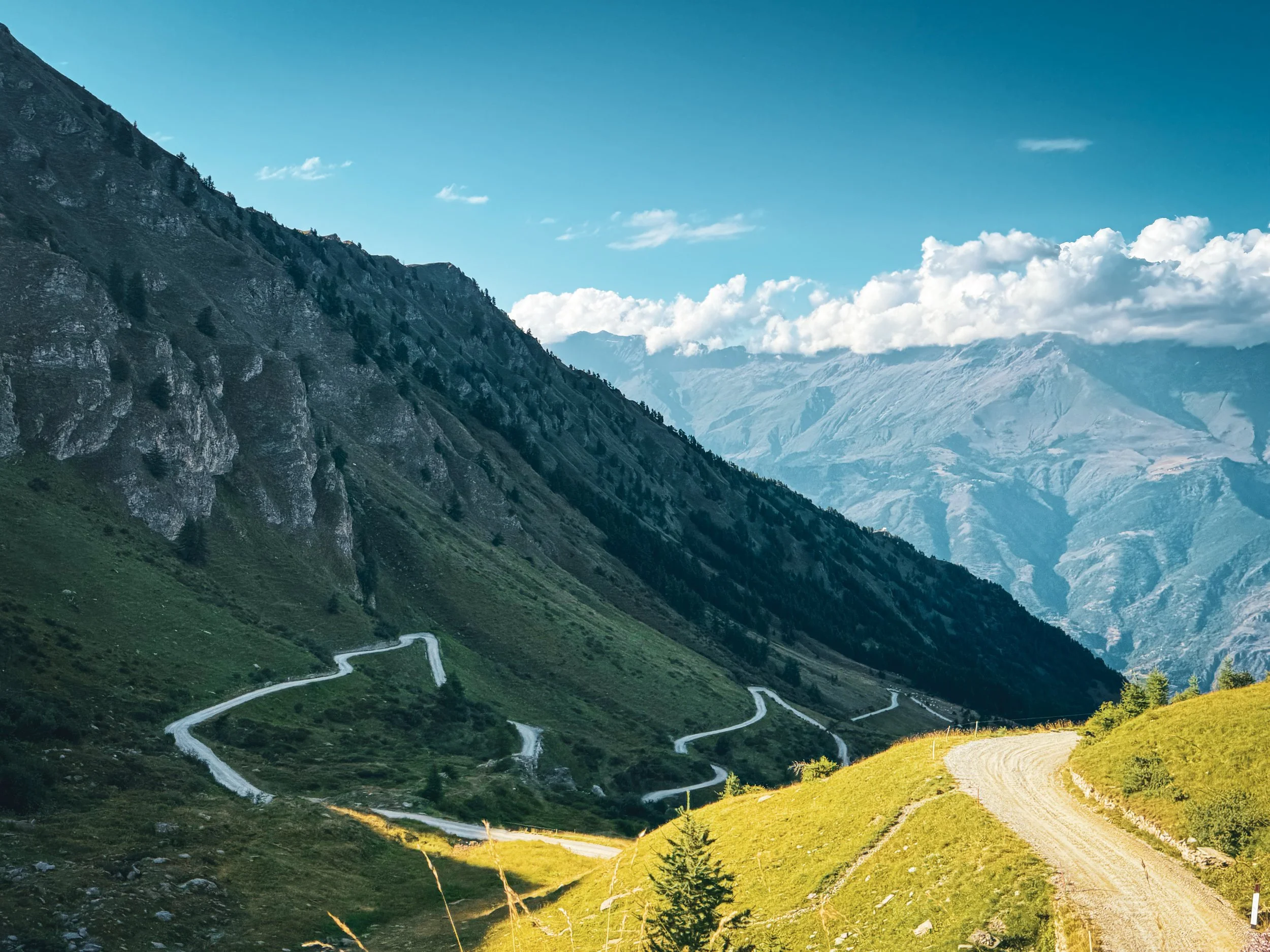
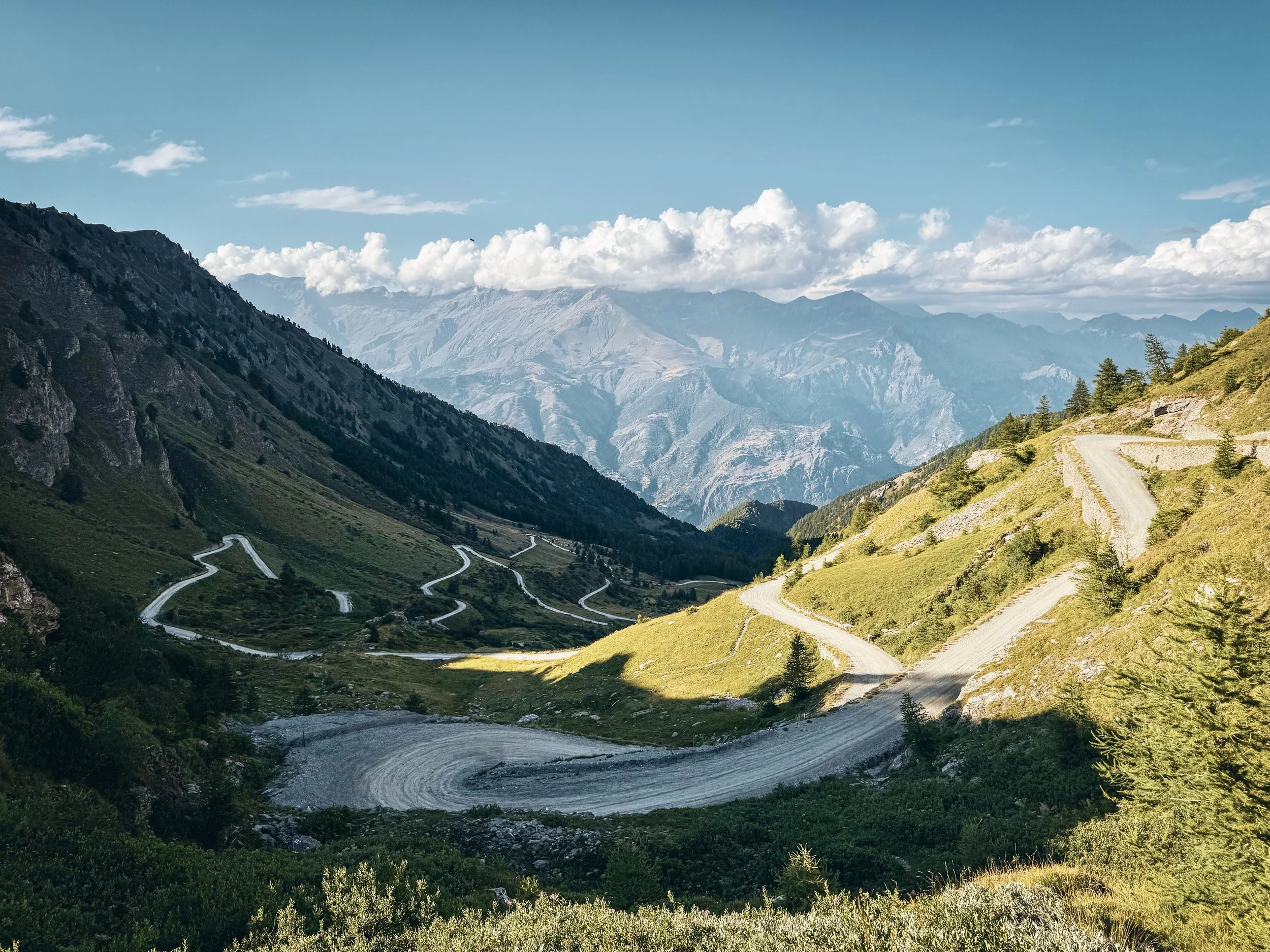
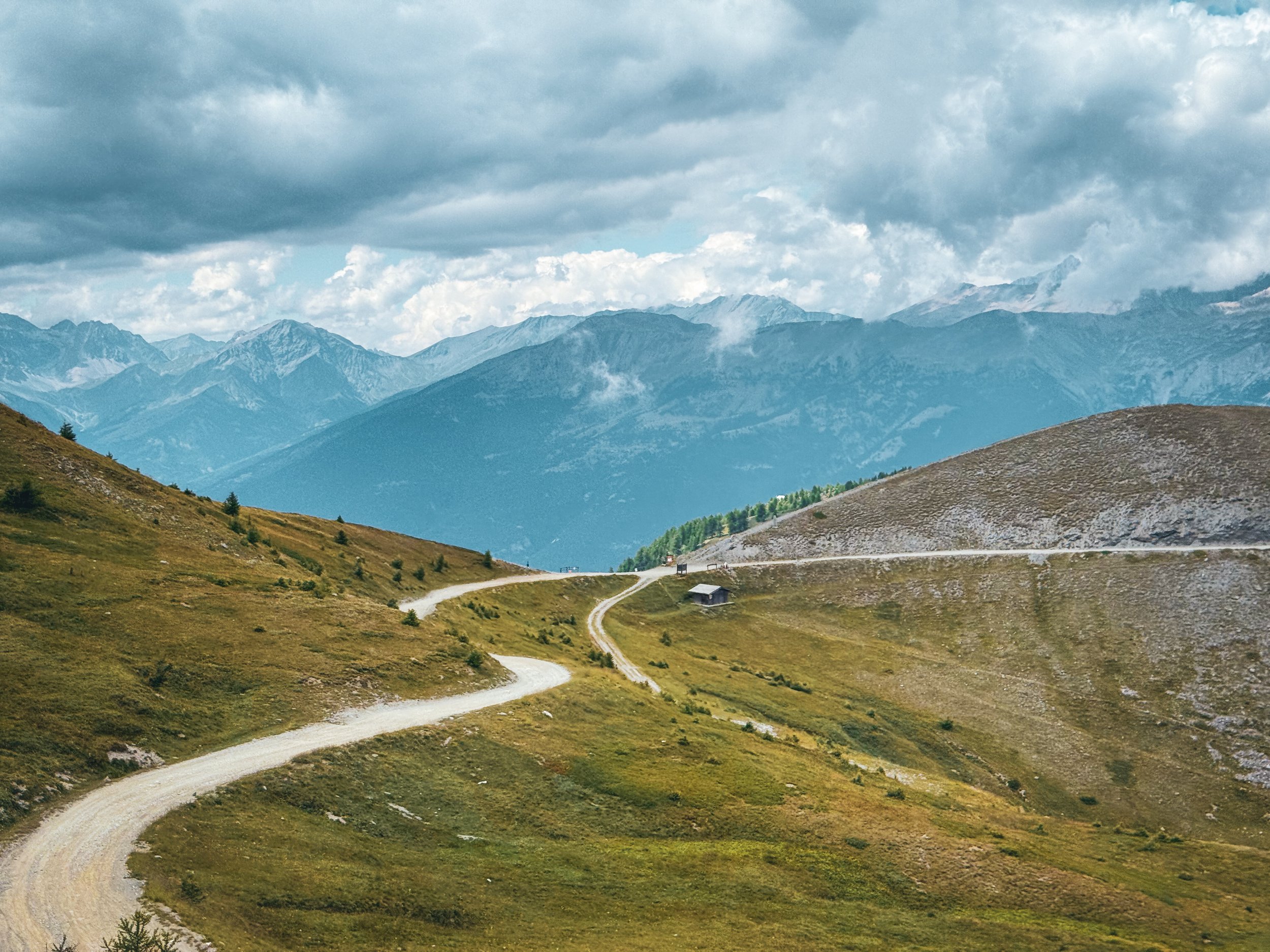
It's long. It's tough. It's gravel. It's a pass where the mountain takes up all the space. At 2,470 m, the noise of the world has disappeared. The bike moves forward at the pace of your breath. The gray, striated rock tells the geological story of millions of years.
This is where many realize that the GRAAALPS is not an "ultra cycle" but a complete Alpine crossing, with pure and wild climbs.
The passage to Italy: the Montgenèvre Pass, 1,850 meters above sea level.
We leave behind the Durance valley, the forests, and the familiar mountains of the French side, and without realizing it, we climb toward this symbolic threshold between two countries. It is one of the most symbolic moments of the journey: Montgenèvre marks the first border crossing into Italy.
At the summit, you can see Napoleon's obelisk, standing like a timeless landmark. All around: mountains, valleys, French-Italian horizons. You cross the border, but in the effort, the distinction fades away: you are just there, between two worlds, in the Alps.
Time stands still. The moment when "we crossed over": from France to Italy, from the valley to the peaks, from the road to adventure.
Then the descent begins, or the rest of the journey, but we already know that this passage will leave a lasting impression. The Montgenèvre Pass: not a closed chapter, but a symbolic milestone. An alpine transition.
And with it, the feeling that yes, we are really crossing the Alps—we are experiencing them, we are crossing them, we are going beyond them.
Act III — Italy: the legendary peaks where you forget everything else
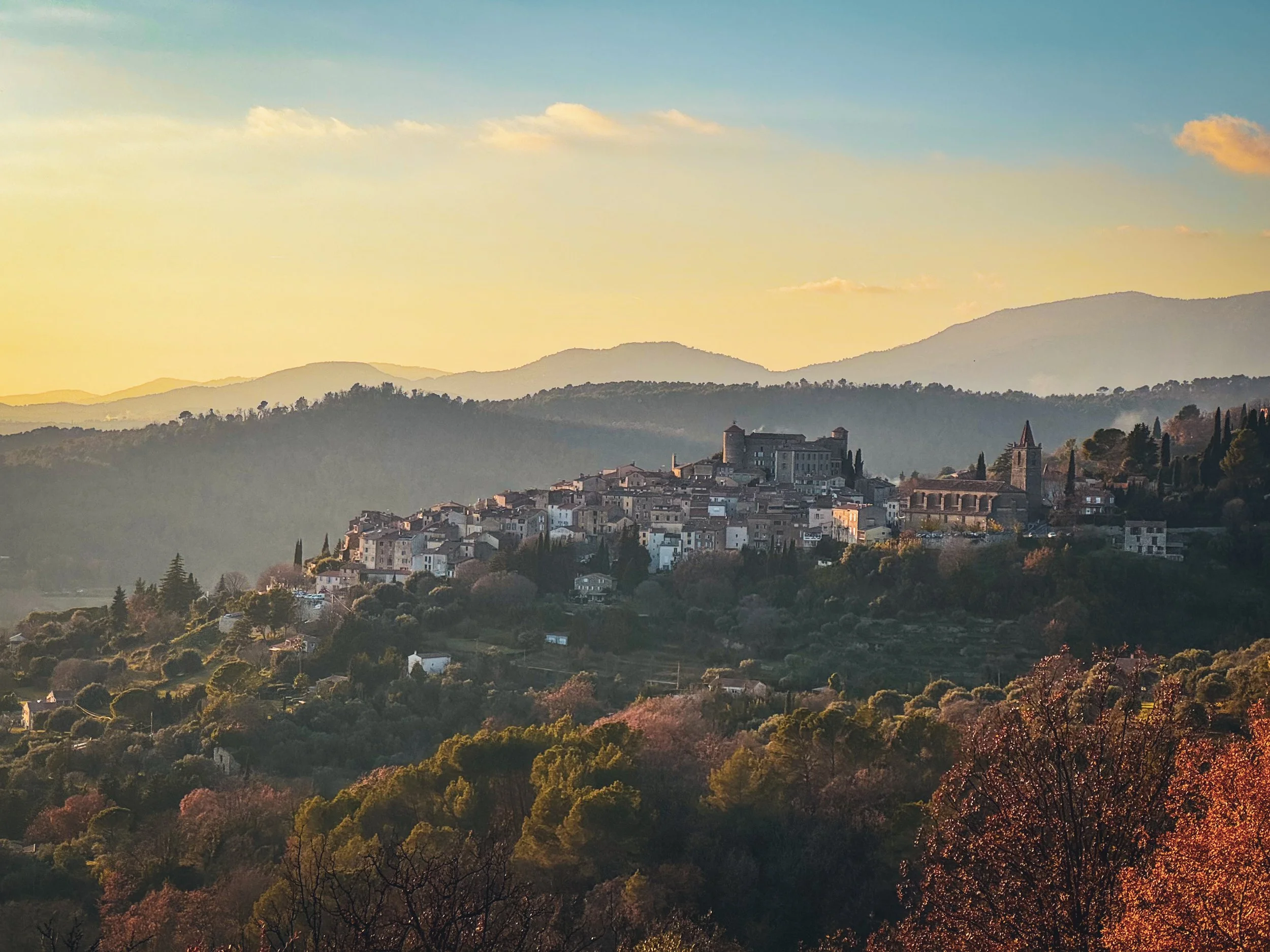
Photo: @nathaliemonnier
Strada dell’Assietta — 2,497 meters of unreality
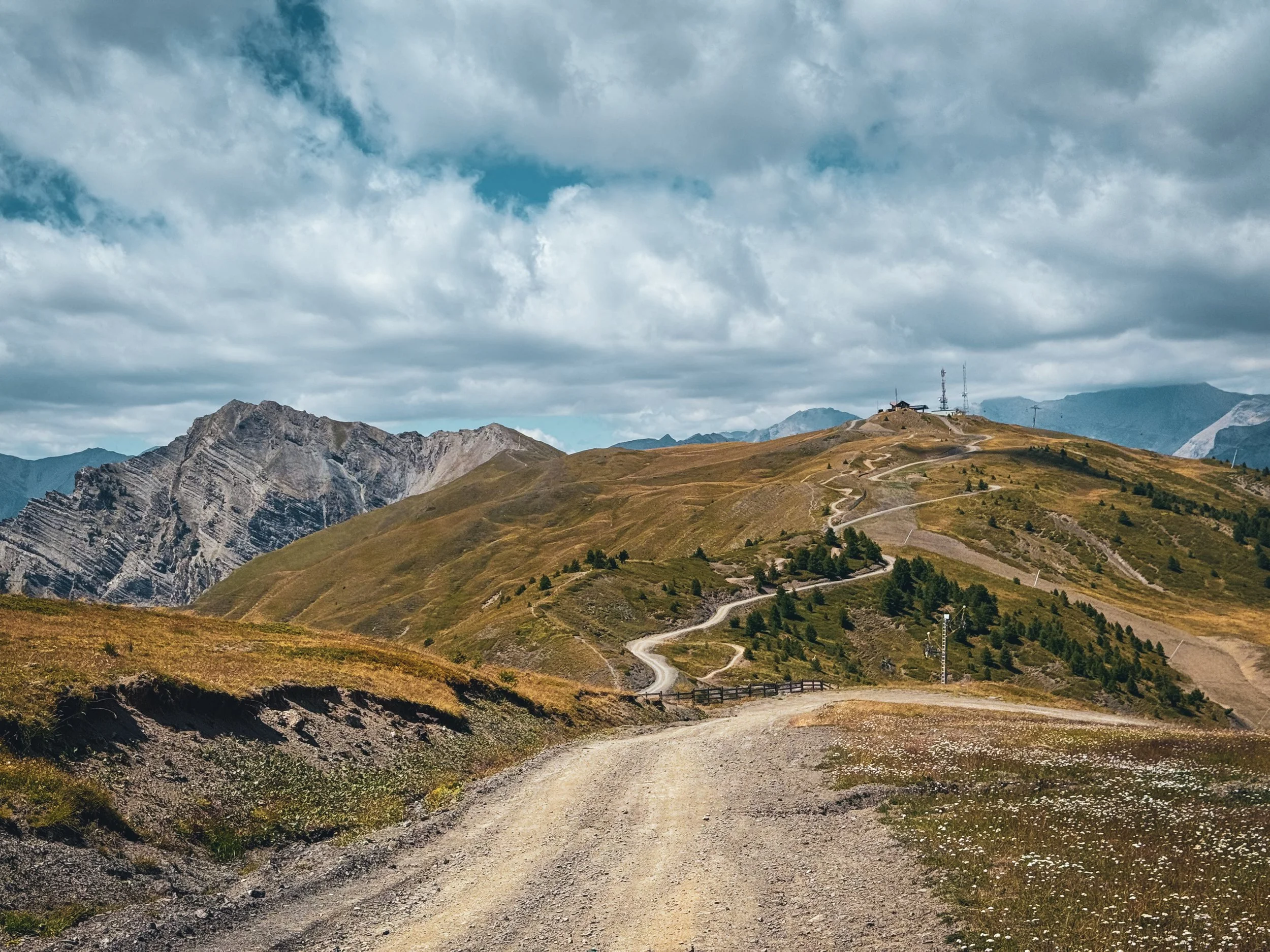
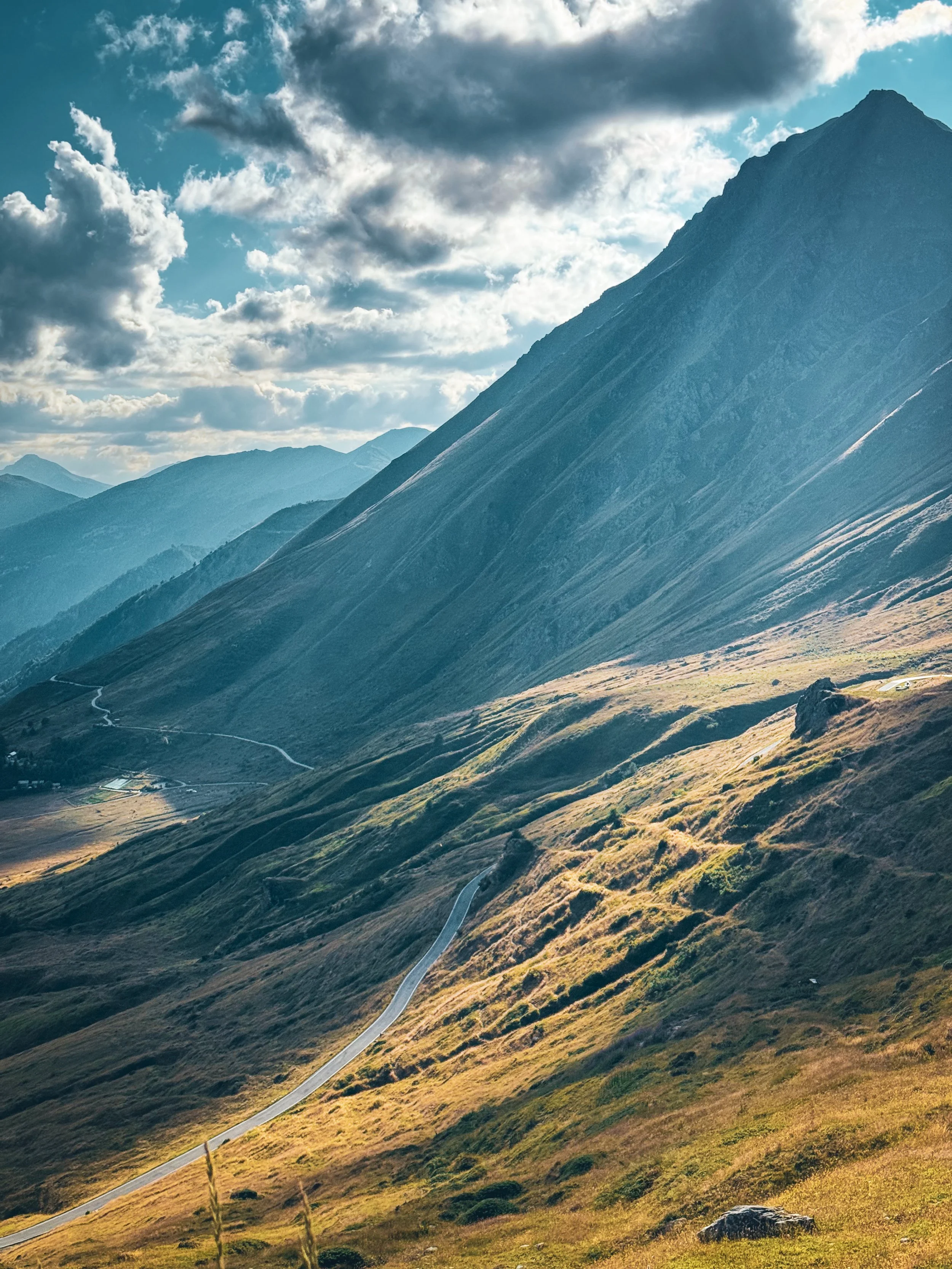
The Strada dell'Assietta is an endless, almost unreal ridge line. To the left, deep valleys. To the right, a series of peaks.
Beneath the wheels, a clear, dry, dusty track. The wind is often strong, almost aggressive. You're driving above the world.
At the end of La Strada, we know that we have just experienced something that will remain with us forever.
Colle delle Finestre — the pass for cyclists, the pass for dreamers
The heart of the 800 km: the Italian military tracks from Turin to Nice. Here, you really enter a different world. The Strada dell'Assietta is the first challenge: nearly 20 km of ridge at over 2,000 meters, on a dry, dusty, exposed track. It's not technical, but it's continuously demanding. The bike bounces, the wind often comes from the side, and you stay at altitude for a long time without a break.
It's easy to see why cycling history was written here.
Col del Colombardo — a rugged, isolated, monumental pass
A more discreet pass on the map, but probably one of the toughest on the entire route. It is wild, irregular, with constantly changing road surfaces, sometimes very steep slopes, and an effort that, at this stage of the race, really requires the right gear. This is where the minimum ratio of 0.8 really comes into its own: without it, you suffer the climb rather than ride it. It is a pass that tests your endurance, lucidity, and patience.
Act IV — The Swiss Highlands: The Alps at Their Most Majestic
Great Saint Bernard Pass — the pilgrims' ascent
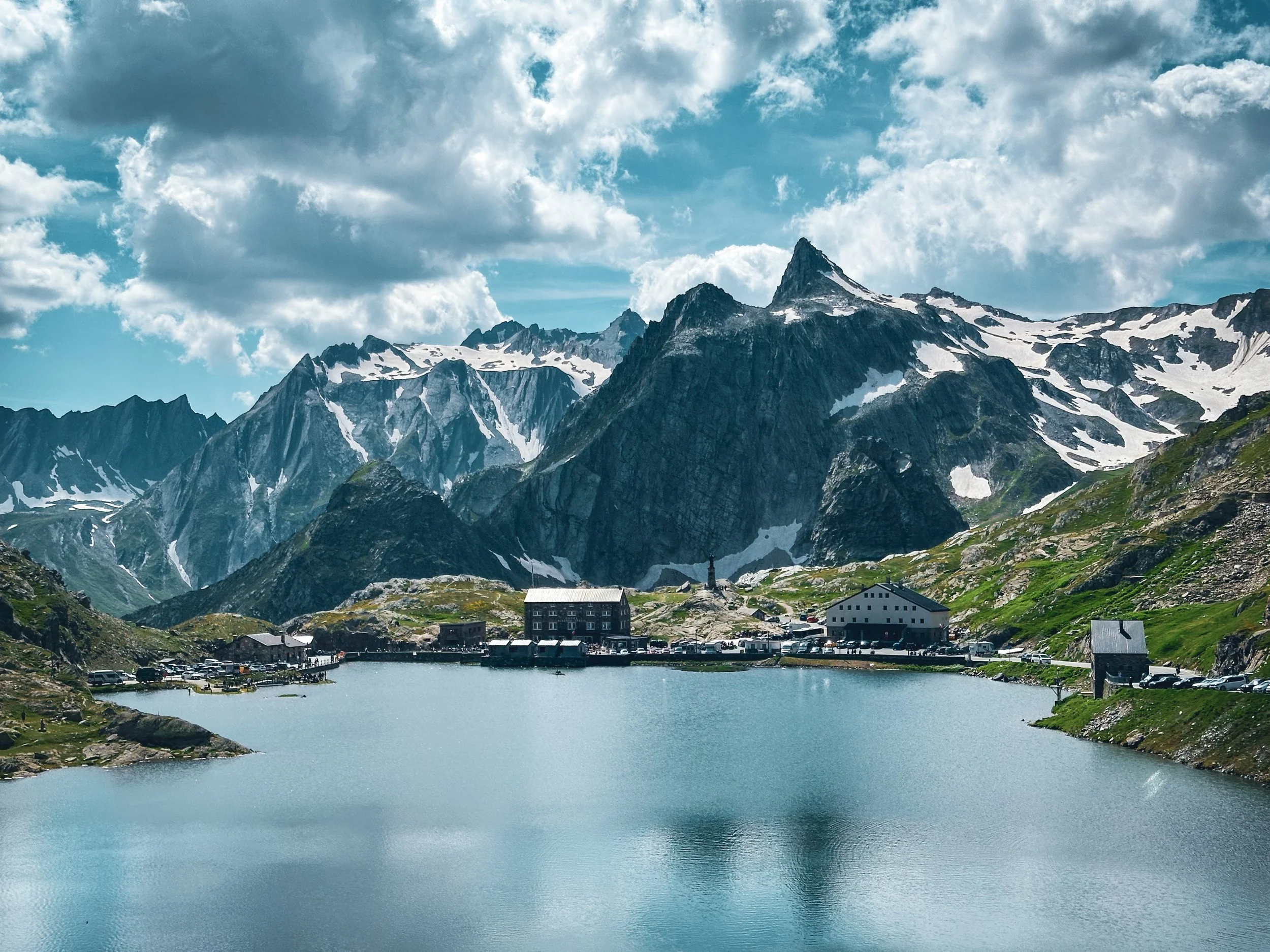
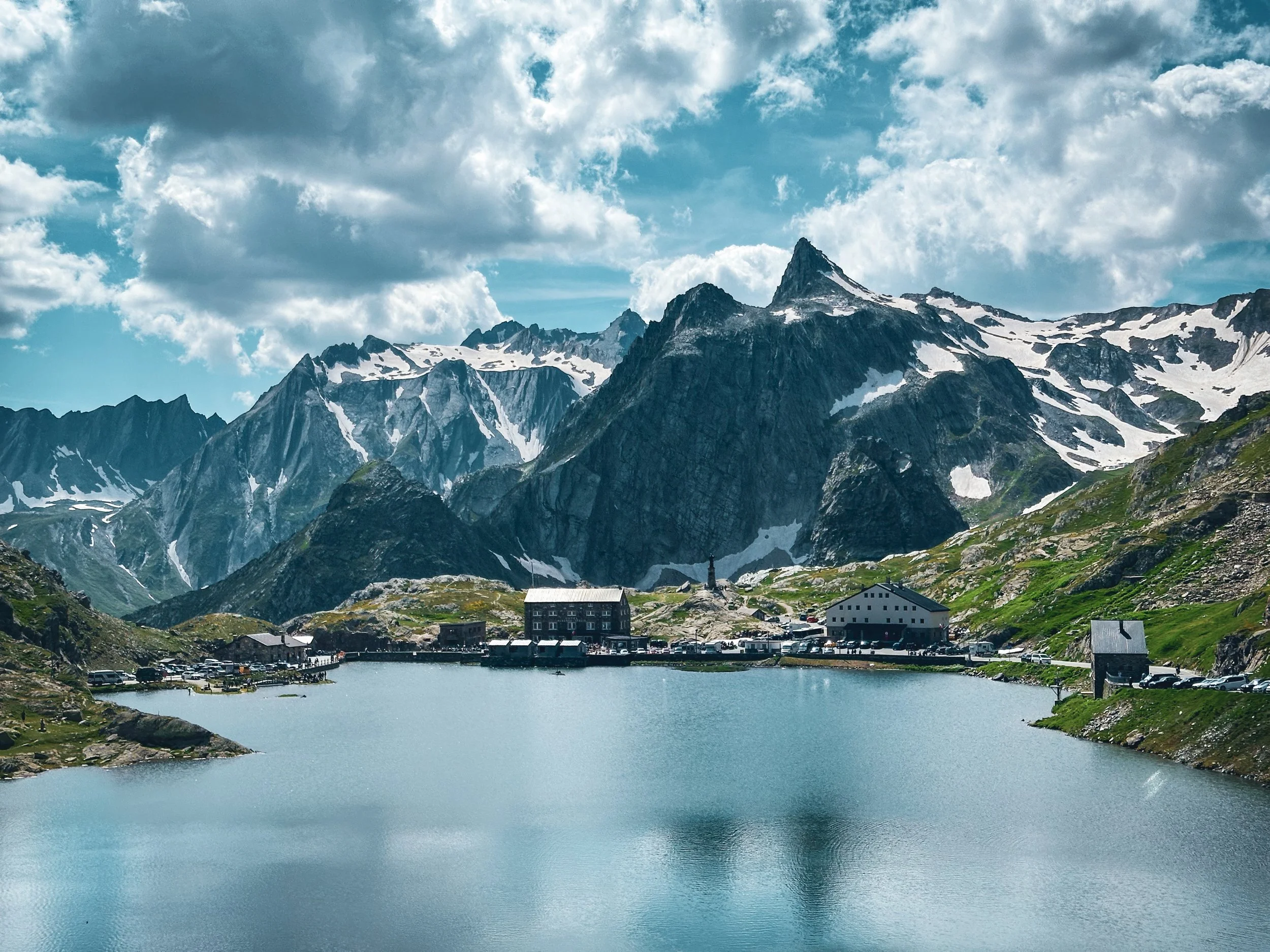
Great Saint Bernard Pass - @graaalps
The Great Saint Bernard Pass is a historic climb. The ascent begins on paths and small roads, eventually reaching the legendary main road of the pass, which winds between torrents and alpine pastures. You can hear marmots whistling in the distance! The pass is monumental! It's easy to understand why pilgrims have been passing through here for centuries. Here, you find a sense of calm after the Italian slopes, but it's not easy: the altitude and the length of the climb always take their toll. This is a pass that requires clear thinking, as it is the passage to Switzerland, the last crossing of the Alps that opens the way to the third and final country of the adventure!
Col de la Chaux & Croix de Coeur - the final scene
It is a long, steady climb, but with double-digit gradients in many places—fifteen kilometers with an elevation gain of over a thousand meters—combining road, trails, and rockier sections. At this stage, the slope seems harder than it really is, simply because your legs have already worked hard. Once you reach the pass, the tone changes. The passage to Les Ruinettes is much smoother, gentler, almost easy by contrast. And the end, towards La Croix-de-Cœur, is only difficult in name: from Les Ruinettes, it is no longer really a climb, but a balcony offering a last glimpse of the valley before the descent to the Rhône valley.
The arrival of the 800 km — That moment when everything changes
The arrival in Crans-Montana comes almost naturally, sometimes on the road, sometimes on trails. The route does not seek to be dramatic until the very last meter: it accompanies the end of the effort, like a line that settles after crossing an entire mountain range.
Reaching the end of the 800 km route means entering a space that few cyclists truly know. The finish line in Crans-Montana is not just an arch, a carpet, or a GPS point. It is a threshold.
After days of crossing the Alps twice, riding along ridges, crossing passes steeped in history, braving the dry heat of the Italian valleys and the cold wind of the high plateaus, the soft light of dawn—a strange phenomenon occurs: everything slows down.
The bike still creaks under the dust. My legs are shaking. And yet, a new energy flows through my body—a clear-headed pride, almost intimate, that slowly takes hold.
Then comes the final stretch. It seems short... yet endless. Each pedal stroke brings back a memory: a ramp at Colombardo, the wind at the top of Assietta, the blue morning light over Vars, the white silence of Col des Vallons, the first gravel trail at Gauthiers...
We cross the line. A flood of sensations overwhelms us: relief, power, abysmal fatigue, pure joy. We stop. We put our feet down—and the world sways a little.
You realize that you have just accomplished something unimaginable for 99.9% of people. Something that even you yourself, a few years ago, would never have dared to consider.
We take off our helmets. We breathe. And in that breath, there's a little bit of the Alps.
Those who have traveled the 800 km know thatyou don't just arrive in Crans-Montana. You come back to yourself.