
Riding alone at night on ultra-distance rides: a real fear, but one that can be overcome
Interview with Lee Jenkins — Race Across Series Ambassador
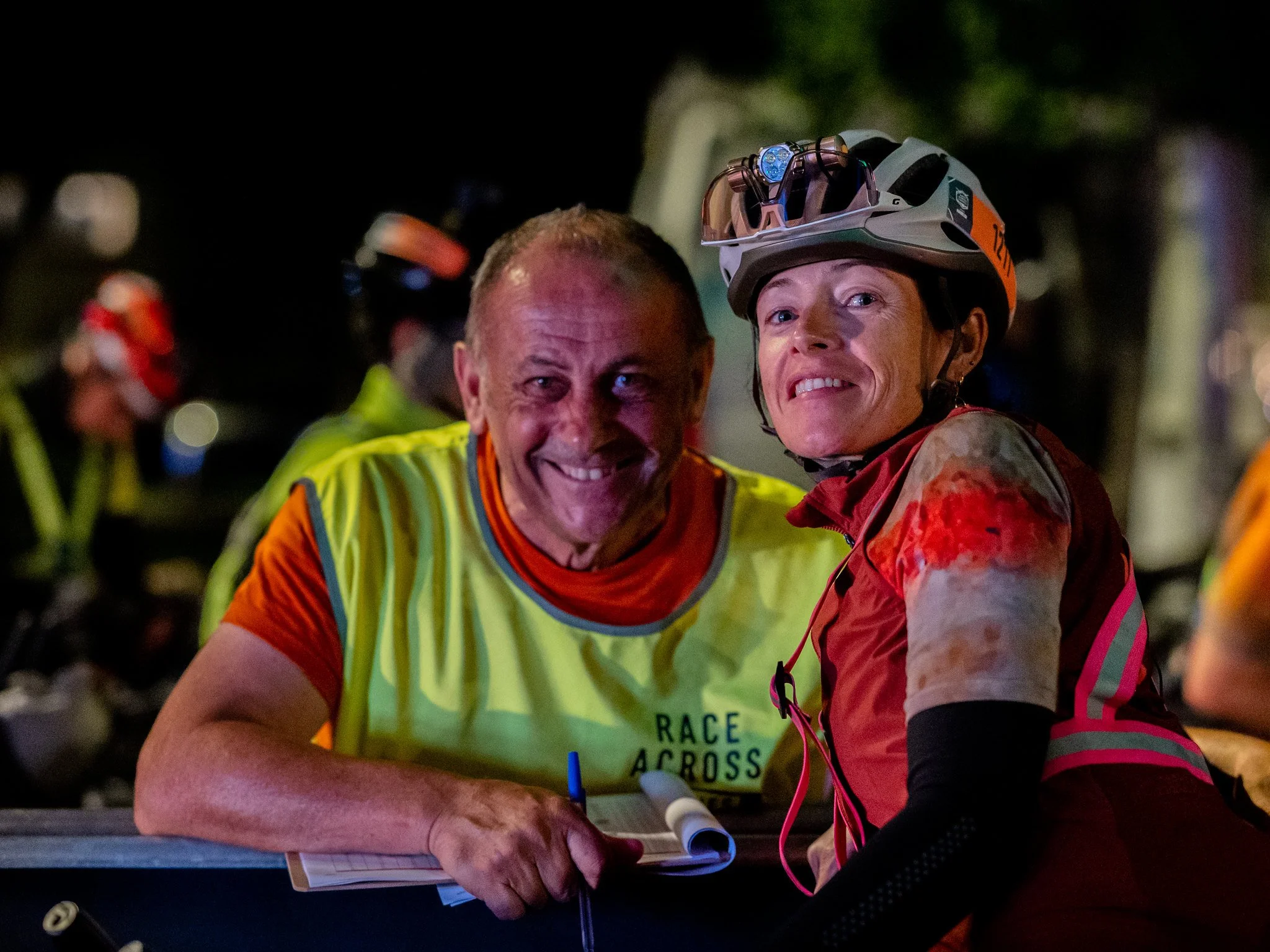
RUNNING ULTRA-DISTANCE AT NIGHT: PREPARING WITH LEE JENKINS, RACE ACROSS FINISHER.
Why I chose to address the topic of riding at night in ultra.
I am writing this article and answering this interview today because I have just been appointed ambassador for the Race Across Series, with a mission that is deeply important to me: to highlight the place of women in ultra-distance running. And when we talk about women who are hesitant to get started, one topic always comes up: the fear of riding alone at night.
I know this because we often receive this message. And I know it especially because I have experienced it. Intensely.
During my first Race Across France, it was even my main obstacle. Not the distance, not the elevation gain: the night.
So I wanted to share my story, my methods, my tools, my very real fears (in Réunion, stray dogs are not just a figure of speech), and how I ended up turning that fear into something manageable.
To make things clearer, I have chosen to respond directly to the questions that I/we are asked most often.
1. Can you introduce yourself and talk about your relationship with ultra-distance running?
My name is Lee, I am 45 years old, I am a nurse, photographer, and mother of two children, and I have been living in Reunion Island for 18 years. I have been cycling since 2023, and ultra-distance cycling since June 2024, with a preference for 1,000 km races. This format suits me perfectly: long effort, adventure, race management, autonomy, and pushing myself beyond my limits. Today, as an ambassador, I try to encourage more women to get started and find their place in ultra-distance cycling.
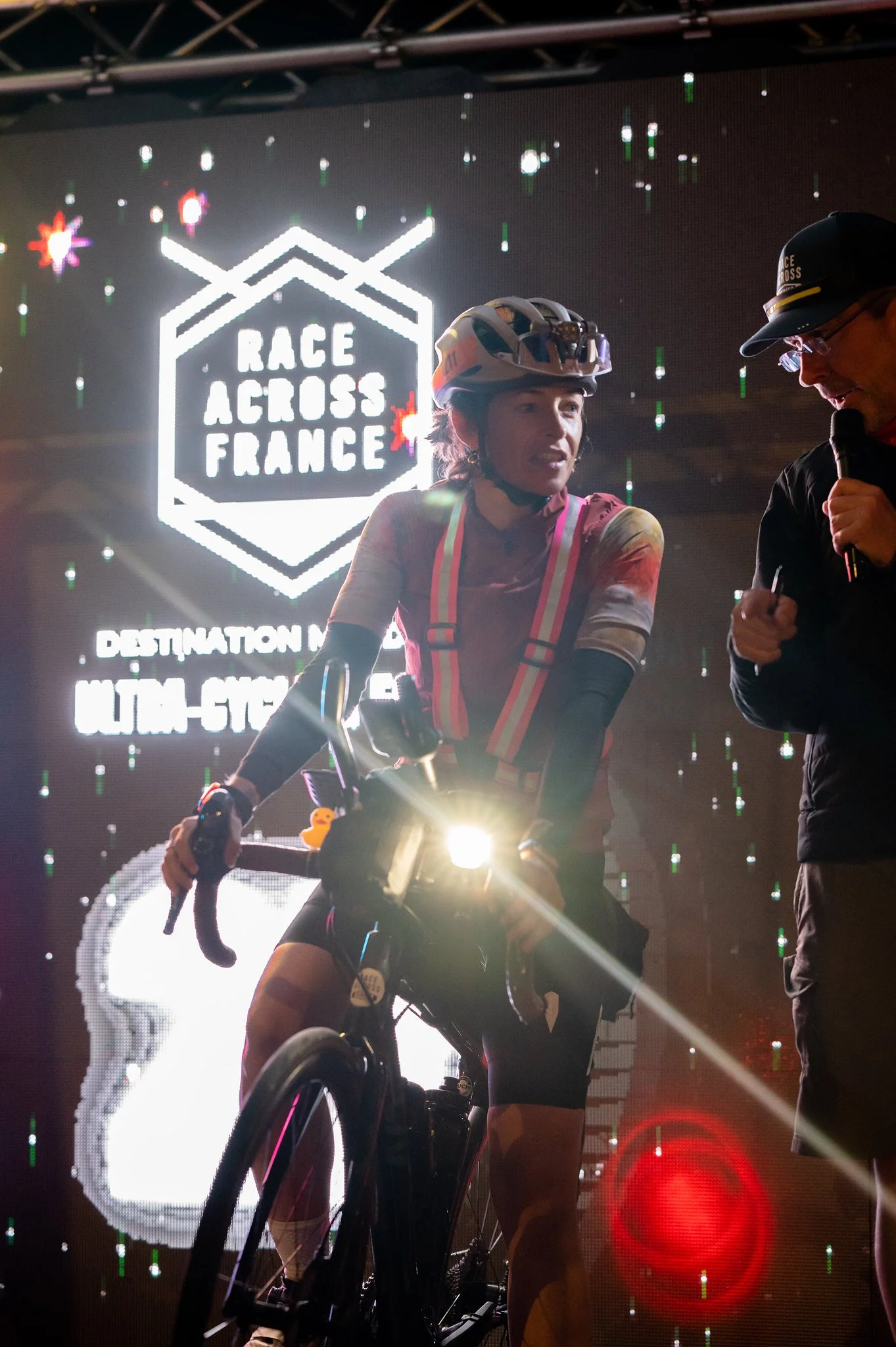
Lee Jenkins at the start of the Race Across France 1000km
Departure in the evening/early night. For a first night of entry on this distance.
2. Do you remember your very first night out?
Yes. I remember it perfectly: two hours, at night, on a route I knew by heart and, above all, without any difficulties. Even so, everything seemed different. I especially remember the mixture of excitement and stress: landmarks disappear, the silence becomes almost oppressive, and when the wind is blowing in your face, the sound of the wind is so intense that it masks any other noises and presences, which is frightening... but there is still something special about it, and that night, far from the city and light pollution, the sky was particularly starry, making the experience strangely magical. You immediately understand why the night is so impressive.
3. How did you feel at first?
A lot of tension. A mixture of fear, extreme vigilance, and at the same time a certain curiosity. The night isolates and amplifies everything.
4. What were your biggest concerns before you dared to ride at night?
Assault, mechanical problems in complete darkness, total isolation... and above all, stray dogs. In Réunion, this is not an imaginary fear: I have been chased several times.
5. Did you have any specific concerns as a woman?
Yes. The fear of a bad encounter, of being isolated without being able to protect myself. This fear is not irrational: it reflects a very real vulnerability. I have never minimized it, but I have learned to equip myself and prepare to reduce it.
6. What made you take the plunge?
Race Across France. I knew I would have to ride at night to finish. I had no choice: if I wanted to participate, I had to face the night before the race. So I decided to overcome this fear before the start, with gradual nighttime rides.
7. Why do you think nighttime is so intimidating? How can we overcome this mental barrier?
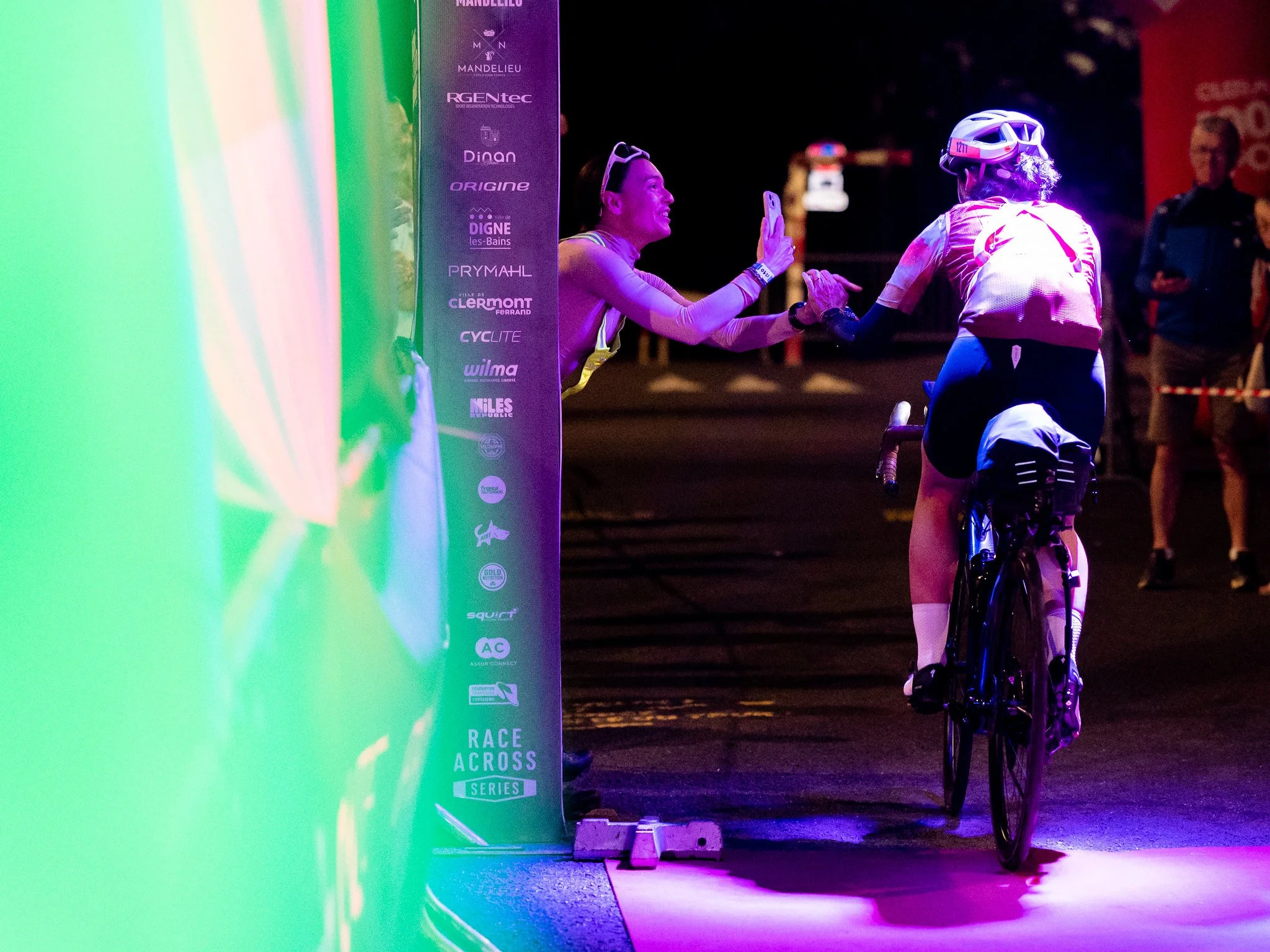
Lee at the start of the 1000km Race Across France -
Because our reference points disappear: we can no longer see far ahead, we can no longer hear anything, and our imagination takes over. To overcome this, we need to create familiarity: ride regularly at night, start with someone else, then alone, and equip yourself to feel safe.
8. What advice would you give to someone who wants to ride alone at night for the first time?
Start simple: go for a short run close to home, tell someone where you are, test your lighting equipment, choose a familiar route, and above all, don't focus on performance, but on the sensation. The idea is to gradually get used to running at night, not to put yourself in difficulty.
How do you prepare for safety: route, lights, communication, mindset?
My routine is always the same:
notify a trusted person of my whereabouts
share my location live from my phone
several powerful lights (2000-lumen bike light and headlamp to widen the field of vision)
whistle, self-defense strobe light, anti-aggression spray
This combo greatly reduces my mental load: I know I can react.
9. Have you ever felt unsafe at night? Or is it mostly a perception?
Yes, and it's not just a perception. In Reunion Island, I was once chased by a pack of dogs at 4 a.m. during an ultra-marathon. I was able to outrun them thanks to my strobe light, which blinded them and slowed them down. I also had to use my pepper spray on a dog in broad daylight. These experiences reminded me that the danger is real, but that with the right tools and reflexes, you can deal with it. Looking back, experience and the help of testimonials on social media have also taught me how to adapt my behavior when faced with aggressive dogs. Sometimes, slowing down instead of speeding up changes the animal's behavior: it calms down and loses interest in chasing us. I know it's hard to believe and that it wasn't easy to try, but it works. Many dogs get excited when they see something running away; some even chase cars. Slowing down or even getting off your bike can stop them in their tracks. If you have to get off, place the bike between you and the dog to create a protective barrier. But rest assured: while these situations are a reality in Réunion, they are not in mainland France. During my two participations in the RAF 1000 km, I didn't encounter any stray dogs, only a deer, a marmot, and a fox. Magical moments.
10. How do you manage fatigue and sleep during ultra-distance races?
At night, fatigue amplifies everything, including fear. During my first Race Across France, I sometimes rode until the middle of the night. Despite my training, I was afraid, especially when I found myself in the middle of nature, in the middle of the forest. I imagined all kinds of scenarios.
So I got into the habit of calling my sister and putting her on speakerphone. She would stay on the phone with me for hours. It kept my mind off things and gave me the courage to keep going through the night. It made me feel like she was there with me. It may sound ridiculous, but it worked. I would like to take this opportunity to thank her from the bottom of my heart.
11. And after this first experience?
Strangely enough, during my subsequent rides, I no longer felt the same fear. It was as if that first stage had been a real trial by fire. It took that initial experience to take the drama out of it and realize that I was capable.
On the other hand, I never ride at night without my tools: they give me peace of mind and confidence, and make the fear much more manageable.
12. What makes nighttime outings unique or magical?
magical departures under the lights of the race across France
Solitude, calm, stars. It feels like the world is asleep and we are moving forward in a timeless bubble. It is an intimate and powerful moment. All our senses are alert. There is something unreal about it.
13. What would you say to a woman who doesn't dare ride at night yet and thinks it's not for her?
That fear is normal. But that it does not define what she is capable of. You can get used to the night, step by step. And once you've done it once, everything changes. Confidence comes, and so does freedom.
CONCLUSION — What I want to convey as an ambassador
I wanted to become an ambassador for the Race Across Series because:
talk about these topics that many people are afraid to bring up
show that fear does not negate legitimacy
remind people that women have a rightful place in these extreme events
Driving alone at night helped me grow up. It taught me vigilance, stress management, and confidence.
And above all: fear is not a weakness, it is a starting point.
If my experience can help even one woman say to herself, "OK, I can try that too," then this article will have served its purpose.
WATCH THE VIDEO AGAIN:
