
“The more women there are at the starting line, the more natural it will become and the more the virtuous circle will take hold.”
Nathalie Monnier, from participant to race coordinator: commitment at the heart of GRAAALPS
Arriving at GRAAALPS as a participant, Nathalie Monnier quickly found her place within the adventure.
Driven by a shared vision and mutual trust with the team, she naturally evolved into the role of race director, putting her experience in ultra-running and bicycle touring at the service of the runners.
Today, she orchestrates safety, consistency of itineraries, and management of unforeseen events, while providing valuable local expertise on the territories traversed.
Through her personal journey, Nathalie also shares a powerful message: limits are often those we impose on ourselves.
In this interview, she talks candidly about ultra running. She advocates for a committed and inclusive vision of ultra running, highlighting the obstacles that still exist for women and the need to change the narrative surrounding the sport.
Through concrete actions—representation, advocacy, mentoring, and more inclusive event design—she actively works to make the starting line more accessible.
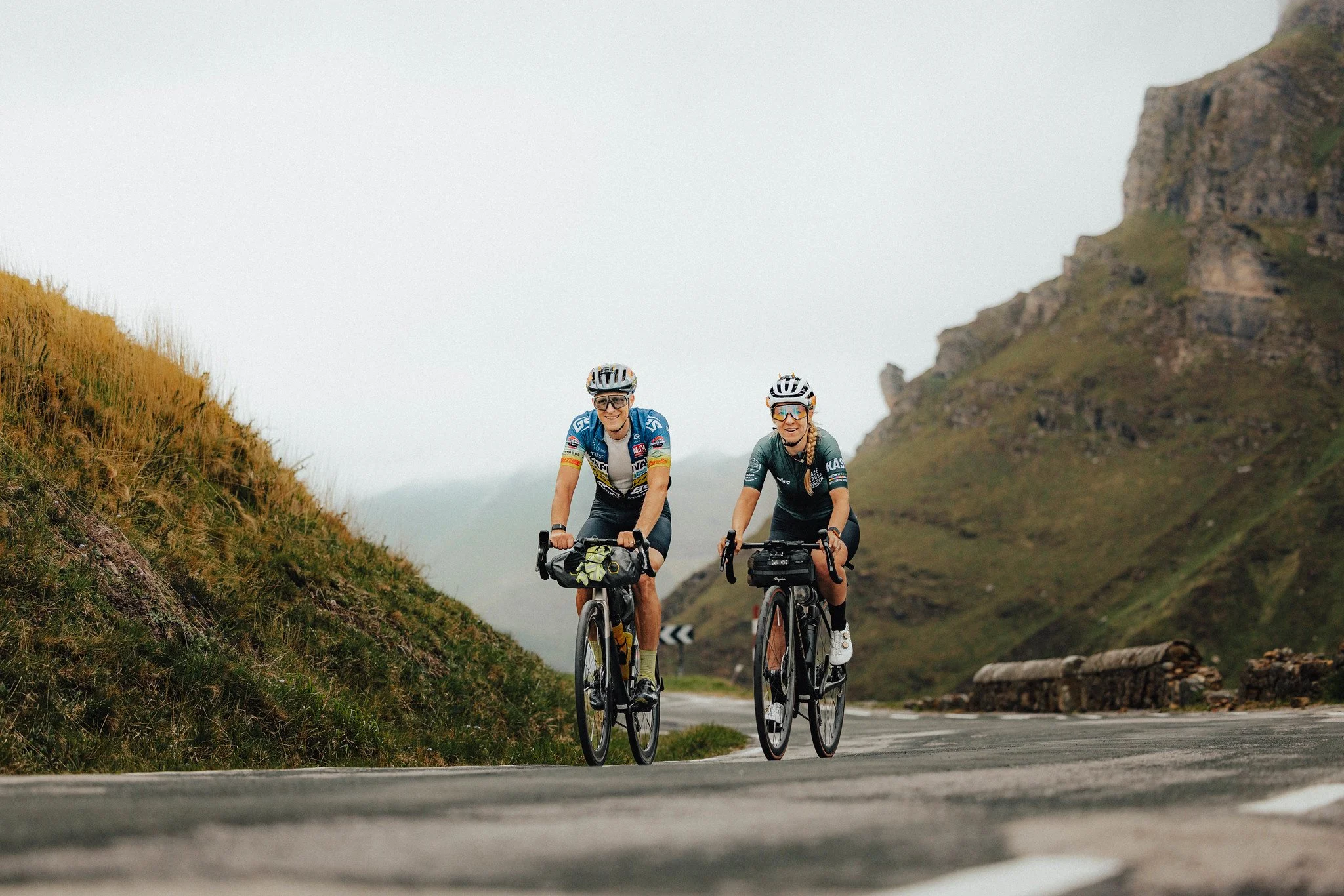
Nathalie Monnier participating in Race Across Spain 2025 as part of a duo with Fabien Monnier - photo: Robin ISSARTEL
1. Can you introduce yourself in a few words and tell us about your background in cycling and ultra-distance racing?
I started endurance sports somewhat by chance, at the age of 28, with triathlon. Then I met Fabien, and that's when cycling took center stage in my life. With him, it became a sport, a playground, and a way to travel together.
About ten years ago, I also discovered gravel riding, long before the era of competitive gravel racing, while riding a cyclocross bike. The idea was simple: greater safety, more freedom in winter, and above all, the pleasure of discovering new trails. At the time, it was a more relaxed, contemplative activity, a different way of approaching cycling.
I then followed a fairly traditional path, participating in cyclosportives, and naturally, I developed a desire to extend the distances I was covering in order to explore my limits and learn how to push them. Bikepacking was the obvious choice: we love to travel, and this format allowed us to cross entire territories independently, from Norway to New Zealand, via the Azores and much of Europe.
I love the very long distances I share with Fabien, because they allow us to experience something powerful together. At the same time, I also enjoy distances between 200 and 500 km on my own: these are distances that give me space, without being too long, and where I feel comfortable on my own.
I wouldn't describe myself as a full-fledged ultra-cyclist, but first and foremost as a passionate cyclist. What I love is diversity: enjoying short rides as much as cyclosportives, long races, ultras, or simply bikepacking adventures. Varying my activities means I never get bored, I stay curious, and I give my body time to adapt without wearing it out.
Over time, what attracts me most is still managing my effort, traveling, adventure, and endurance.
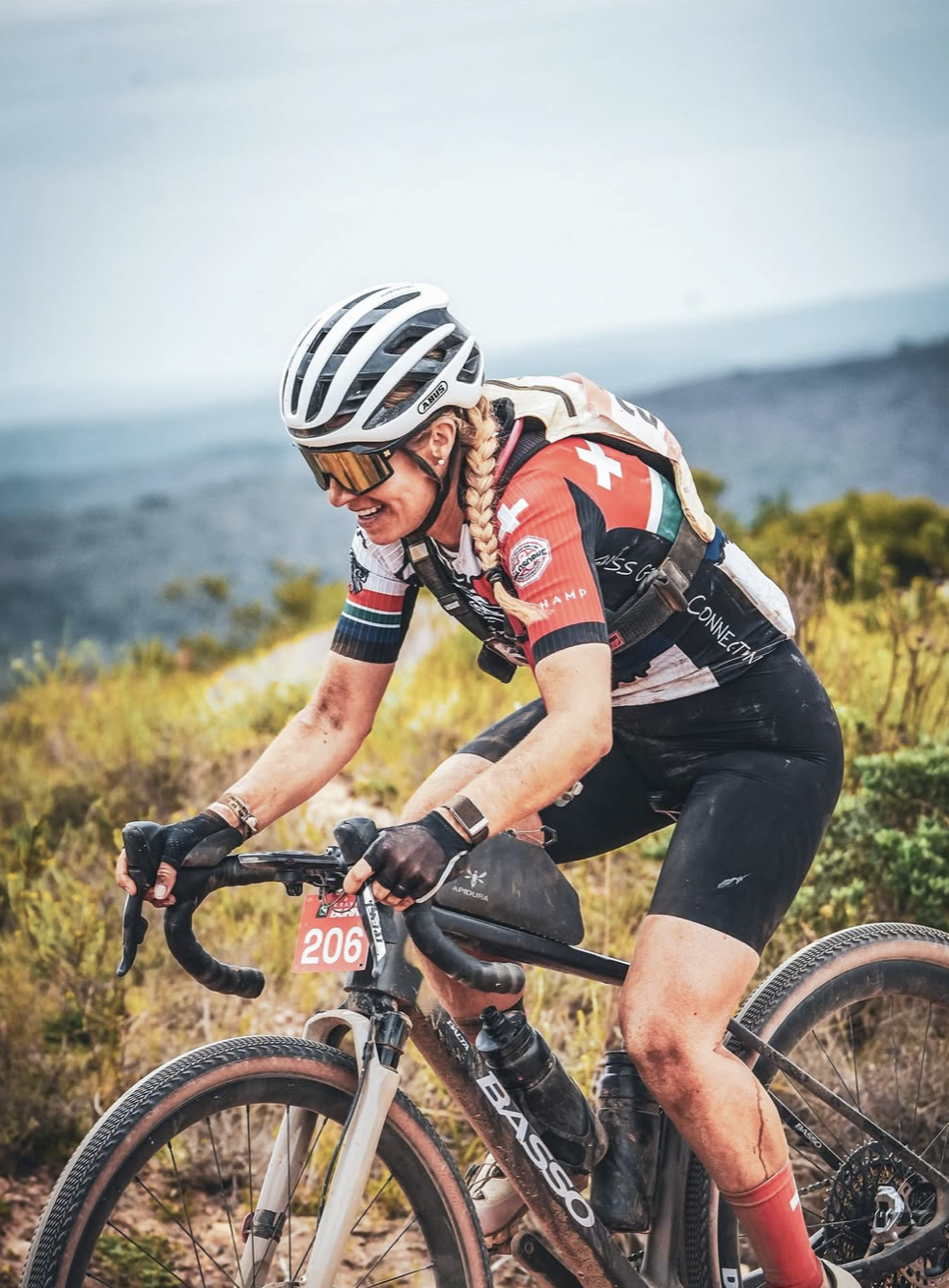
Nathalie Monnier during her participation in Gravel Burn 2025 - photo: @monnier.nath
2. How did you get involved in the GRAAALPS project, and what made you want to get involved as race coordinator?
I first came to GRAAALPS as a participant. The route, the spirit, the mountains... everything immediately resonated with my approach to cycling and ultra-distance events.
I quickly developed a great rapport with the team. I think our shared visions and values naturally brought us closer together. Arnaud then dared to trust me in a role that was new to me, and that trust was decisive. Becoming race director came quite naturally: I wanted to contribute in a different way, from the inside, and to put my experience of ultra-distance racing, but also simply of cycling and traveling, at the service of the riders.
What motivated me most was the desire to give others the same experience I had during the race: a certain way of seeing things, of going through them, of feeling them. Obviously, it's a real challenge to organize an event that is 200% in line with what you would like to experience as a participant. But experiencing it from behind the scenes is an ultra in itself—different, but no less intense.
I enjoy both professional and personal challenges, and I figured that my professional background would give me the right tools to embark on this adventure as race director. And then, all of this is done hand in hand with Fabien, who is responsible for the courses. We move forward together, each in our own role, with a shared vision of the event.
3. In practical terms, what is the role of a race coordinator at an event such as GRAAALPS?
It's a very cross-functional role. Of course, there's compliance with specifications and brand identity, safety, consistency throughout the journey, and managing the unexpected, but there's also a lot of listening, coordination, and synchronization with the team.
My role consists in particular of providing that essential local touch: having a thorough knowledge of the specific characteristics of the countries crossed, the rules, legislation, authorizations, contacts, but also the terrain and the routes. All this requires real foresight so that, once the race is underway, the participants can concentrate solely on their adventure.
Being a race coordinator also means ensuring that the experience remains challenging without being exclusive, committed without being disconnected from the realities on the ground. This involves making choices, sometimes difficult ones, always responsibly, with a balance between adventure, safety, sporting consistency, and enjoyment in mind!
I also like to think that my role as a female race director is to give visibility to women in these still very male-dominated environments and to encourage more female participants to take part in the event. Ultimately, the goal remains the same: to give each participant a powerful sporting and human adventure in a safe environment, supported by a close-knit and aligned team.
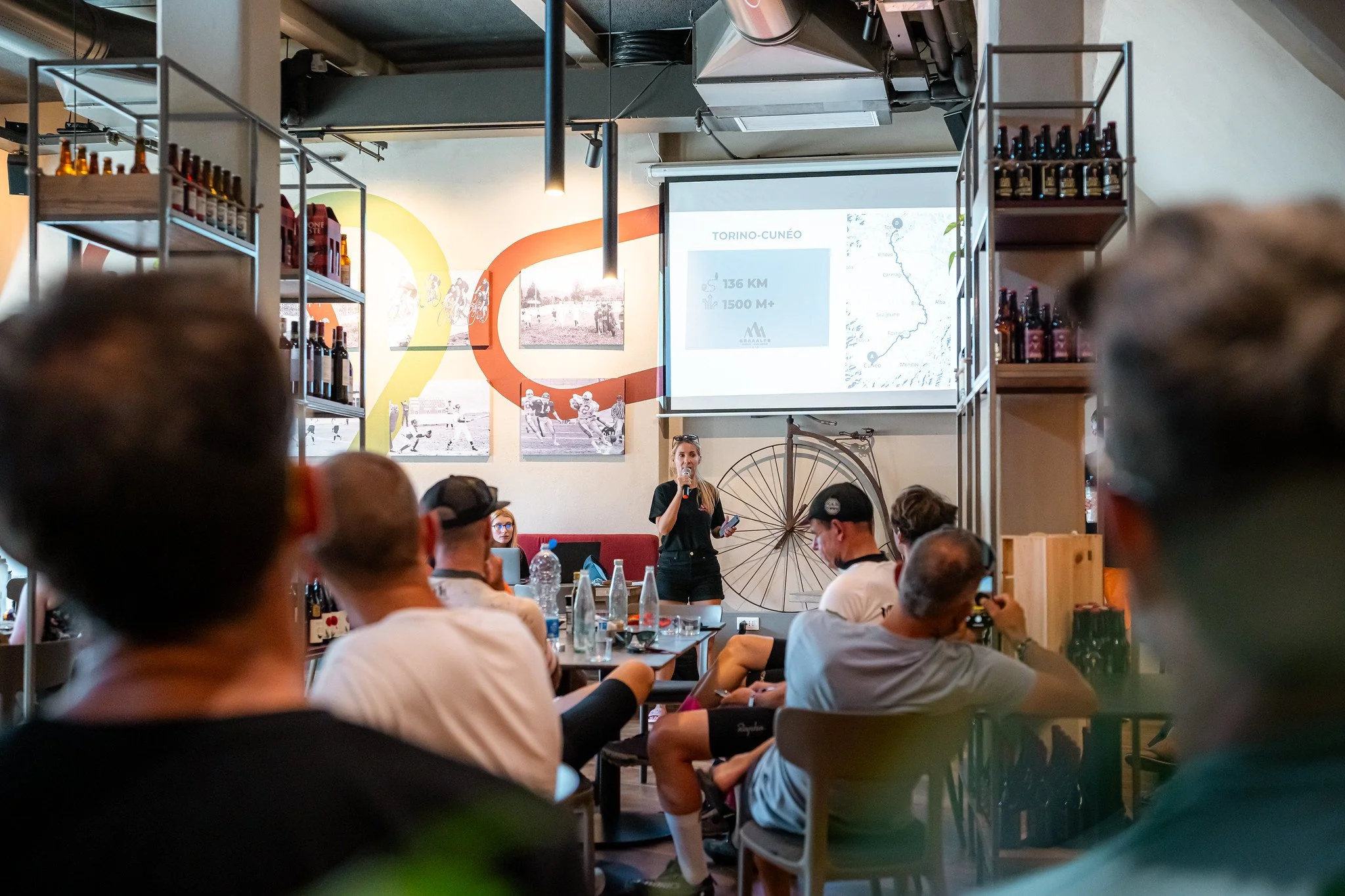
GRAAALPS 2025 briefing led by Nathalie Monnier - photo: Edouard Hanotte
4. GRAAALPS is a demanding, challenging mountain race: what do you think makes it unique?
GRAAALPS is as much a journey as it is a sporting adventure. Crossing the Alps, passing through three countries and tackling a multitude of mountain passes is in itself an extraordinary experience. But what makes it truly unique is the combination of all these elements.
There is a combination of the technical nature of certain mountain trails, the length and succession of passes, the harshness of temperature variations, which can sometimes be very marked, and the isolation of certain areas. Added to this is the raw beauty of the landscapes, which accompanies participants from start to finish, but also the semi-autonomous nature of the event, which requires everyone to manage their own effort, equipment, and time.
GRAAALPS is a link between the sea and the mountains, between physical commitment and inner adventure. It is not a race "against" the Alps, but a journey "with" them, where you have to learn to cope with the terrain, the weather, and yourself. It is this consistency, this constant dialogue between the route, the environment, and the participants, that, in my opinion, makes it so unique.
5. Why is the issue of female participation in ultra-distance races important to you personally?
Because I myself have gone through these questions. About my physical abilities, my limits... Fabien and I did our first ultra off-season during COVID, and that's when I realized that I was the one setting the limits and that preparation, planning, speed, and management were key. But I had to see it to believe I was capable of it.
What particularly strikes me is the gap between what women are capable of doing and what they allow themselves to attempt. Ultra-distance running has taught me that success is determined as much, if not more, before the race as during it. Preparation, organization, planning, mental management... all this work beforehand plays a huge part in the success of an ultra, much more so than physical condition alone (which is also a part I really enjoy!).
And in this area, women have very strong skills. That's why I'm convinced that there is still enormous untapped potential. For me, encouraging female participation means helping to break down the invisible barrier between what we are capable of doing and what we allow ourselves to consider.
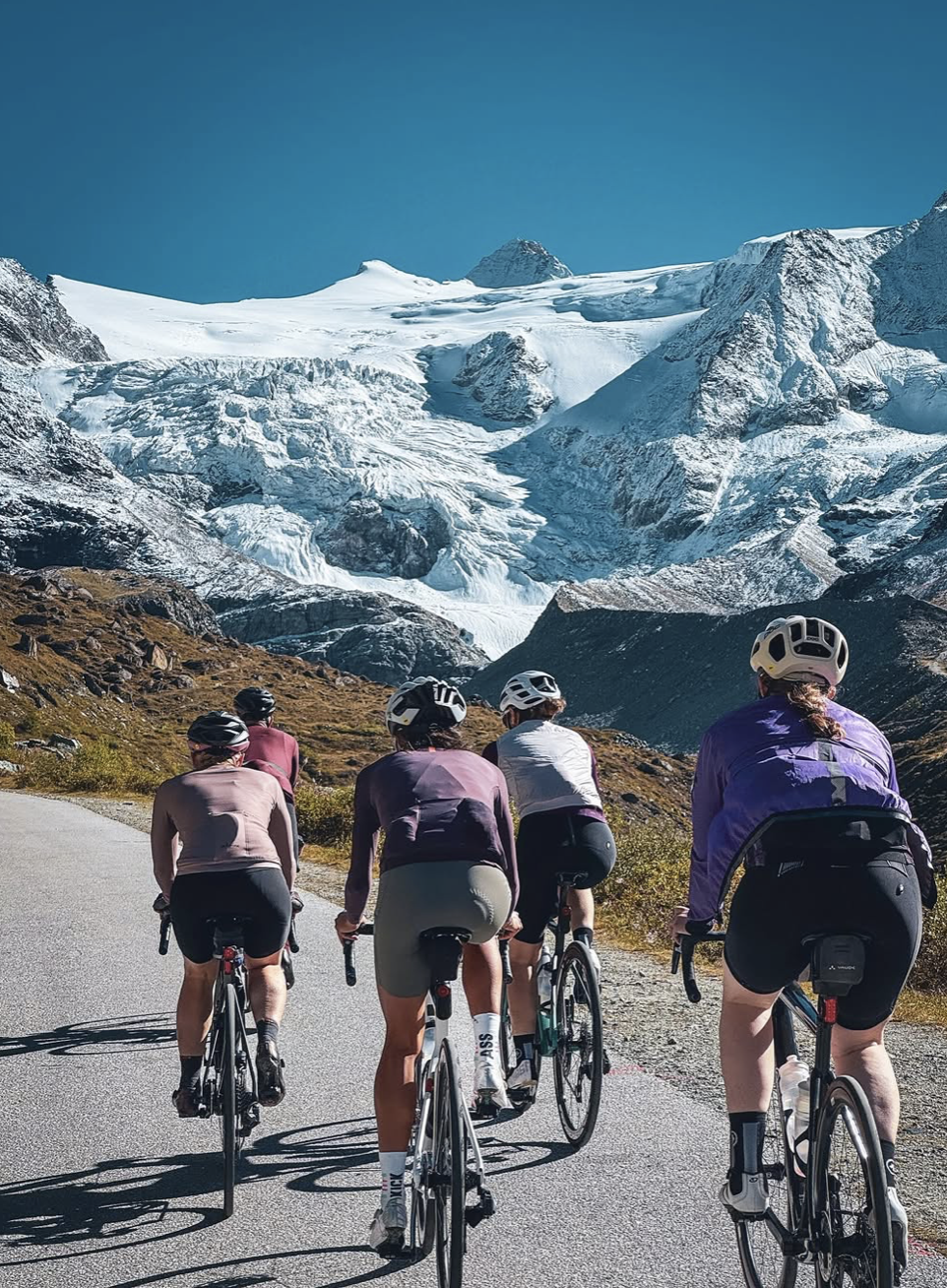
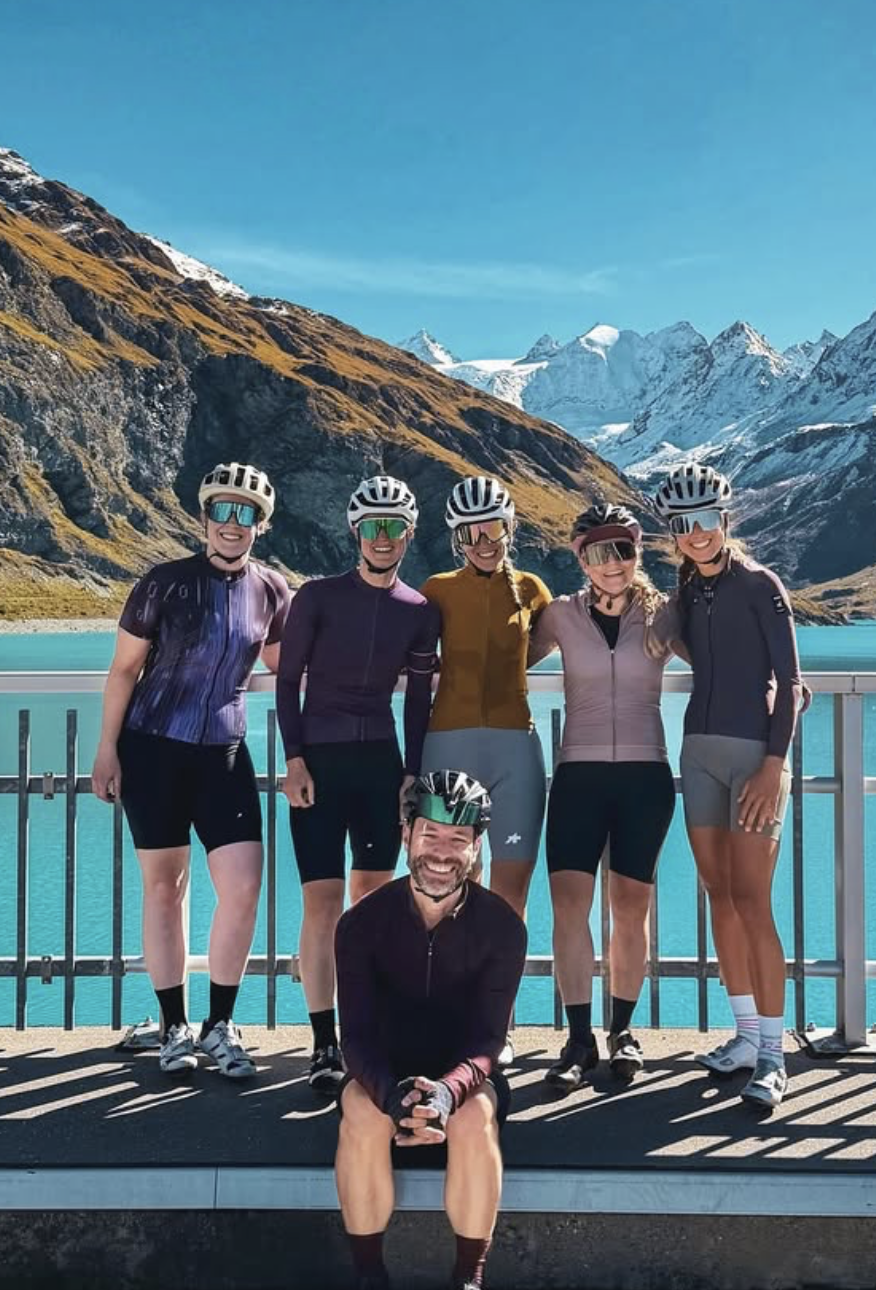
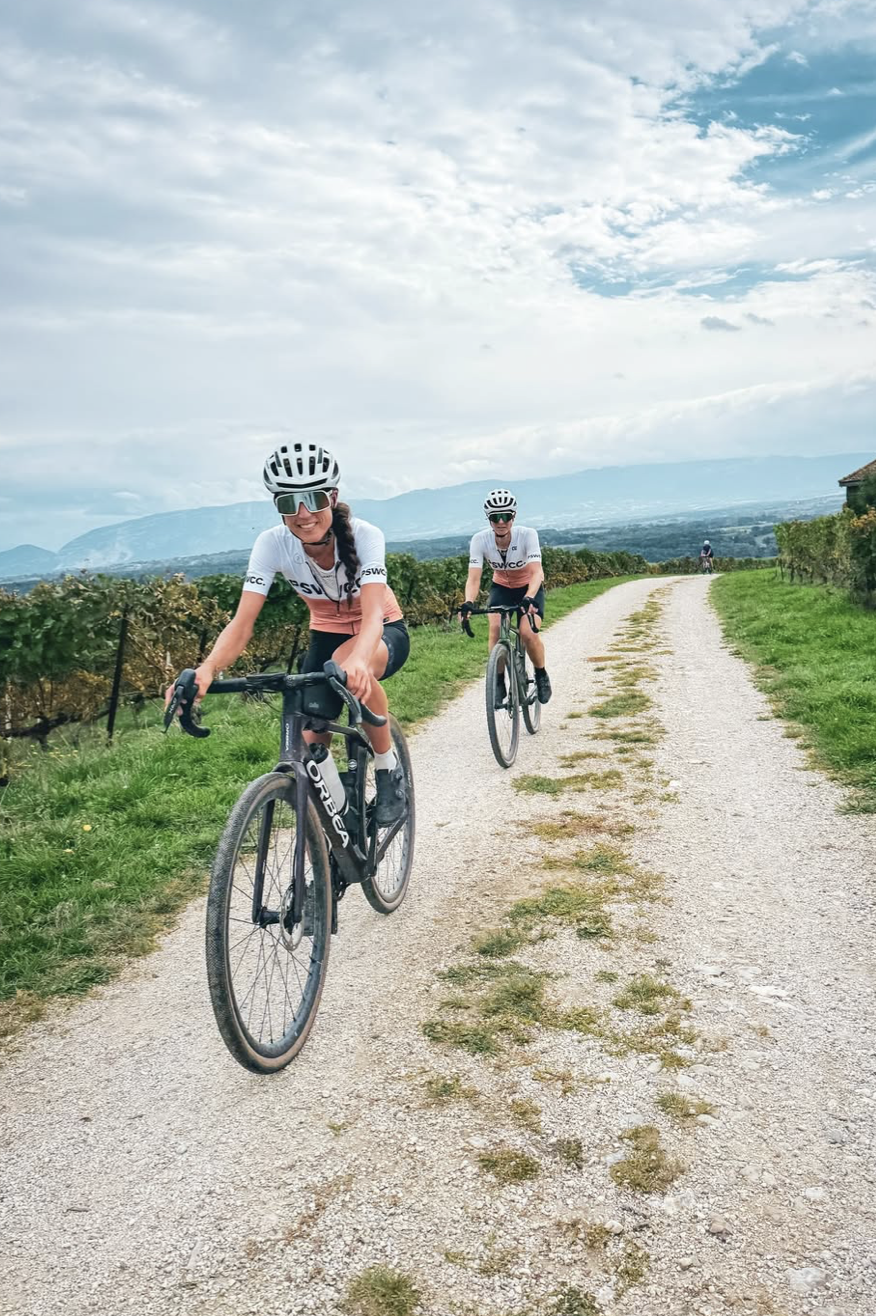
Sharing group walks on Nathalie Monnier's Instagram account - photos: @monnier.nath
6. In your opinion, what are the main obstacles that still prevent many women from considering this type of race?
In my opinion, there are many obstacles, and they often overlap. First, there is a lack of representation: there are still too few visible female stories and few role models to identify with, which makes it harder to imagine oneself in that role. But this is really starting to improve; we are seeing more and more women taking up ultra running and even performing better than men.
There is also the fear of failure, which is very present in many women: what if I don't succeed? This question can be paralyzing, especially in a world where ultra-running is often portrayed in a very heroic or extreme way.
Added to this are more concrete obstacles: mental load, organizing daily life, finding time to train, logistics, and the opinions of those around you. All of these factors may seem incompatible with an ultra project, but they can be approached differently.
Finally, there is sometimes a form of self-censorship, fueled by the idea that you have to be "100% ready" before you start. But ultra running is never perfectly mastered. It is also learned along the way, and it is often there that women discover how capable they are of adapting.
7. What concrete actions can be taken to get more women to the starting line?
The first thing is to change the way we talk about ultra running. Show a variety of routes, different experiences, and sincere stories—not just extreme performances or tales of extraordinary achievements. There's no single way to do ultra running, and it's important to make that clear.
Next, it is essential to create spaces for exchange and knowledge transfer: mentoring, discussion time, feedback, and group preparation. Being able to ask questions, share doubts, and understand what this entails in concrete terms greatly changes the way we project ourselves.
It is also essential to think about inclusivity from the moment an event is conceived, rather than as an afterthought. This involves communication, tone of voice, visuals, but also very concrete choices on the ground: the welcome, the support, the clarity of information, the way in which all forms of success are valued, not just rankings. And I think that at Race Across, we understood that.
Finally, encouraging women to take the plunge without waiting to be "100% ready" sends a powerful message. The more women there are at the starting line, the more natural it will become and the more the virtuous circle will take hold.
8. As a woman who is very involved in ultra running, what would you have liked to have been told or put in place when you started?
I wish someone had told me that there isn't just one right way to do ultra running. That you can get into it in many different ways, at your own pace, with your own strengths and ambitions.
I would also have liked to see more women in the spotlight in ultra-marathons to make it easier for me to take the plunge. There was a lot of talk about men and, above all, their achievements. That wasn't what I was looking for in ultra-marathons.
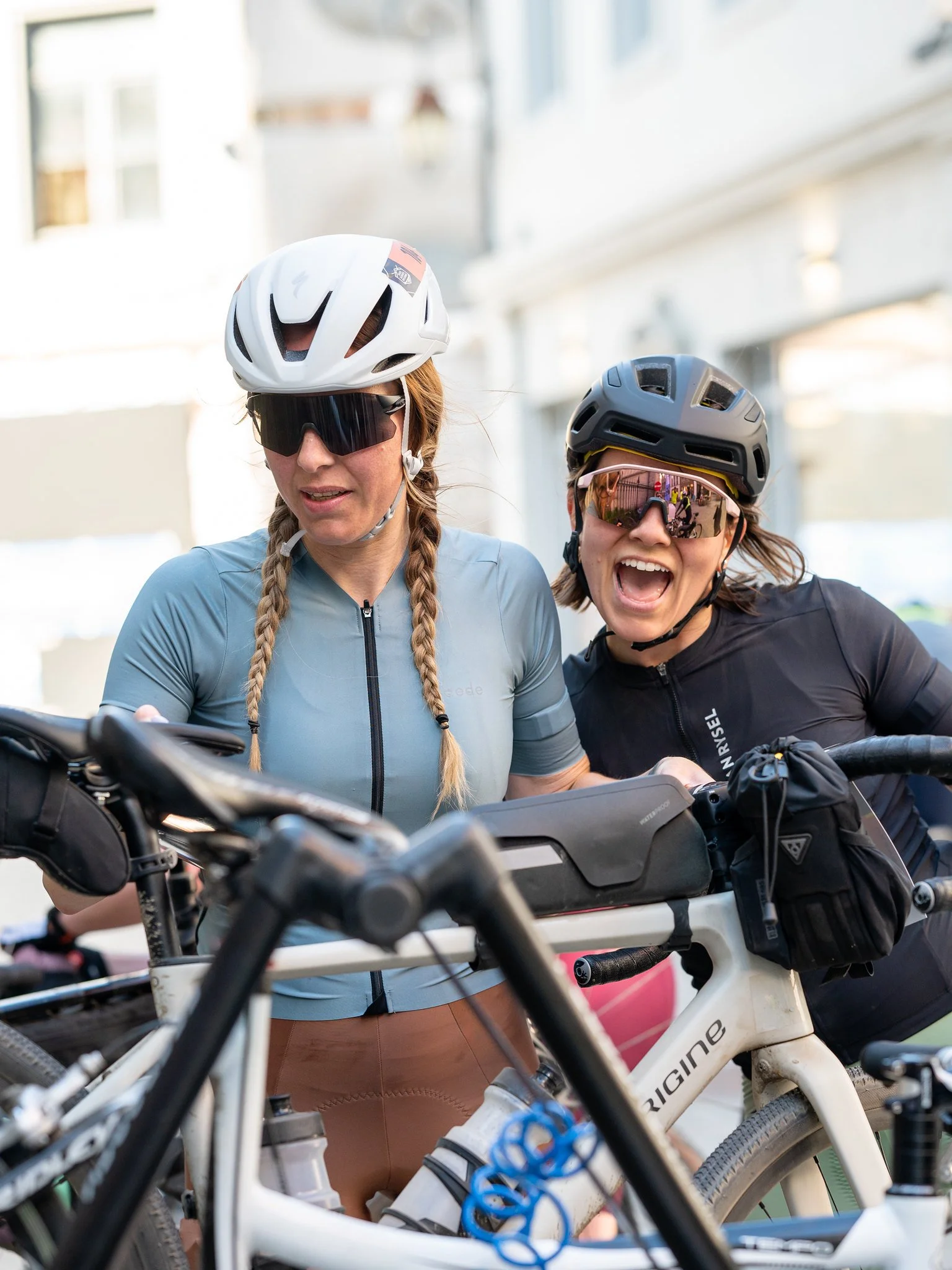
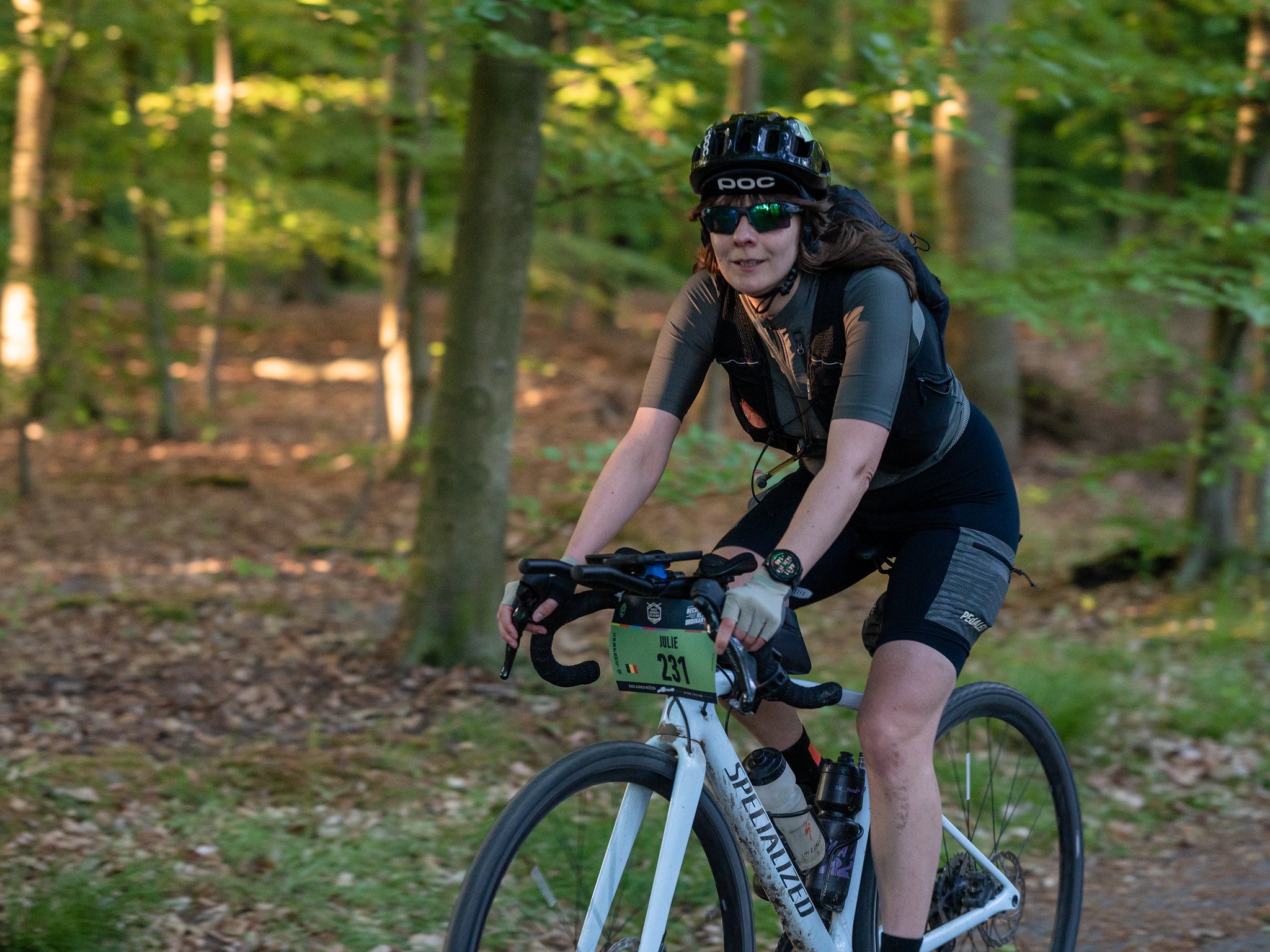
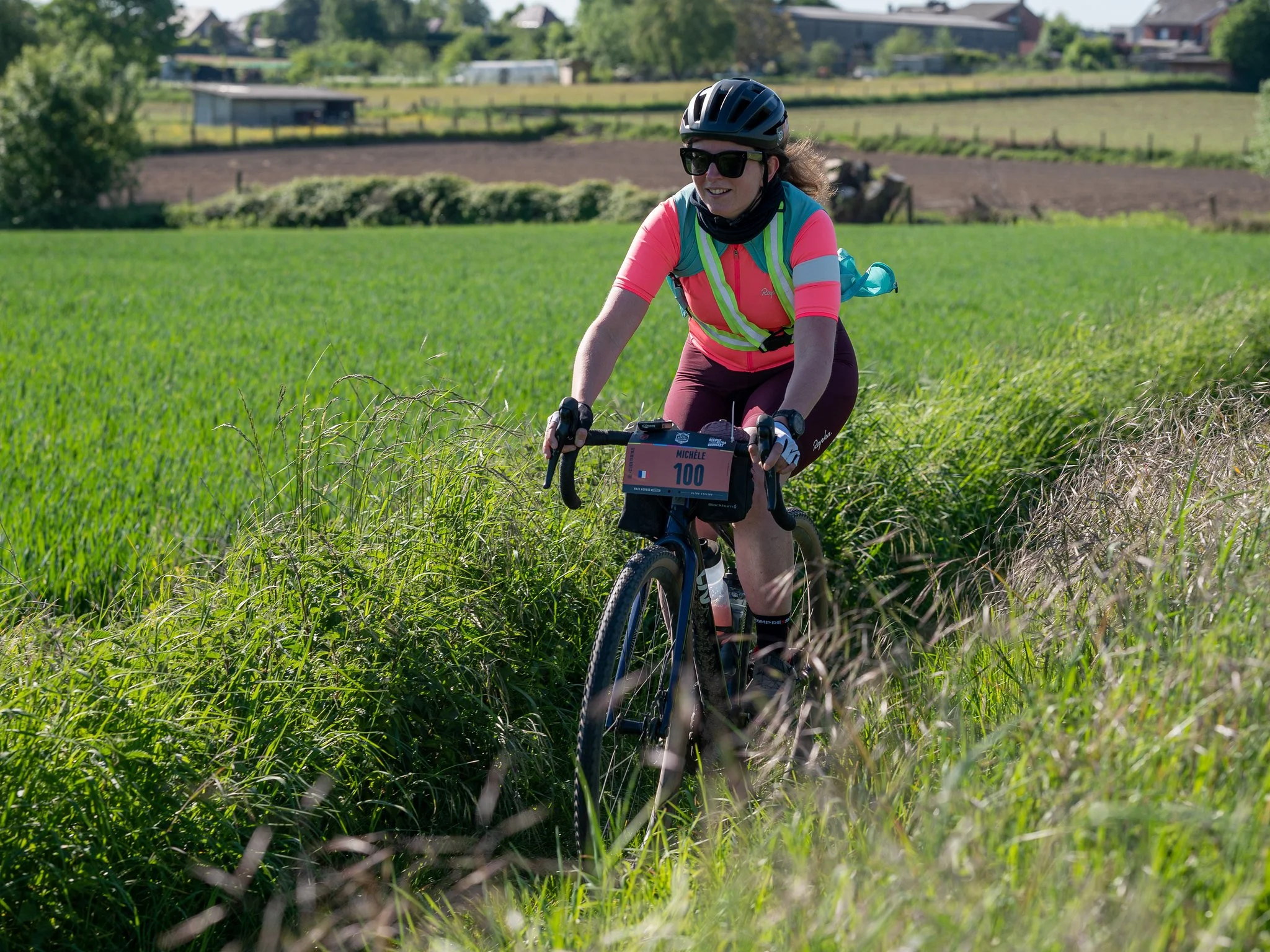
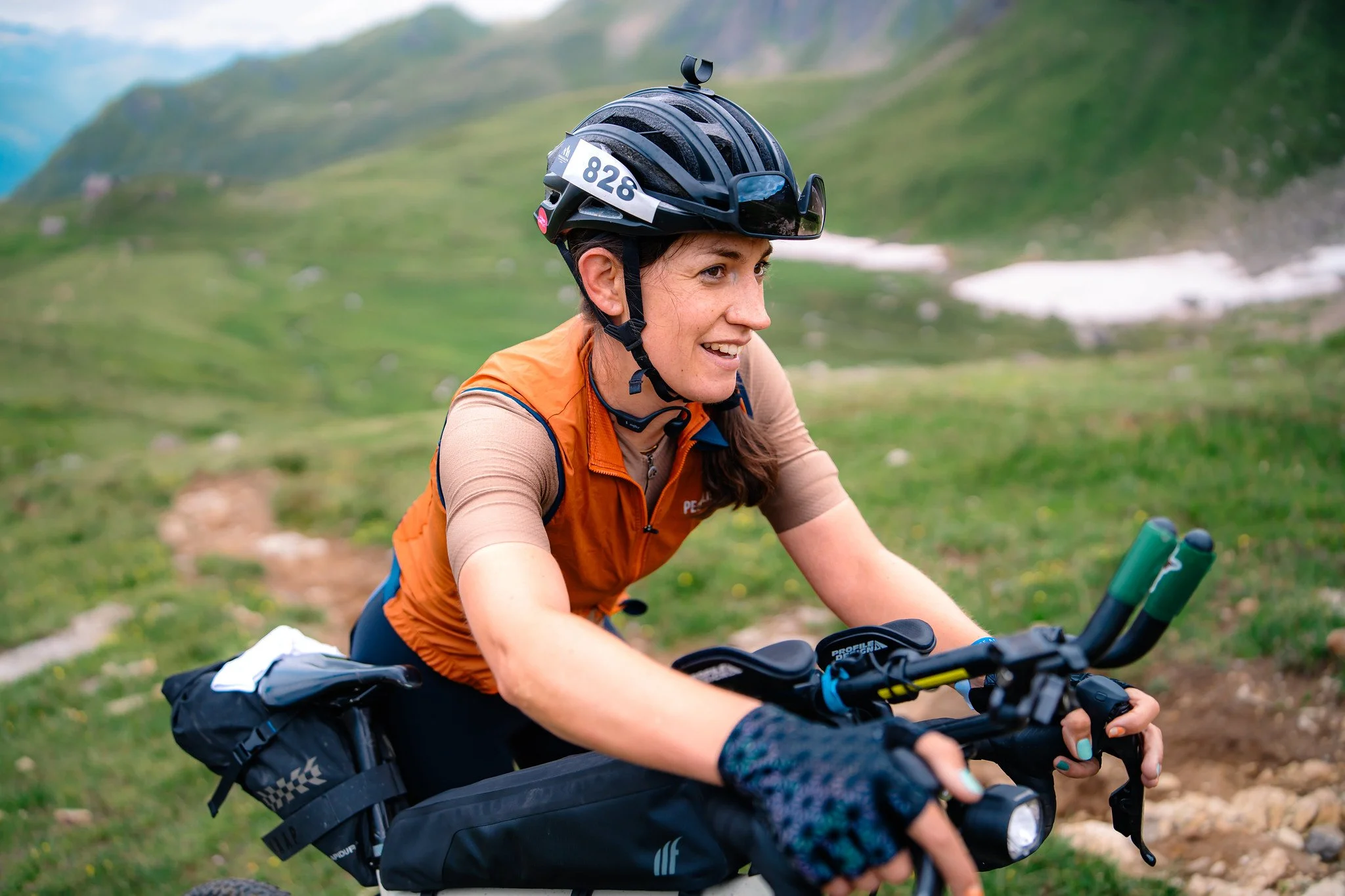
Spotlight on some of the participants in our Gravel 2025 series - photos: Edouard Hanotte & Jennifer Nguyen
9. What message would you like to send to women who are still hesitating to sign up for a race like GRAAALPS?
You don't have to be 100% ready to get started. If the idea crosses your mind, it means there's already something worth exploring.
GRAAALPS is not just a sporting event, it is above all a human adventure. A crossing, a journey, an immersion. There are those suspended, almost magical moments, like crossing a border on gravel, in the middle of nowhere, without really knowing where one country begins or ends. It is often these moments that linger longest in the memory.
Come and try adventure, travel, experience. Not to tick a box or prove something, but to live something powerful and real. It's an adventure that you write as you go along.
10. In your opinion, what could an even more inclusive edition of GRAAALPS look like in the coming years?
It would be an edition where the diversity of profiles at the starting line becomes something natural. Different life paths, varied experiences, multiple ways of approaching the adventure without it being over-interpreted or categorized.
And perhaps one day there will be an edition where women are no longer perceived as "a separate category," but simply as full participants, present, visible, and legitimate. Where their presence is no longer surprising, but naturally enriches the event.
Above all, this is an event where everyone, regardless of their background, level, or approach to cycling, feels empowered to experience this journey in their own way. GRAAALPS remains true to what it already is at its core: a demanding sporting adventure, yes, but above all a human one.
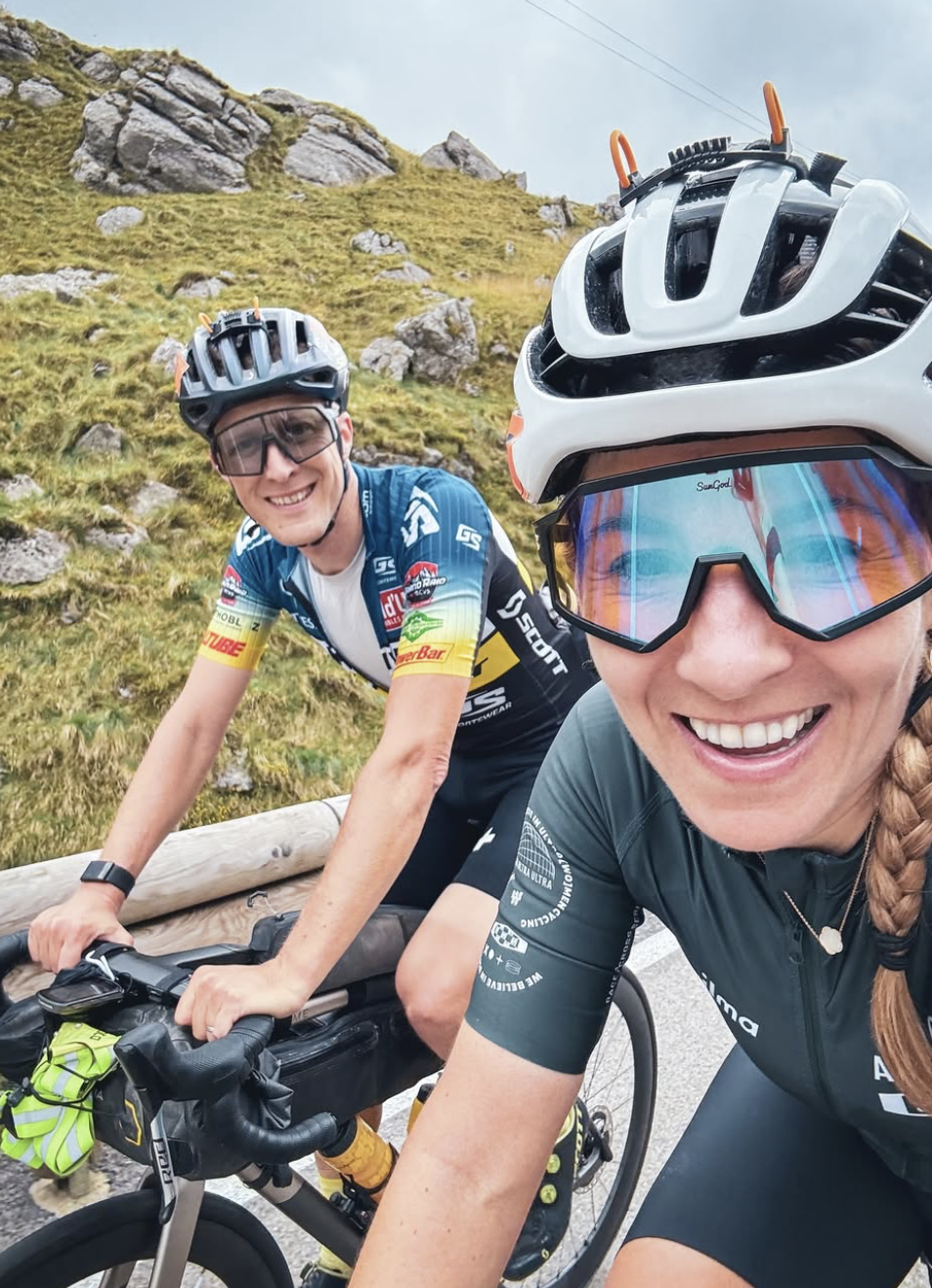
Natalie and Fabien Monnier, competing as a duo in the Race Across Spain 2025 - photo: @monnier.nath
Want to relive 2025? Click here: https://www.youtube.com/watch?v=d4uCDCwaOOw
Find out more about the route and GRAAALPS 2026: https://www.raceacrossseries.com/en/graaalps-2026
