
Base camps on the Race Across: understanding the heart of semi-autonomy in ultra-distance cycling
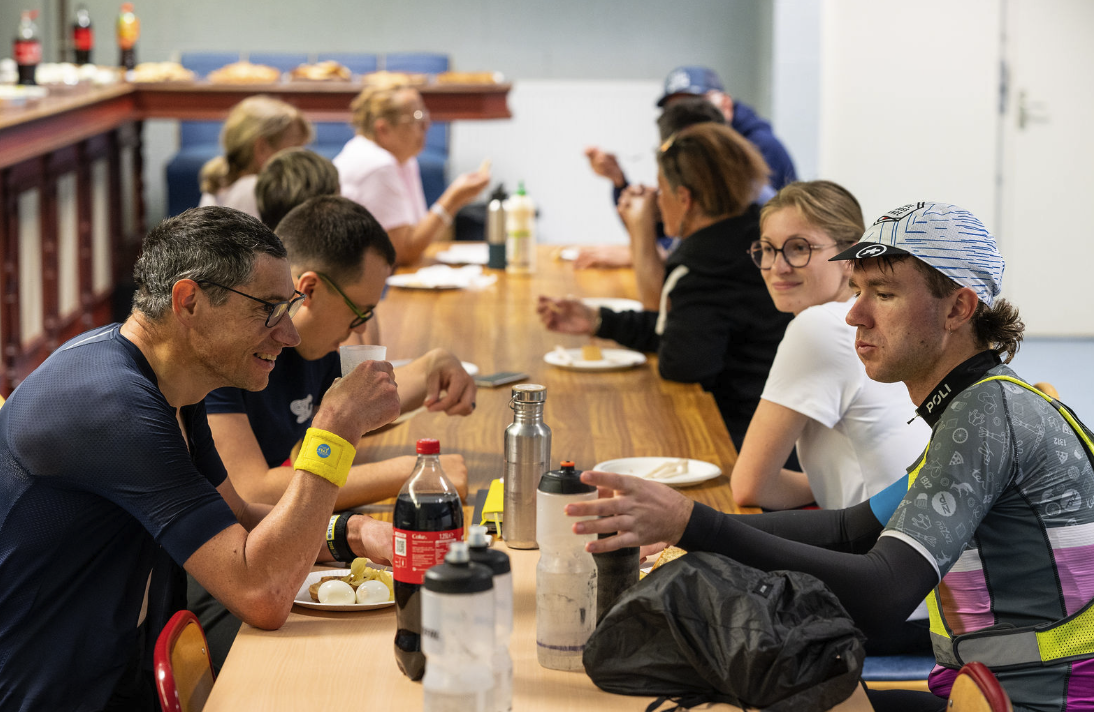
A moment in life at the Basecamp - RAF 2024 - photo @jenniferNguyen
In ultra-cycling, performance isn't just about what happens on the bike. It's also—and above all—about what happens during breaks. In Race Across Series events, these key moments take place in very specific locations: base camps.
Often idealized or sometimes misunderstood, base camps are nevertheless a fundamental pillar of the semi-autonomous format offered in our events. They embody the balance between adventure, safety, and personal commitment. Depending on the format of the event, their role and location differ. But their objective always remains the same:
👉 to allow you to recover and set off again in the best possible conditions, in accordance with the principle of semi-autonomy.
But in practical terms, what purpose do the base camps serve in the Race Across? What can you do there? And above all, what should you not expect? Is there a difference between the base camps for compact events and those for itinerant events?
Two formats, two basic approaches of the basecamp
1. The base camps on compact events
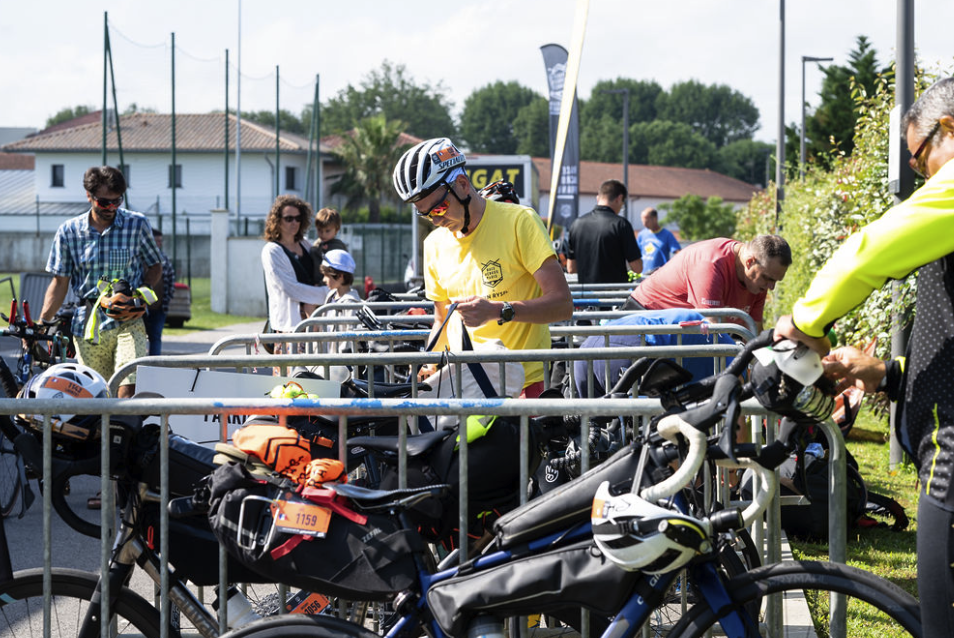
On compact events (Race Across Paris, Race Across Portugal , for example), the route is organized in loops around a single central point. Here, there is only one Basecamp, the true heart of the adventure.
This Basecamp brings together all the services and key moments of the event:
participant reception point
departure area
arrival area
refueling
showers and restrooms
rest areas
authorized assistance
Everything takes place in the same location, from the initial briefing to the finish line. Participants pass through several times during the loops, making it a lively and vibrant base camp.
This format is ideal for:
maintain strong collective momentum
facilitate logistics
provide a clear reading of effort and progress
2. Base camps on point to points events
For traveling events—such as Race Across France or Race Across Quebec —the logic is completely different.
The living quarters are here:
scattered throughout the course
placed at strategic points
thoughts as breathing spaces in the midst of a long effort
They are not mandatory, but often become... lifesavers.
Each participant remains free to:
whether or not to stop there
manage one's rest time
adapt your strategy according to your physical and mental state
In this format, the Basecamp a permanent gathering point, but a reassuring landmark, sometimes eagerly awaited for tens (or hundreds) of kilometers.
At traveling events, base camps also play an essential role in managing your personal logistics, particularly thanks to the drop bag system.
On long distances— 2,500 km and 1,000 km —several drop bag points are provided along the route. They allow you to:
drop off a change of clothes in advance
bring appropriate gear (for nighttime, rain, cold, heat)
replace certain equipment
anticipate changes in your effort and the conditions encountered
These bags are only available at certain base camps, carefully positioned at key points in the race. They offer a real opportunity to reorganize your equipment without compromising the principle of semi-autonomy.
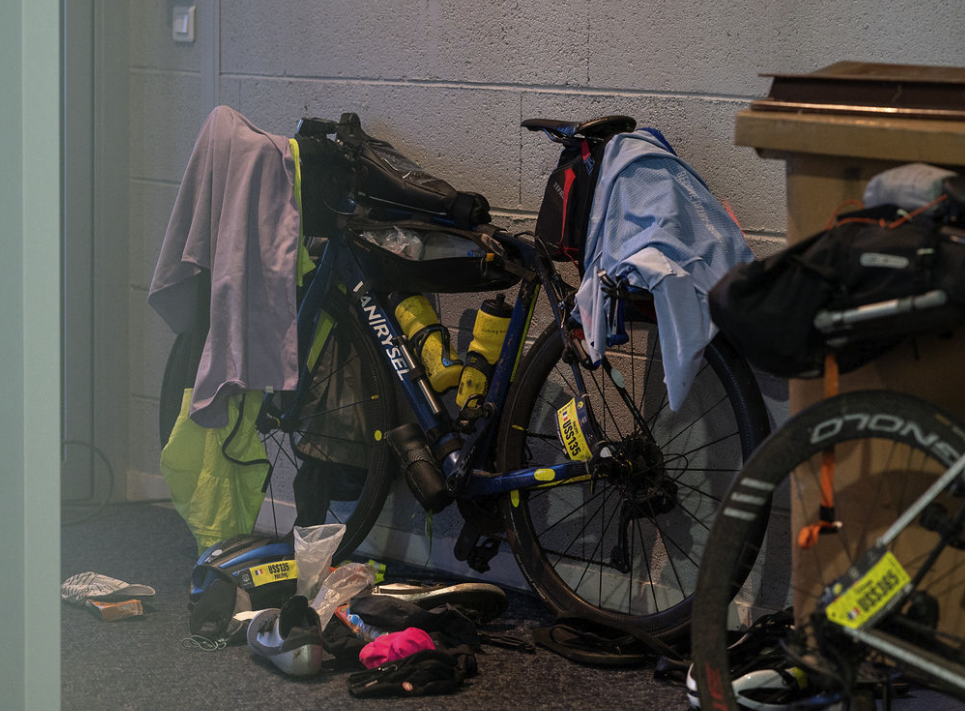
Bicycle participating in a Basecamp RAF Basecamp - photo: @jenniferNguyen
A common principle: semi-autonomy
Regardless of the format, one rule applies to all Race Across races: Personal assistance is only allowed at the base camps.
A concrete example in the field
During the 2024 Race Across France, a participant encountered a significant mechanical problem with his bike as he approached a Basecamp.
Rather than wasting valuable time or leaving tired, he called on acquaintances present at Basecamp to help him make the repair. While the bike was being taken care of, the participant was able to rest, eat, and recover.
Once the repair was complete, he left with a functional bike and a clearer mind.
👉 This example perfectly illustrates the spirit of the bases of life on itinerant formats:
assistance is permitted, but supervised
Basecamp a tool for optimization, not a shortcut.
Everyone remains in control of their own strategy and choices.
Used intelligently, support bases can increase clarity and safety without ever detracting from the personal commitment inherent in ultra-distance running.
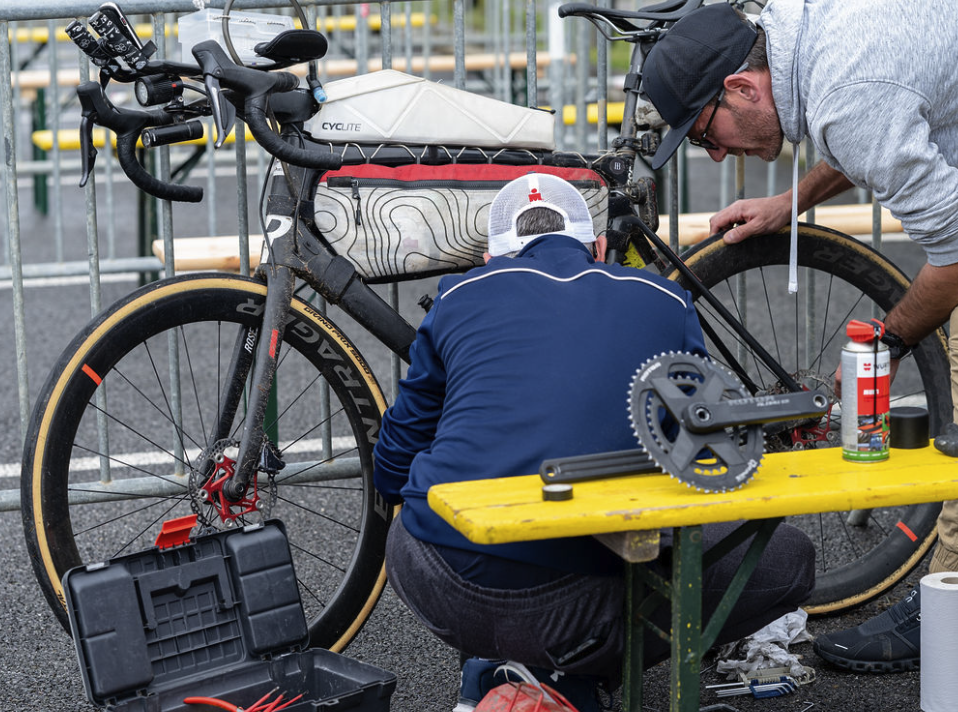
Repair workshop at the Basecamp on RAF 2024 - photo: @jennifernguyen
Outside these areas:
no personalized outside assistance is permitted
Each participant works completely independently.
The living quarters therefore become the only places where you can find a loved one, support, or a teammate, in an environment that is fair for everyone.
This philosophy is at the heart of Race Across's DNA and helps to preserve:
the spirit of adventure
personal commitment
equality among participants
What you will find on a Basecamp
The living quarters are neither hotels nor extended comfort zones. They are places to catch your breath, chat, reorganize... and then set off again.
On site, everything you need to cope with moments of fatigue is available:
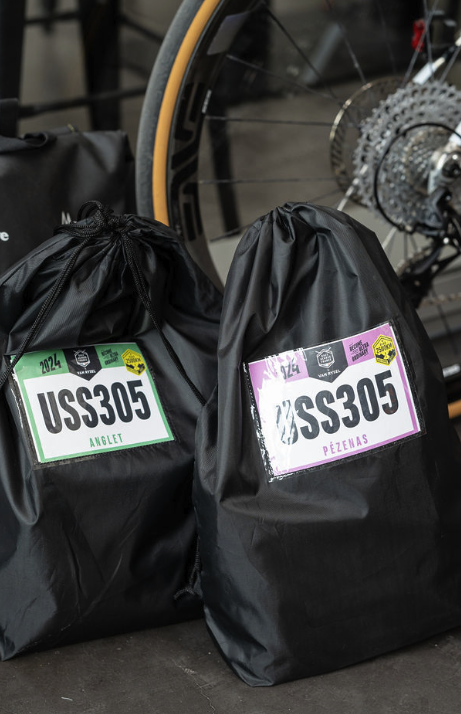
Ballast bags on the RAF -
Food supplies 🍌🥪
Bicycle repair station 🔧🚴 (only at certain events)
Rest area (camp beds) ⛺️🛌
⚠️ Limited number availableMedical station 🏥 (only certain events)
Toilets & showers 🚿🚽
Information & guidance stand ℹ️🗺️
Electronic charging area 🔌📱
Bike park 🚴♂️🅿️
Everything is designed for effective recovery, without ever tipping over into excessive comfort.
Basecamp a hotel: a key point to incorporate into your strategy
This is an essential point to understand before setting off: a Basecamp a hotel.
At certain events—particularly in Paris—nearly 700 participants take part in the same event. It is therefore impossible to imagine individual comfort equivalent to that of traditional accommodation.
The living quarters are not designed to accommodate everyone at the same time, nor to allow everyone to sleep for long periods in optimal conditions.
Rest areas do exist, but they are limited and designed for short, focused, and effective breaks.
Building your entire strategy around Basecamp a classic mistake.
In ultra-distance running, it is essential to:
plan your rest periods
plan alternatives (power naps, managing sleep beforehand, personal strategy)
remain flexible depending on the crowd and your own physical condition
Basecamp be seen as:
a tool
an opportunity
a safety net
… but never as a guarantee of comfort or availability.
On Race Across, the experience is based on semi-autonomy: this means accepting uncertainty, adapting your strategy in real time, and making choices—sometimes uncomfortable ones—that are an integral part of the challenge.
Anticipating these realities means not only performing better, but above all enjoying your adventure more.
The living quarters, reflecting the spirit of Race Across
Whether centralized or scattered along the route, the base camps embody the very essence of Race Across:
a demanding adventure
an organization designed for safety
a clear framework, but never sterile
a profoundly human experience
These are often places of weary glances, silence, exchanged advice, discreet encouragement... before setting off again, alone on the road.
Advice from Arnaud, founder of Race Across
"A Basecamp isn't a place where you settle down. It's a place where you refocus. Take what you need, listen to yourself, then move on. The race always continues a little further than the Basecamp Basecampand that's where the adventure really begins."
— Arnaud Manzanini
In the Race Across, we're not looking for perfect comfort. We're looking for the right balance between clarity, commitment, and the pleasure of reaching the finish line.
Anticipate, adapt, and trust in your ability to move forward— Basecamp there to help you... not to make decisions for you.
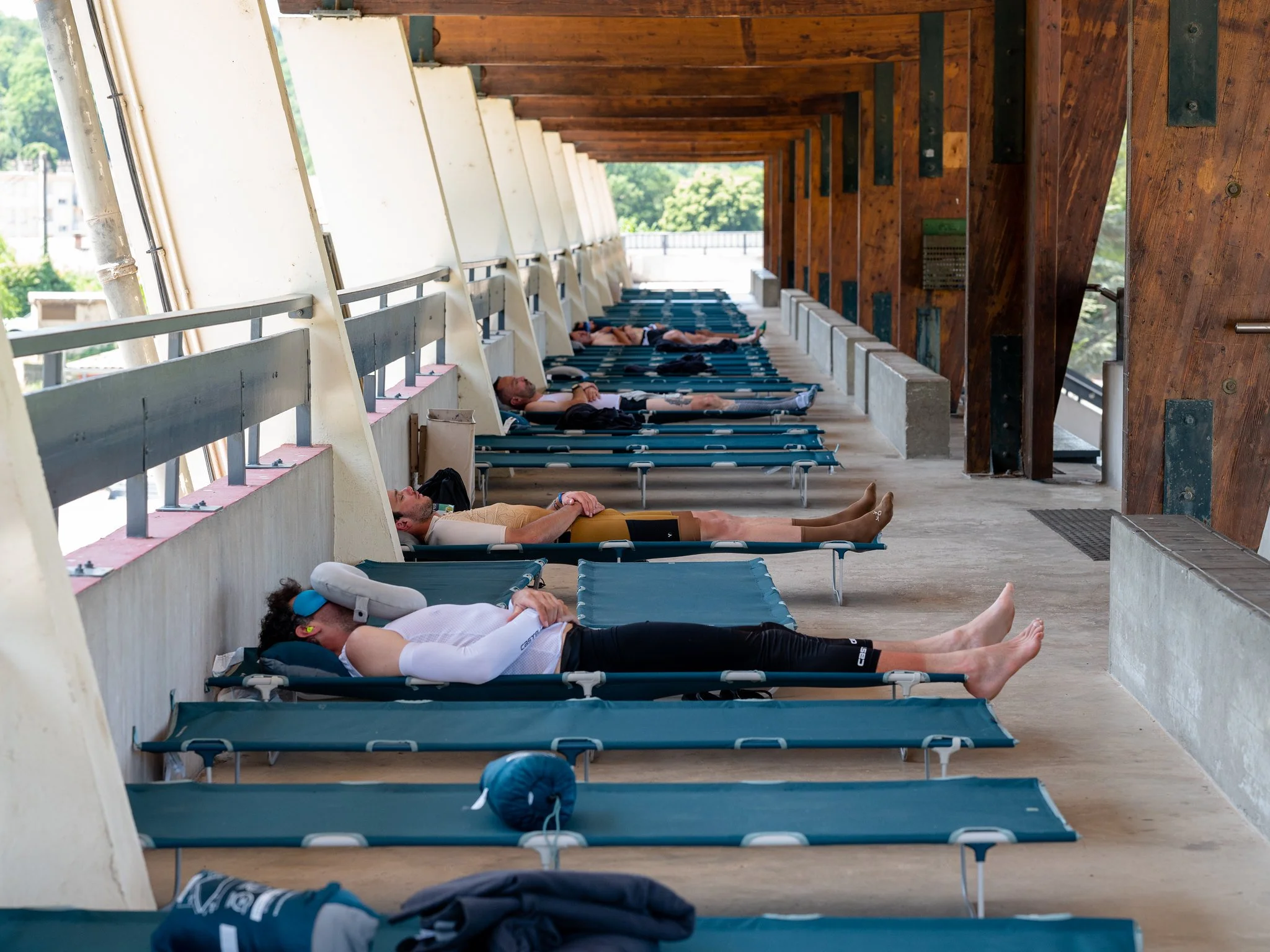
Participant resting at one of the RAF 2025 bases - photo: @jennifernguyen
