
Pauline Gaidet: from trail running to ultra-cycling, a rebirth over 2,500 km
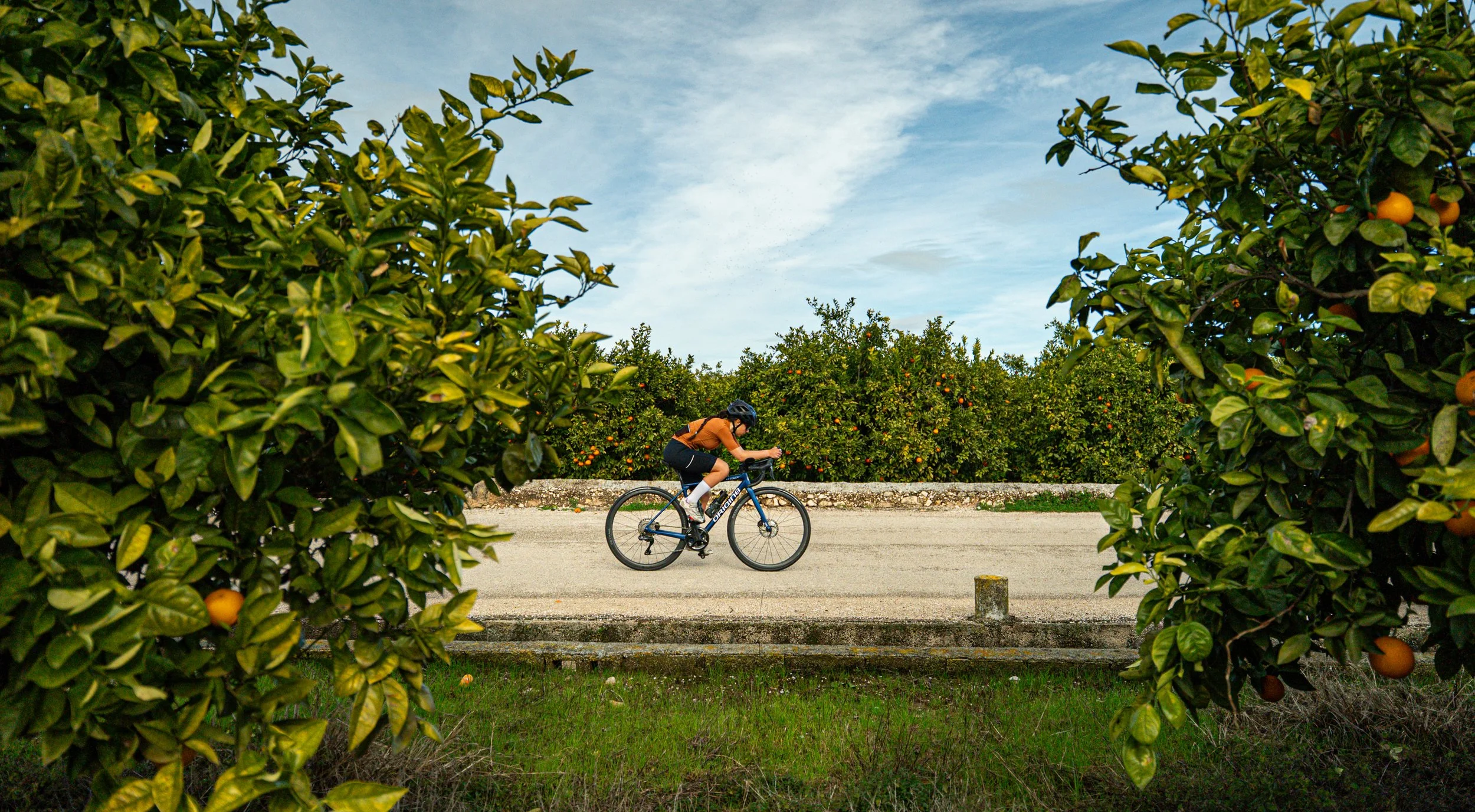
Pauline Gaidet on her Origine bike during training for the Race Across France 2,500 km
A former trail runner, Pauline Gaidet never imagined she would one day find herself at the starting line of a 2,500 km ultra cycling race. However, an injury, a sudden halt to her career, and then a gradual recovery reshaped her sporting journey.
In this interview, Pauline looks back on her journey: from trail running to cycling, from frustration to resilience, and what her challenge in the 2,500 km Race Across France means to her today. This first article, echoing the web series, sets the scene and explains her motivations.
Can you introduce yourself in a few words and tell us about your sporting career to date?
My name is Pauline Gaidet, I am 33 years old and I come from La Rosière, in Savoie. I grew up in the mountains, where sport was part of my daily life: I started skiing at a very early age, then competed in horse riding between the ages of 6 and 16. In high school, I turned to endurance sports, particularly multi-day ski touring.
During my studies, I discovered running, then trail running, which quickly became central to my life. I practiced it for a dozen years, alongside my job as a product manager specializing in outdoor sports.
In 2022, a serious accident interrupted this trajectory. After a long rehabilitation, cycling entered my life, first to maintain my heart condition, then as a real sporting project. Today, I am preparing for the Race Across France 2500 km, with ultra-cycling as my new field of expression.
What role has trail running played in your life, both athletically and personally?
Trail running has played a central role in my life, both as a sport, a personal motivator, and a pillar of my professional identity. My job as a product manager was linked to this activity: I developed equipment that I tested in the field, creating a strong link between work and sport.
In terms of sport, trail running was a revelation: after ten years of competing in show jumping without any major victories, I won my first trail race, which marked a turning point in my career.
I then met my main coach and my training became more structured, with varied formats ranging from vertical kilometers to 100 km and 100 mile ultra-trails, with the aim of competing in the UTMB circuit. Looking back, trail running sometimes took up too much of my time, but it was a great way to develop personally and athletically.
When did the injury occur, and how did it change you physically and mentally?
The injury occurred at the end of the 2022 season, in a context of significant fatigue: intense training, a demanding professional schedule, and insufficient recovery time. The accident took place during the last training session in the mountains, despite certain warning signs.
Physically, the consequences were severe, especially for my ankle. Mentally, this accident was a real wake-up call: it forced me to rethink my approach to training, listening to my body, recovery, and nutrition. Today, I work with more attention and respect for how I feel.
How did you experience this period of forced downtime or soul-searching?
This period was very significant. The accident, which occurred in an environment I knew well, was a real shock, with the very clear feeling that I had had a brush with death. The following months were devoted to rehabilitation, intense physical and psychological work, and putting my priorities into perspective.
Paradoxically, this break was also beneficial: I was able to recover, slow down, reconnect with my family and friends, and for the first time in a long time, take the time to live differently than through sports, without giving up on the idea of becoming an athlete again.
How did cycling come into your life at that point? Was it an obvious choice or an alternative at first?
Cycling gradually became part of my life. I was already working in the cycling industry, but I started cycling regularly myself during my stays at rehabilitation centers. Cycling was part of the cardiovascular program and allowed me to train without pain.
At first, it was an alternative way to stay in shape while waiting to be able to run again. I spent a lot of time on a home trainer, working on my endurance as if I were training for an ultra-trail. Then, faced with the uncertainty of when I would be able to start running again, I decided to try my first ultra on a bike. This choice, which was initially pragmatic, quickly took on a whole new dimension.
What immediately appealed to you about long-distance cycling?
What immediately struck me was the absence of pain. Being able to spend long hours on the bike, without discomfort or limping, was a real revelation, with a feeling of fluidity and continuity in the effort.
Cycling also allowed me to regain a sense of normalcy: training in a group and riding without the injury being too noticeable. After several difficult years, it was a real breath of fresh air.
I also really enjoyed the specific training for ultra-distance cycling: the volume, the long rides, managing my effort, and even riding at night, immersing myself completely in the project and the long hours, are aspects that suit me perfectly.
When did you realize that ultra-cycling could become more than just a transitional phase?
The realization came gradually, but it became clear during my last rehabilitation session. I understood that cycling would not simply be a temporary solution, but could be a new outlet for self-expression.
In practical terms, I felt better on the bike than I did doing my old sports. Certain activities, such as ski mountaineering, had become too painful, whereas cycling allowed me to train to my full potential. Today, I don't know if I'll ever run 100 miles again, but cycling has found a permanent place in my life.
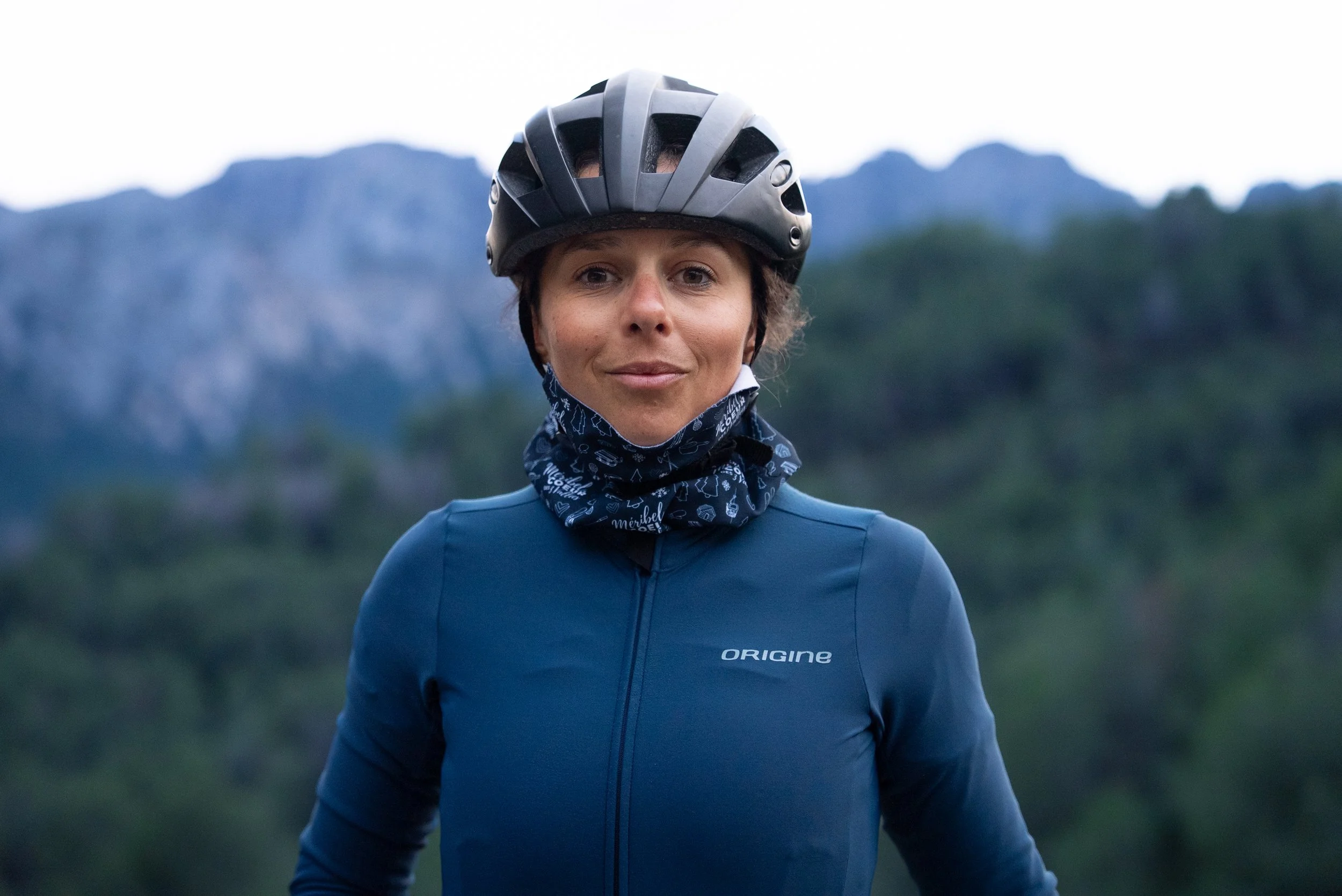
Portrait of Pauline Gaidet.
What specifically attracts you to ultra-distance running, compared to other shorter formats?
Ultra-distance running suits me above all because of the preparation involved. I like projects that are built up over time, with structured progression, a lot of aerobic work, and careful management of effort.
I also like the fact that there are few goals throughout the year. Each race becomes a real journey, prepared for months in advance. Ultra running requires adaptability, clear thinking, and the ability to deal with the unexpected, qualities that I identify with greatly.
Nighttime is also an integral part of what attracts me: those moments of solitude and extreme concentration are spaces where I feel aligned.
Why did you choose the Race Across France 2500 km as your main goal?
Race Across France is an event that made an impression on me from the first time I heard about it. It seemed almost unreal to me because of its scale.
If I am committing to this race today, it is not because I enjoy challenges at any cost, but because it fits naturally into my journey. Crossing France by bike, over such a long distance, has a very strong resonance for me. The fact that the finish line is located after crossing part of the Alps further reinforces this connection.
The RAF 2500 km represents a defining milestone. It is not an end in itself, but a key step towards even longer formats. I know that it is a challenge within my reach, both physically and mentally, and I want to explore how far this path can take me.
What does this challenge mean to you today, beyond athletic performance?
Race Across France is now my main goal for the year. It's a project that matches my current ambitions and allows me to express myself fully, both physically and mentally.
Everything revolves around this preparation: my training, where I live, my work schedule. I moved to Spain for the winter, joined a community of cyclists, put ski mountaineering on hold, and rethought my daily routine. Beyond performance, it's a whole lifestyle that has taken shape, one that is more consistent and closer to the terrain.
How does this project represent an important milestone in your personal and athletic journey?
This project symbolizes a real return to being an athlete. For the first time in three years, I am no longer seeing a physical therapist every week for my ankle. This is a very significant detail for me: it marks the transition from rehabilitation to a focus on building and performance.
I can once again train consistently, make progress, and plan for the future. This project marks a clear turning point in my career.
If you had to sum up in one sentence what this adventure means to you, what would it be?
It's a return to an ultra-ambitious project, built over time, with the desire to prepare myself as best I can to take part in a race that matches my ambitions.
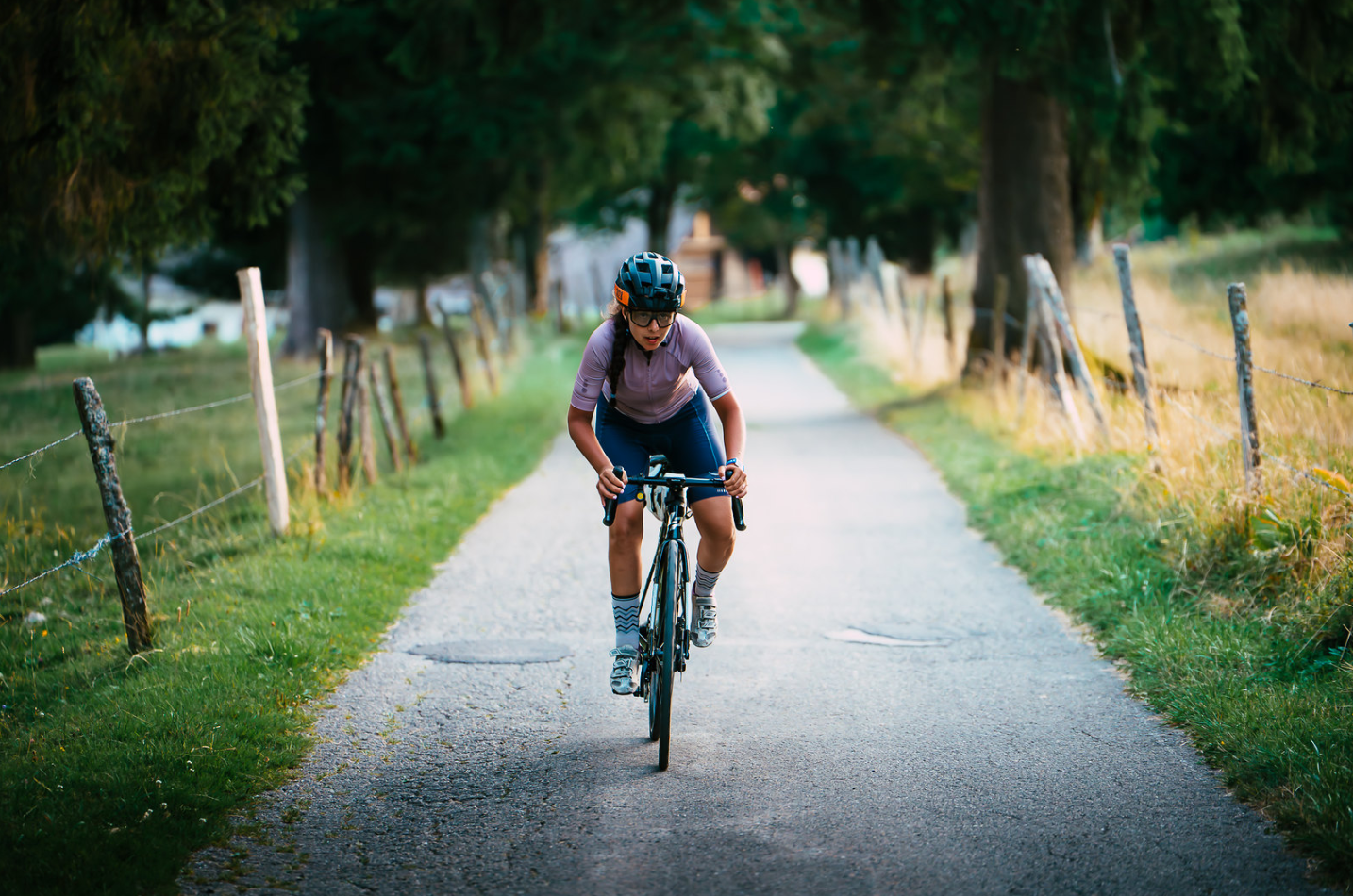
Pauline Gaidet during her participation in the 1000 km Race Across Switzerland 2025.
