
The Ultimate Checklist for the Race Across Series (500, 1000, & 2500 km)
The 500-, 1,000-, and 2,500-kilometer races in the Race Across Series embody the very essence of ultra-distance adventure: riding day and night, traversing spectacular landscapes, and braving freezing temperatures at sunrise followed by intense heat just a few hours later.
On a self-supported ride, every detail counts. Your bike becomes your home, and everything you carry needs to help you keep moving forward, even when fatigue starts to set in. Finding the right balance between lightness, comfort, and efficiency can make a huge difference as the miles go by.
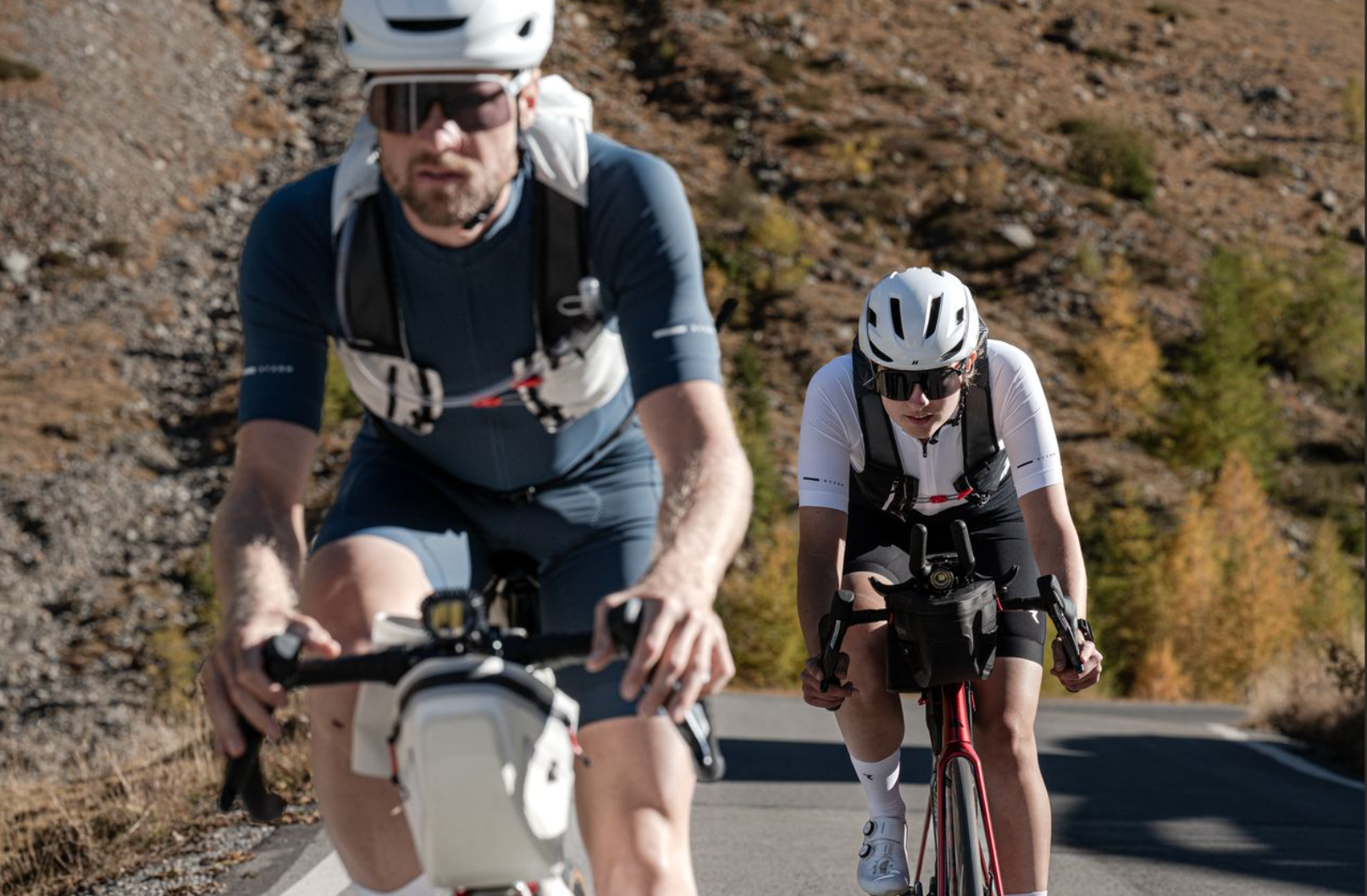
Set up Cyclite
Strategy: How to Distribute Your Gear Effectively
On a long-distance ride, how you pack your bike is almost as important as the equipment itself. A well-organized bike is more stable, easier to handle, and much less tiring to manage after hours in the saddle.
The golden rule: place the heaviest items as close to the frame as possible to keep the center of gravity low and ensure the bike remains responsive, even when loaded.
Base Camp (saddle bag)
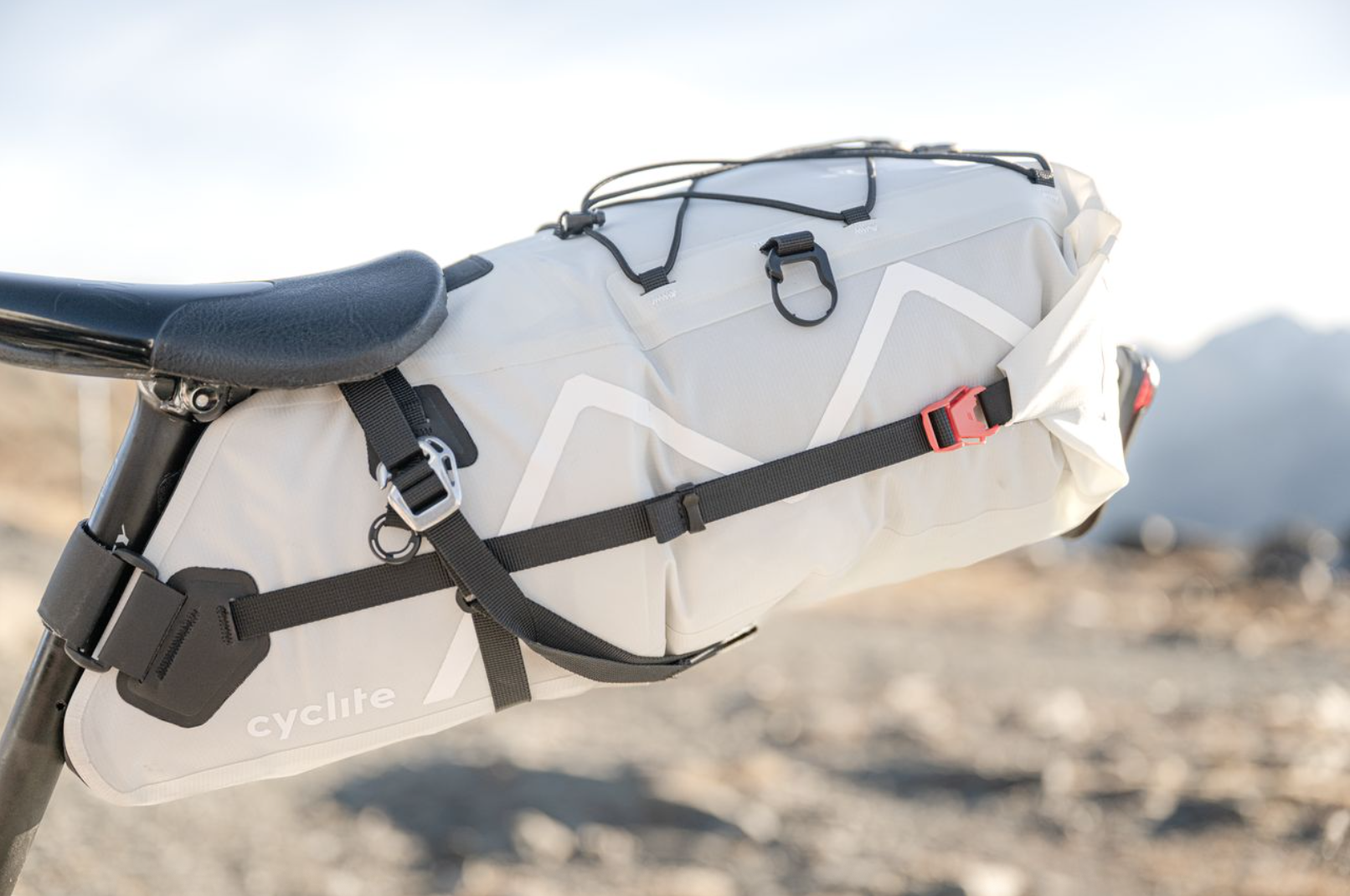
Cyclite Saddle Bag
Your saddle bag should contain items you won’t normally need until after dark. Proper organization is essential to prevent the infamous “tail wag” effect.
Takeout:
Sleeping gear: a compact sleeping bag, a lightweight sleeping pad, a change of clothes for the night, and, if necessary, a lightweight tent or bivy sack.
Thermal insulation: a warm, packable down jacket for overnight breaks.
Safety & emergency supplies: a spare inner tube and a survival blanket.
2. Central Storage (Frame Bag)
This is the heart of your bike's storage system. Positioned in the main triangle, this bag is ideal for heavier items and things you need to access quickly during stops.
Takeout:
Tools & spare parts: tire levers, inner tubes, tubeless kits, and multi-tools.
Electronics: a portable charger and charging cables to keep your GPS running.
Essentials: wallet, credit cards, and a small first-aid kit.
Nutrition: additional food supplies.
3. The Cockpit (Top Tube Bag)
Think of this bag as your dashboard. Everything should be within easy reach—all without stopping pedaling.
Takeout:
Quick nutrition: gels, bars, and electrolytes.
Tech: a smartphone or a small camera to capture the adventure.
Personal care: sunscreen or anti-chafing cream.
4. The Cargo Zone (Handlebar Bag)
On rides of 1,000 km and 2,500 km, an aerodynamic handlebar bag is often essential for carrying bulky but relatively lightweight gear.
Takeout:
Weather protection: a rain jacket or hardshell that’s easy to reach.
Extra food: especially for long stretches without aid stations.
5. Hydration Pack (Hydration Vest)
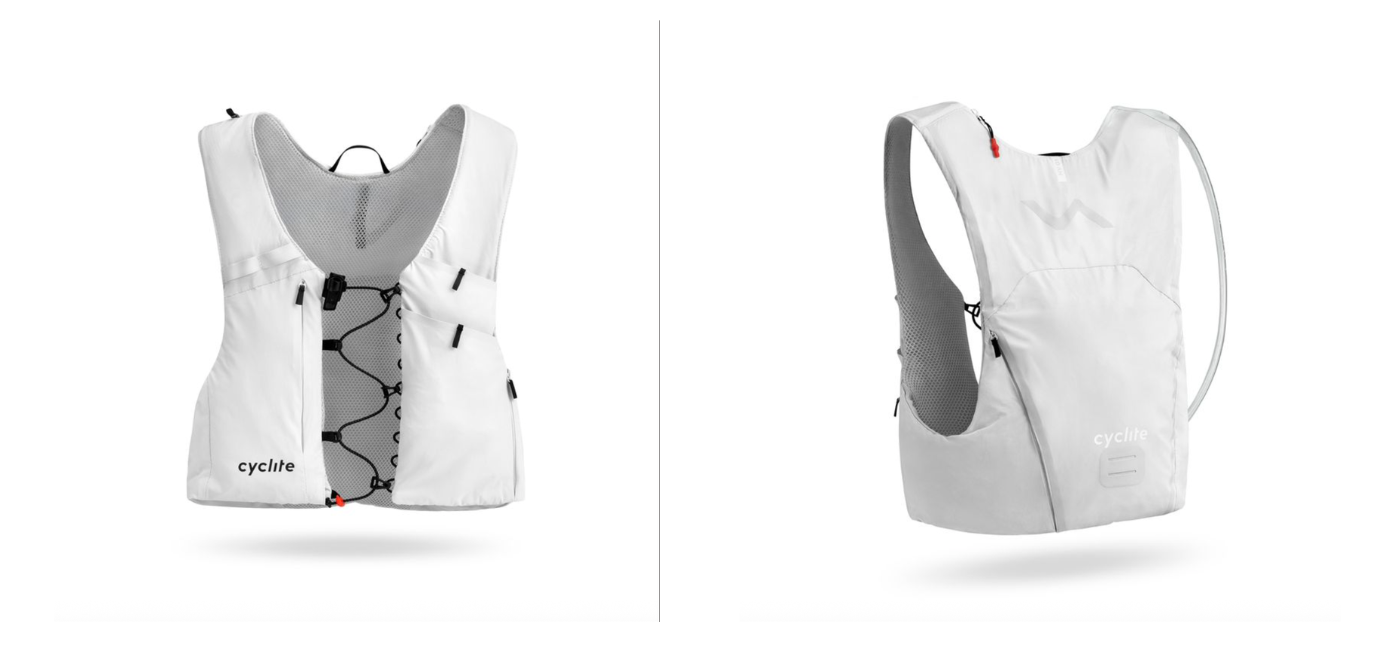
Cyclite Hydration Vest
For races of 500 km or longer, a hydration vest can be a real game-changer. It allows you to carry more water while keeping your essentials within easy reach.
Takeout:
Hydration: a 1.5- to 2-liter water bladder for long stretches without aid stations.
Convenient nutrition: gels and gummies in the front pockets.
Safety & Technology: smartphones, salt tablets, or satellite trackers.
Waste: a bag specifically for empty packaging.
Safety & Weather: The Reality of Long-Distance Travel
On a race covering more than 500 km, you may experience all four seasons in a single adventure. You need to be prepared to handle temperature fluctuations ranging from 2°C at night to over 25°C during the day.
On the body:
Short-sleeve jersey + breathable base layer.
High-quality cycling shorts (the most important factor for your comfort).
Armbands, leg warmers, and Buffs to quickly adapt to temperature changes.
Safety & extras:
The safety trio: a reflective vest, a survival blanket, and a reliable first-aid kit.
Visibility: High-performance front and rear lights are essential for nighttime sections.
Hygiene: Clean your skin and cycling shorts daily to prevent chafing and saddle sores.
Finding the Right Balance
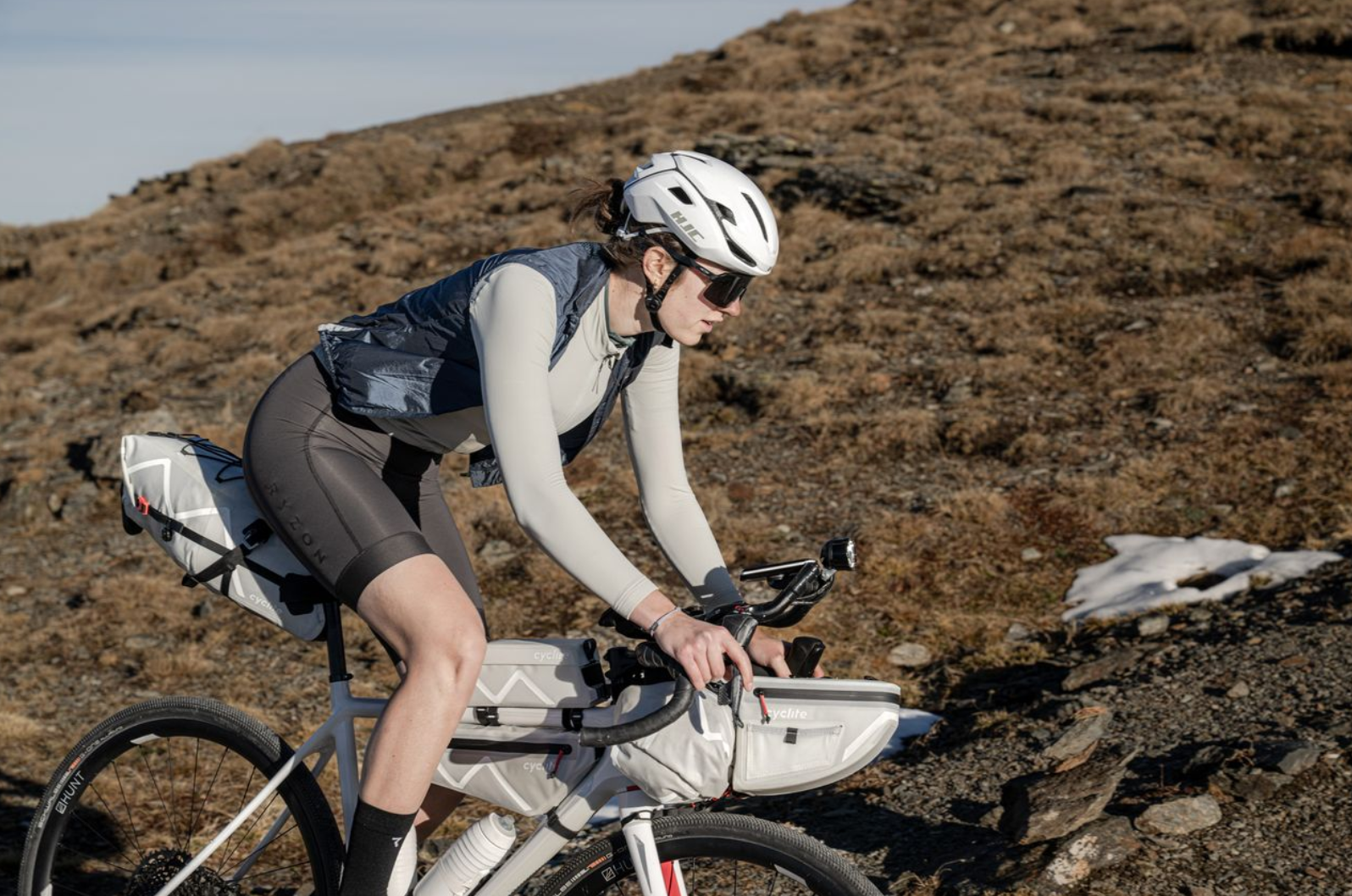
Set up Cyclite
The perfect setup evolves with experience. On a 500-km ride, you might opt for a minimalist approach to maximize speed. On a 2,500-km ride, it might be worth carrying a few extra grams for the comfort of a tent and a proper sleeping system.
No matter the distance, focus on:
a clean aerodynamic integration,
quick access to essential materials,
and logical organization.
Modern modular systems now let you increase your storage capacity without turning your road bike into a touring bike.
Conclusion
Success in the Race Across Series depends above all on a clean, functional, and well-thought-out setup. By distributing weight intelligently and preparing your gear with care, you reduce friction—both physical and mental.
Get your gear ready, test your setup on long training rides… then hit the road.
Travel light. Travel fast.
