
Women in Ultra-distance Running
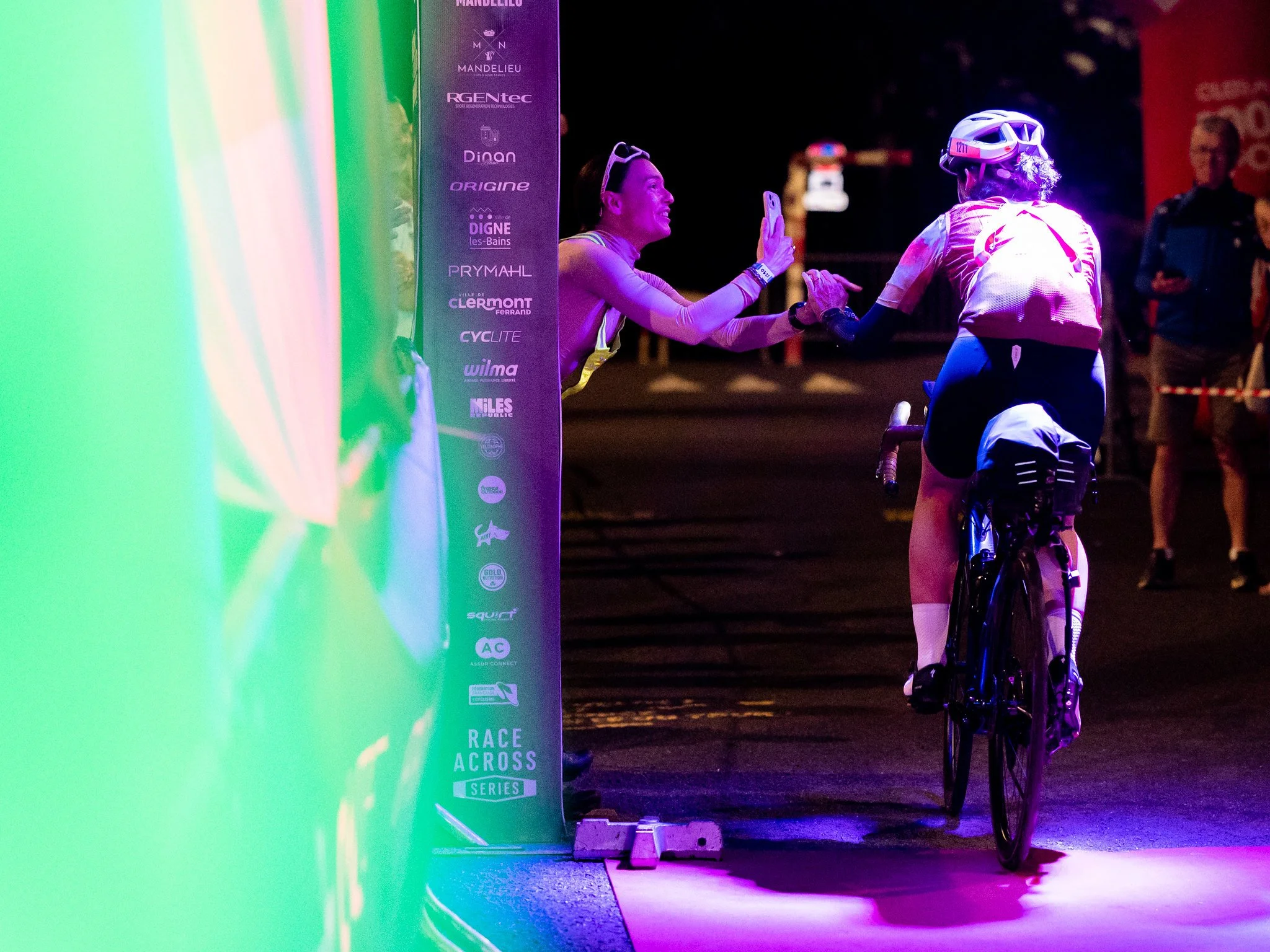
@Elsa offering encouragement at the starting line of the Race Across France 1000km - photo @Jennifernguyen
Joint interview — Lina & Elsa: “Ultra-distance: women rock (and we have proof)”
Ultra cycling and women: why ultra-distance is no longer (at all) a men's sport
For a long time,ultra cycling was presented as an extreme discipline, reserved for a handful of men capable of enduring pain, fatigue, and endless miles. But what about women? Too often invisible, underrepresented, or confined to outdated clichés: lack of strength, technique, or mental fortitude.
The reality is quite different.
Today, ultra-distance cycling for women is experiencing a real surge in popularity. More and more women are lining up at the start line, across all distances, and above all... on the podium. Overall victories, high success rates, formidable racing strategies: the facts are there, and they speak for themselves.
In this article, we hear from Lina (@linette_healthylife) and Elsa (@healmyplanet), two committed, visible, and unfiltered athletes. In this joint interview, they debunk common misconceptions about ultra-distance cycling, recount their journeys, discuss sexism, mechanics, inclusion, female solidarity, and explain in concrete terms what makes an ultra-cycling race more welcoming to women.
👉 Ultra cycling and women: no, it's not "too hard." It's just changing.
And the evidence shows that this change is already underway.
We give participants a voice, without filters.
Lina @linette_healthylife & Elsa @healmyplanet
Q1 — We often hear that ultra-distance running is "too hard" for women. What is your response to that?
Elsa:
Just look at the results. Pauline wins the Race Across Spain 300 km, Estelle came 3rd in the Scratch on the 1000 km of the RAFrace... And in 2025, we see a record number of women lining up for enormous distances. This proves that not only do women have their place, but they excel.
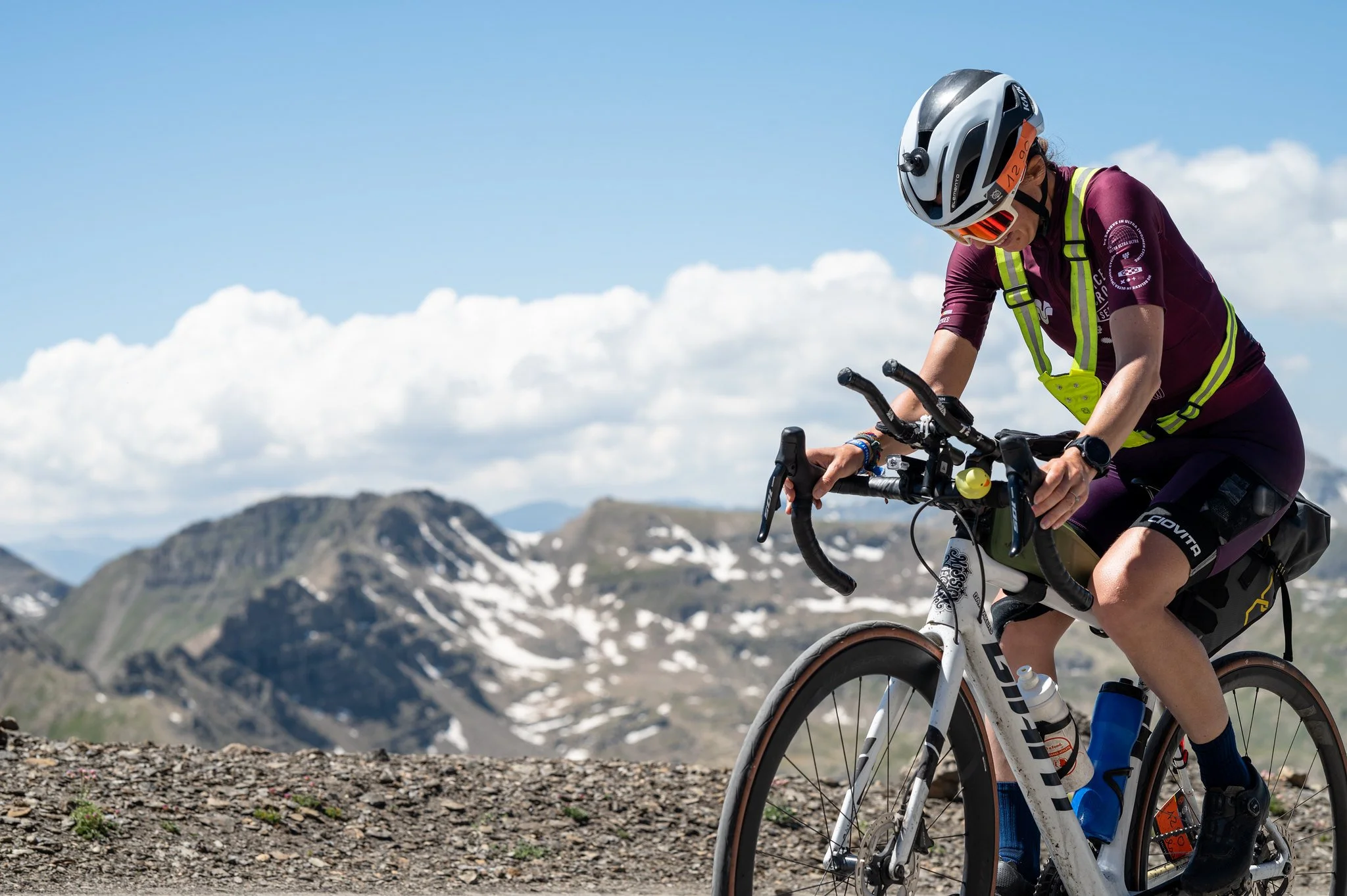
@Esla on her bike during the climb up the Col de la Bonnette on the RAF 1000km in 2025 - photo: @jennifernguyen
Lina:
Ultra running isn't just about having big quadriceps. It's about pain management, patience, strategy, and consistency. And when it comes to that, many women are formidable. The success rate for women is often even higher. When a woman signs up, it's because she's ready. Very ready.
Q2 — How did you get into ultra-distance running?
Elsa:
I used to watch the Tour de France from the Pyrenees when I was a child... and all I saw were men. The women's Tour de France reappeared in 2022, so for a long time, I didn't think it was possible.
Then I cycled across the United States solo. One day, someone said to me, "You should try competing."
I tried criteriums... not for me.
Then I won a giveaway with Wilma (link https://www.instagram.com/wilma.cc?igsh=ODZ6MG44dzBkbjBo ). And that's when everything changed: I entered the world of ultra. And honestly, it changed my life.
Lina:
I come from a triathlon background. And for a long time, I felt that to be legitimate, you had to have a certain body type, very "lean and muscular." Wrong.
And then there was the mechanics: I was told repeatedly that "it wasn't for women." I taught myself. A video reached 3 million views... Elsa commented, "I can't be bothered to wash my bike." I replied, "Come over, I'll do it for you." She came over. We've been inseparable ever since.
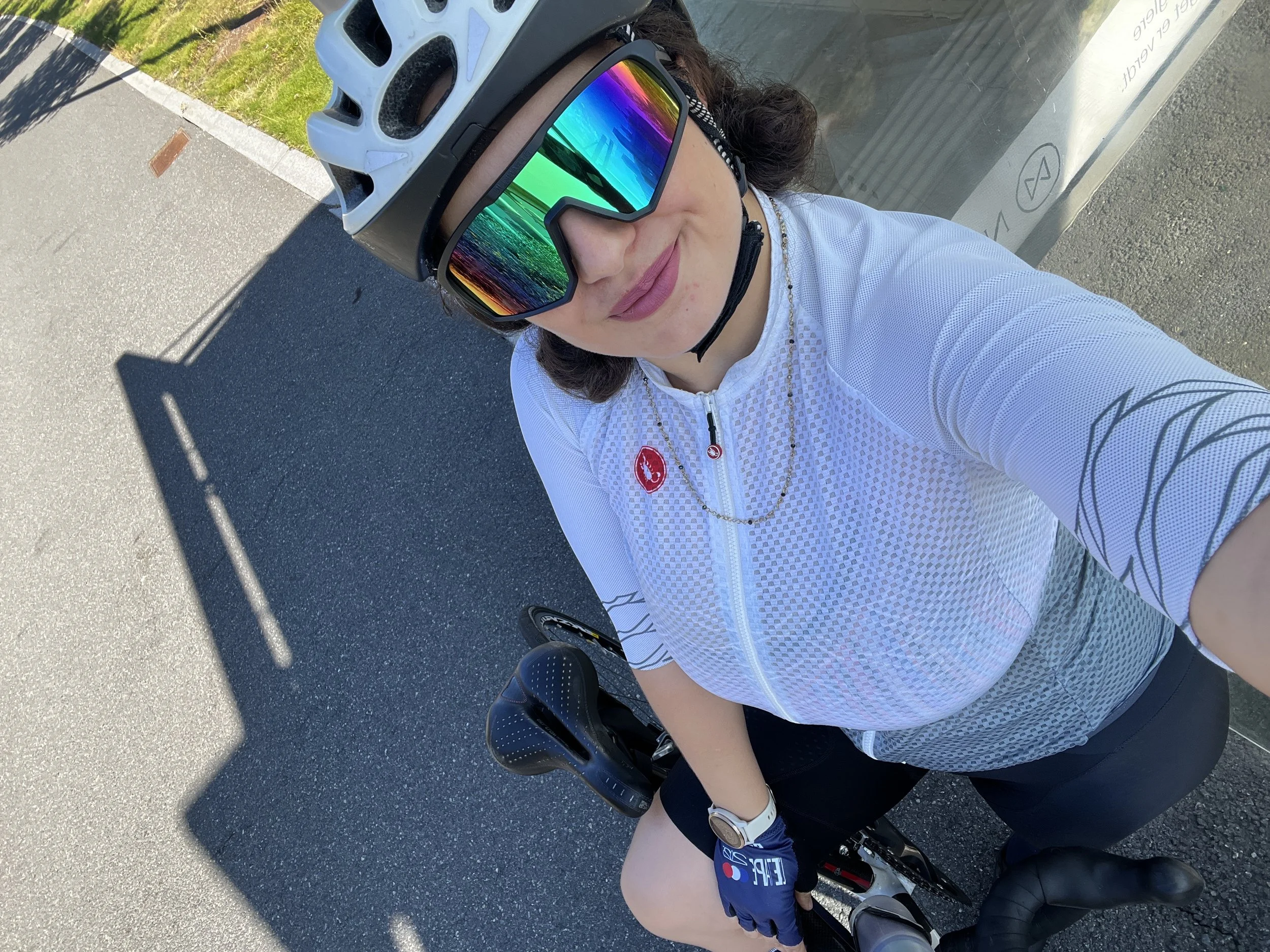
@https://www.instagram.com/linette_healthylife/ Lina on her bike -
Q3 — What are the real levers for making a race more welcoming to women?
Lina:
Anequal podium. Equal visibility, equal recognition. At the Race Across Series, this is already the case, and it changes everything.
Elsa:
Aclear goal for female participation. Saying "18% is already good" is not enough. La Transcontinentale aimed for 100 women and publicly committed to it. We believe in a balanced 50/50 lottery. It's consistent. It's simple.
Lina:
Next, we needvisibility. Show women. Put them in the spotlight. At Race Across Quebec, they celebratedsix womenon the podium because two were tied. That's very powerful symbolically.
Elsa:
And then there are practical things:
–Menstrual productsat training camps
–Safe spaces
–Options for parents who are athletes(childcare, flexibility)
We can't ask for more female participation without adapting the environment.
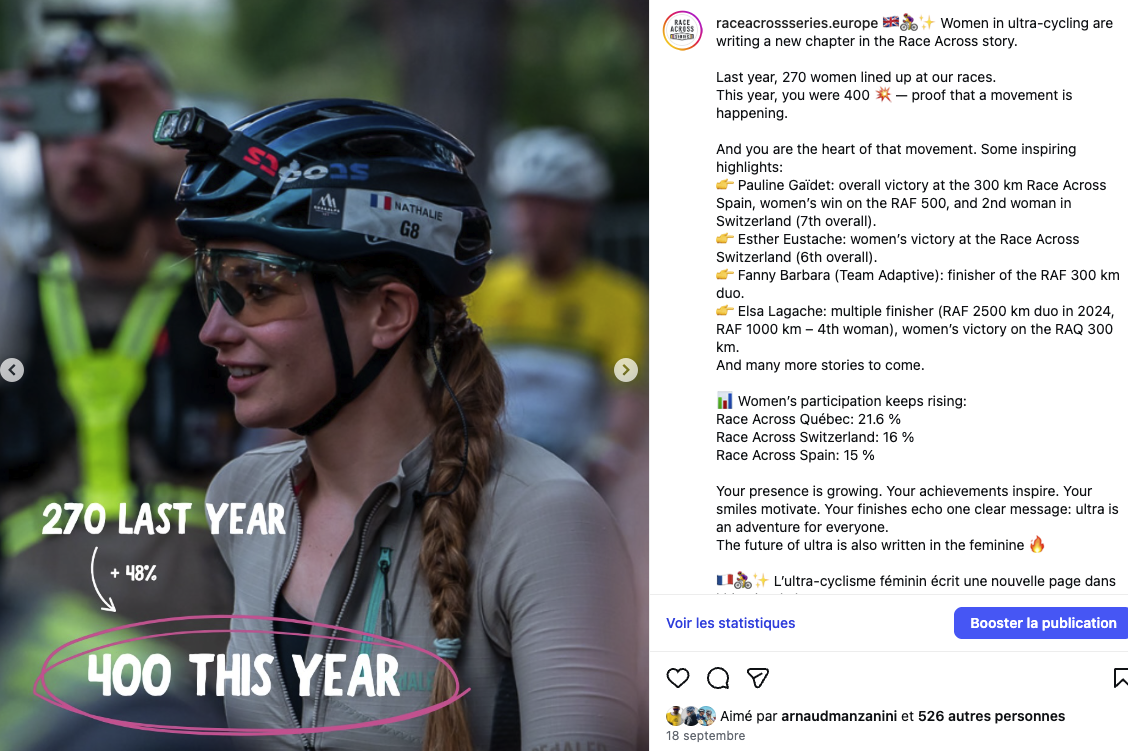
400 women registered last year for the various races in the Race Across Series - photo: @edouard Hanotte.
Q4 — Let's talk about taboos, mechanics, and clichés: do you still see them?
Elsa:
Yes. In 2025, we still get comments like "Go back to the kitchen." It really happens.
But what matters is that we set an example: we know how to repair, fix, and tinker, especially in the heat of the moment during a race.
Lina:
It's not about "strength" or "skill." It's about representation. If we never see women doing repairs, we can't imagine doing it ourselves. When I posted my mechanical videos, lots of women told me, "You've inspired me."
Q5 — Have you encountered sexism in racing or training?
Lina:
Of course.
In the middle of Ironman training:
"If you're scared, change sports."
Or:
"Training with women means wasting a session." All of this coming from cyclists who have never run. At the 24 Hours of Longchamp, we get yelled at at 3 a.m. while wearing a race bib. The podium highlights three men... while two women rode all night. These are the kinds of details that need to change.
Elsa:
In certain events, recognition and media coverage are clearly not on the same level. We recently saw an article highlighting the victory of our ultra champion, Victor, in an ultra race in Spain last summer—but not a word about the three French cyclists (all from the north!) who achieved an incredible performance in the same event. No mention, no insert.
There is still work to be done.
Q6 — And yet, we are seeing increasingly strong solidarity among women.
Elsa:
Absolutely. All-female Strava and Instagram groups are booming.
It's a space where you can be vulnerable, ambitious, strong, train... without judgment.
Lina:
And that's what drives things forward: seeing visible, determined women who support each other. That's where it all starts.
We're proof of that: one simple comment, and we became ambassadors together.
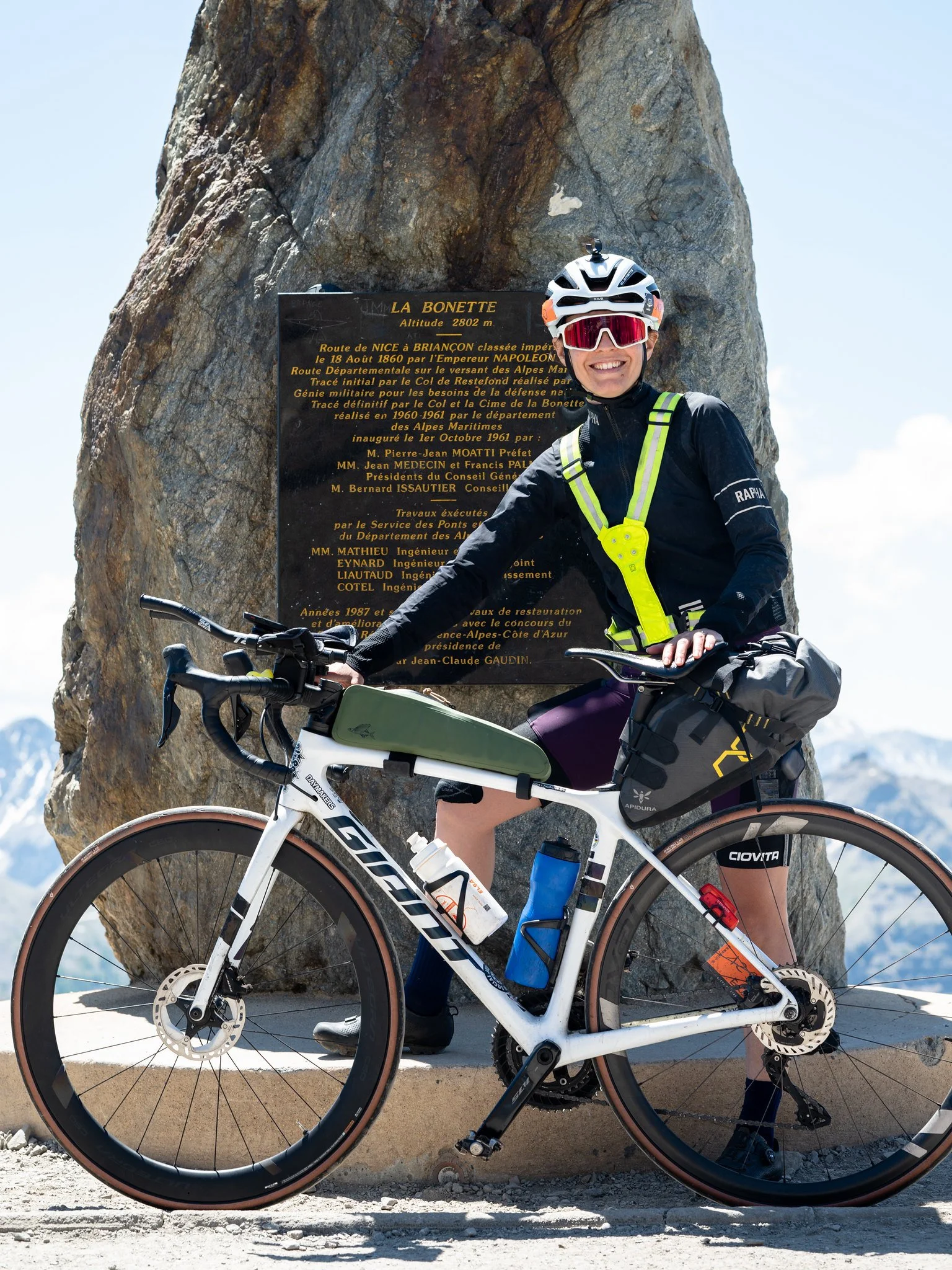
@elsa, at the summit of La Bonnette on the RAF 1000km - photo: @jennifernguyen
Q7 — What message would you like to convey to those who are still hesitating?
Lina:
There is no such thing as the "right body type" for ultra running.
It takes hard work, mental strength, and a heart that wants to push forward.
Elsa:
That ultra-distance running is a wonderful playground. And that it belongs to women as much as it does to men.
Q8 — You are organizing a meeting in December. What will you be discussing?
Elsa:
December 16, at Panache Cycle (Paris), at 6:00 p.m.
Also broadcast on YouTube.
Lina:
We'll talk about ultra-distance cycling for women, mechanics, everyday violence, progress, victories, hardships... And above all, how to bring about real change in women's cycling.
Elsa:
There will even be a menstrual cup from All Matters to win (https://www.instagram.com/allmatters?igsh=N3Z4M3lsanFsMXlk).
Because that's what inclusive thinking is all about.
The last word
Lina:
Ultra-distance running isn't a closed world. It's a world that's opening up.
Elsa:
And the future of cycling is already becoming more female-oriented. We can see it. We are experiencing it.
And we are here to accelerate this movement.
Last year, 400 women registered for the Race Across Series, which is a 48% increase compared to the previous year.
We have set up a safe space on DISCORD with a channel exclusively for women: https://discord.gg/VsEH9bw9vD
