
Am I ready to take on the challenge of 2,500 km across France or Quebec?
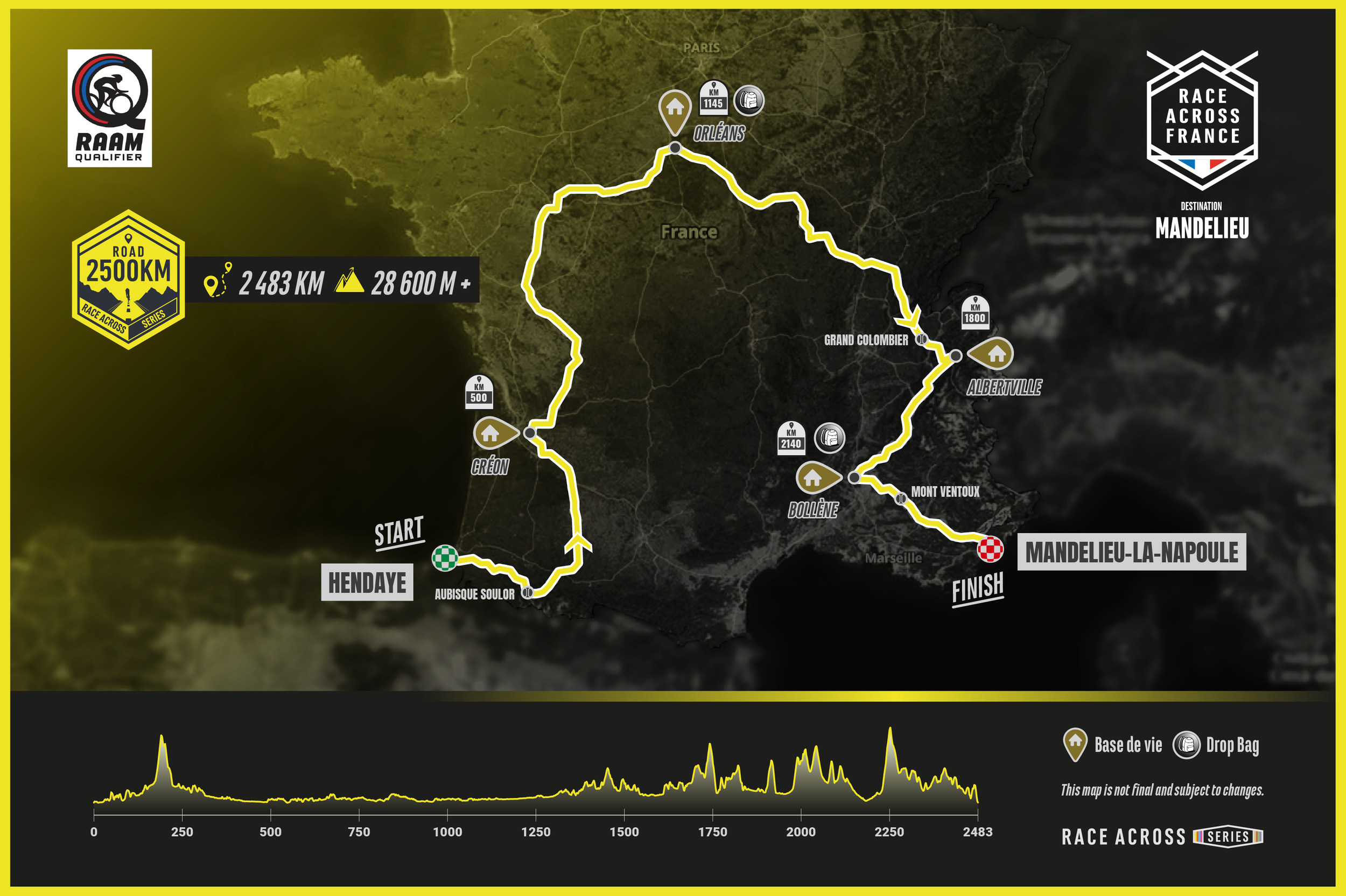
Illustration of the RAF 2500 km - Race Across France Ultra cycling by Edouard Hanotte
Am I ready to take on the challenge of the Race Across 2500 km, whether in Quebec on the RAQ or in France on the legendary RAF?
This is the central question asked by those who watch, sometimes from afar, the queen of distance races, the Race Across France and Race Across Quebec.
2,500 kilometers.
Thousands of meters of elevation gain.
Days and nights on the bike. A complete crossing of the country, from the Atlantic to the Mediterranean.
The first reaction is often the same:
👉 "It's not for me."
👉 "I'm not strong enough."
Yet, year after year, finishers tell a different story. The 2,500 km race is not a matter for superheroes.
It is an adventureof organization, strategy, lucidity, and resilience. Over the years, the number of participants has continued to grow. There has also been an increasing presence of women, with more and more taking on this ultra-distance adventure, either solo or in pairs.
The 2,500 km: much more than just a sporting achievement
In ultra-distance running, performance is not measured solely in watts or average speed. It is built over time, based on endurance, adaptability, and making the right choices at the right moment.
No one "does" 2,500 km in one go. We move forward:
pass after pass,
valley after valley,
Mile after mile
Basecamp Basecamp.
The key is to accept that ultra-distance running is a puzzle, not a sprint.
1. Semi-autonomy: freedom, responsibility, and racing intelligence
The Race Across France and the Race Across Quebec are semi-autonomous events, a format that is often misunderstood. So what does that mean in practical terms?
On the road, you are completely self-sufficient:
no mobile assistance,
no follow vehicle,
No outside help other than what you find yourself.
This ensures fairness and the spirit of adventure that is unique to ultra-cycling. But this autonomy does not mean that you are alone in your challenge. Below, we explain why semi-autonomy is essential for riding further.
If you want to learn more about our concept, you can find it here: https://www.raceacrossseries.com/notre-concept-2025
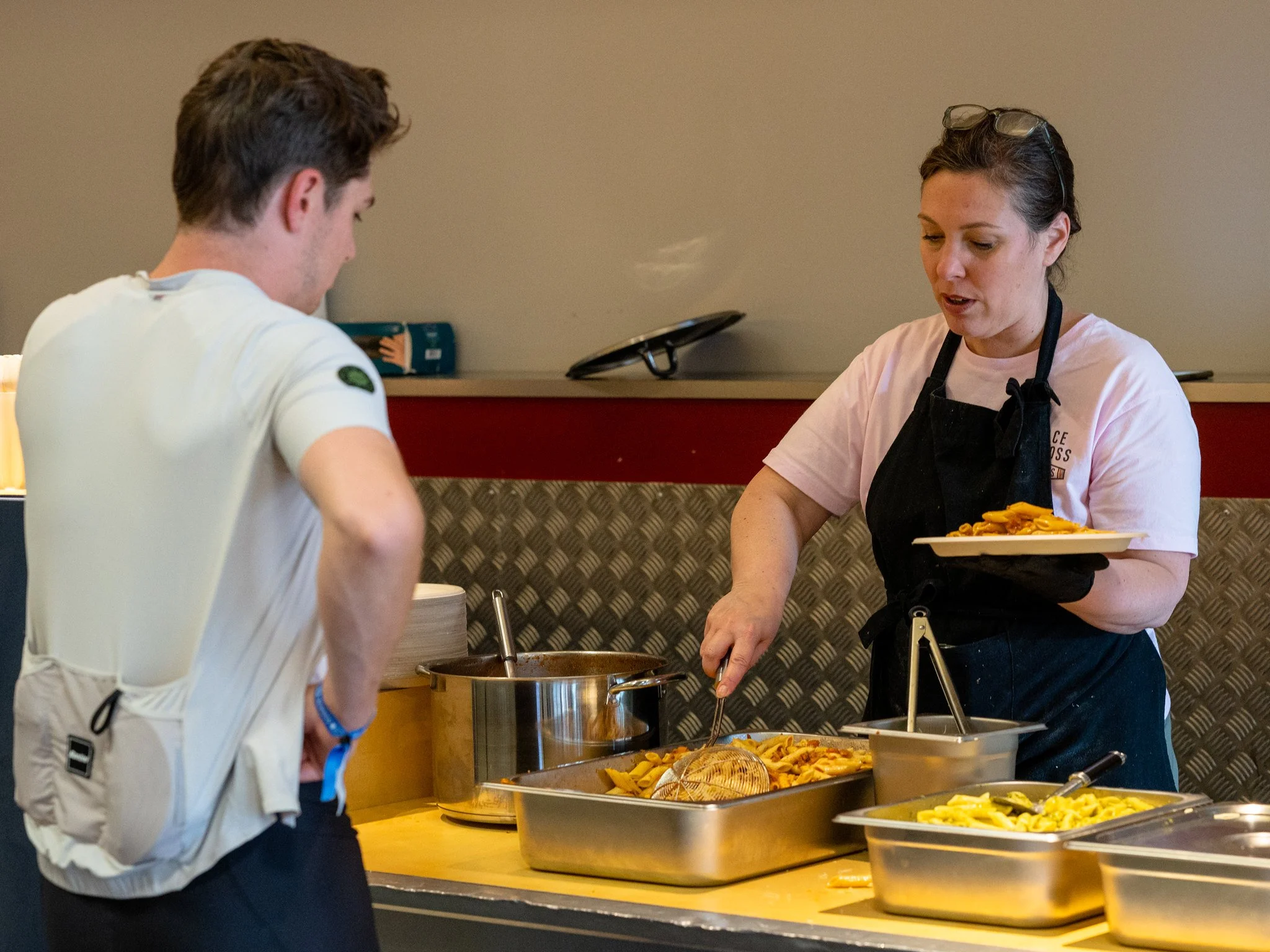
A hot meal at Basecampphoto: @jenniferNguyen.
2. Autonomous on the road, accompanied to the base camps
On the bases, however, the philosophy is completely different.
Strategically positioned along the course, the aid stations are true oases during the race.
This is where:
assistance is permitted and encouraged,
you can reunite with your family, friends, and team,
You can receive supplies, food, and moral support.
The organization also provides dedicated services to offer minimal support to participants, allowing them to be accompanied and supported throughout the event. These services include food, hot meals, showers, and the opportunity to rest on camp beds set up at each Basecamp.
These moments play a key role:
physical recovery,
mental reset,
positive outlook for the rest of the journey.
👉 Race Across France is not an extreme isolation event. It is an adventure where people, connections, and support play an important role.
3. You will never truly be alone on the road
Even on the 2,500 km race, you are never completely alone. The Race Across France, for example, brings together hundreds of participants, spread over several distances:
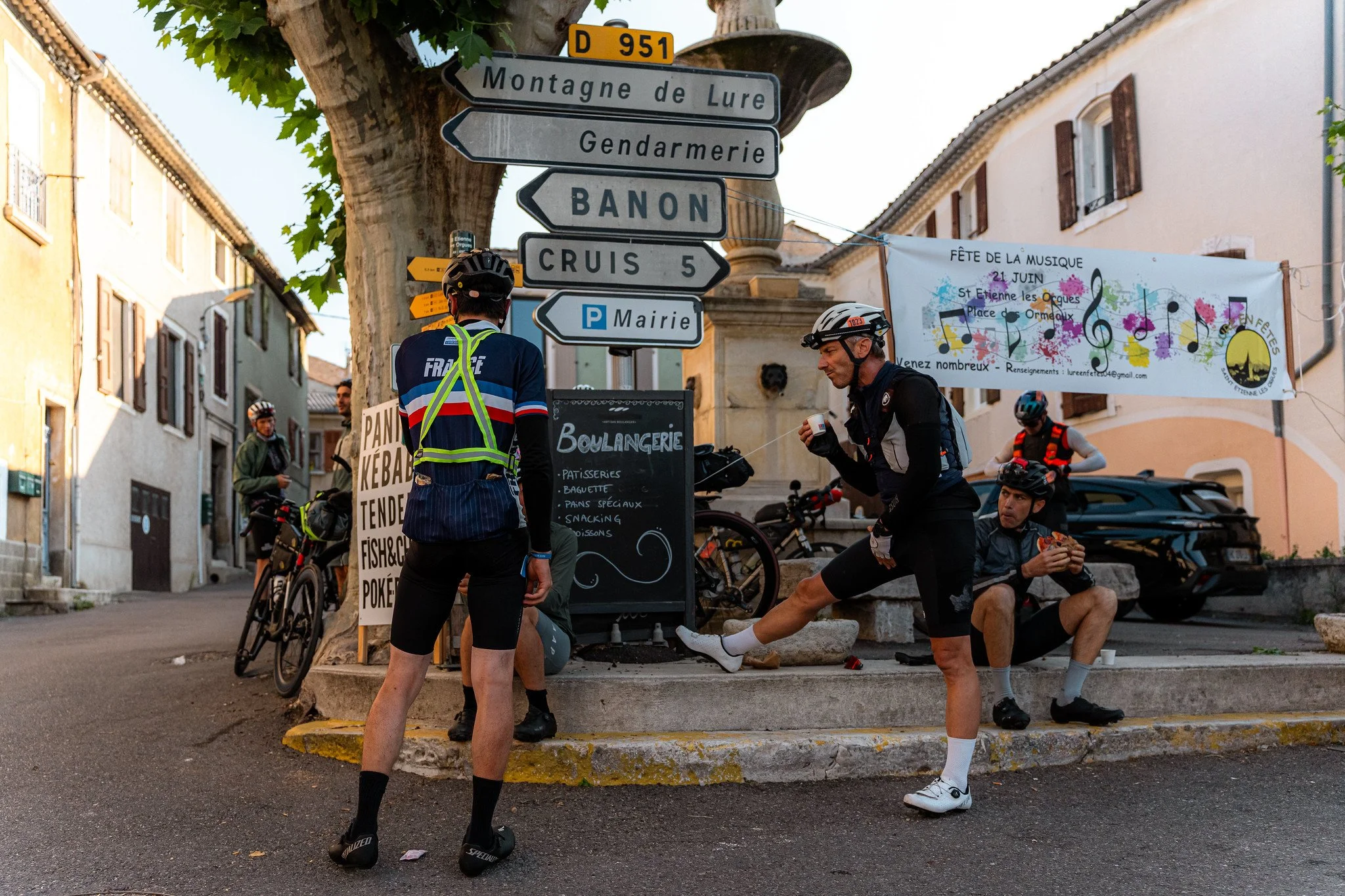
Runners meet on the road to share a moment at the bakery - photo @edouard hanotte
2,500 km
1,000 miles
500 miles
300 miles
200 miles
On the Race Across Quebec, however, the 2,500 km route is unique, but other participants in the 2,500 km race will be there!
Throughout the route, you will meet other cyclists, other rhythms, other stories. A few minutes of conversation, a few kilometers ridden together, a discussion at Basecamp Basecampmoments are often real mental boosters and they are what make our event unique, with a community that has become increasingly dynamic and lively over the years.
They point out that:
you are not alone in your doubts,
you are not alone in your suffering,
You are not alone in moving forward.
In ultra-distance running, the mind also feeds on human connection, even if it is fleeting.
4. Set achievable goals: one step at a time
One of the biggest mistakes in ultra running is to think of the race as a whole.
👉 The right approach is to break down the distance:
a section,
a pass,
a Basecamp,
a sunrise,
one more night spent on the road.
Each portion becomes a clear and achievable goal. Each validated goal builds confidence and momentum for the future. It is often this ability to think small in order to achieve big things that makes all the difference.
5. DROP BAGS: use them wisely
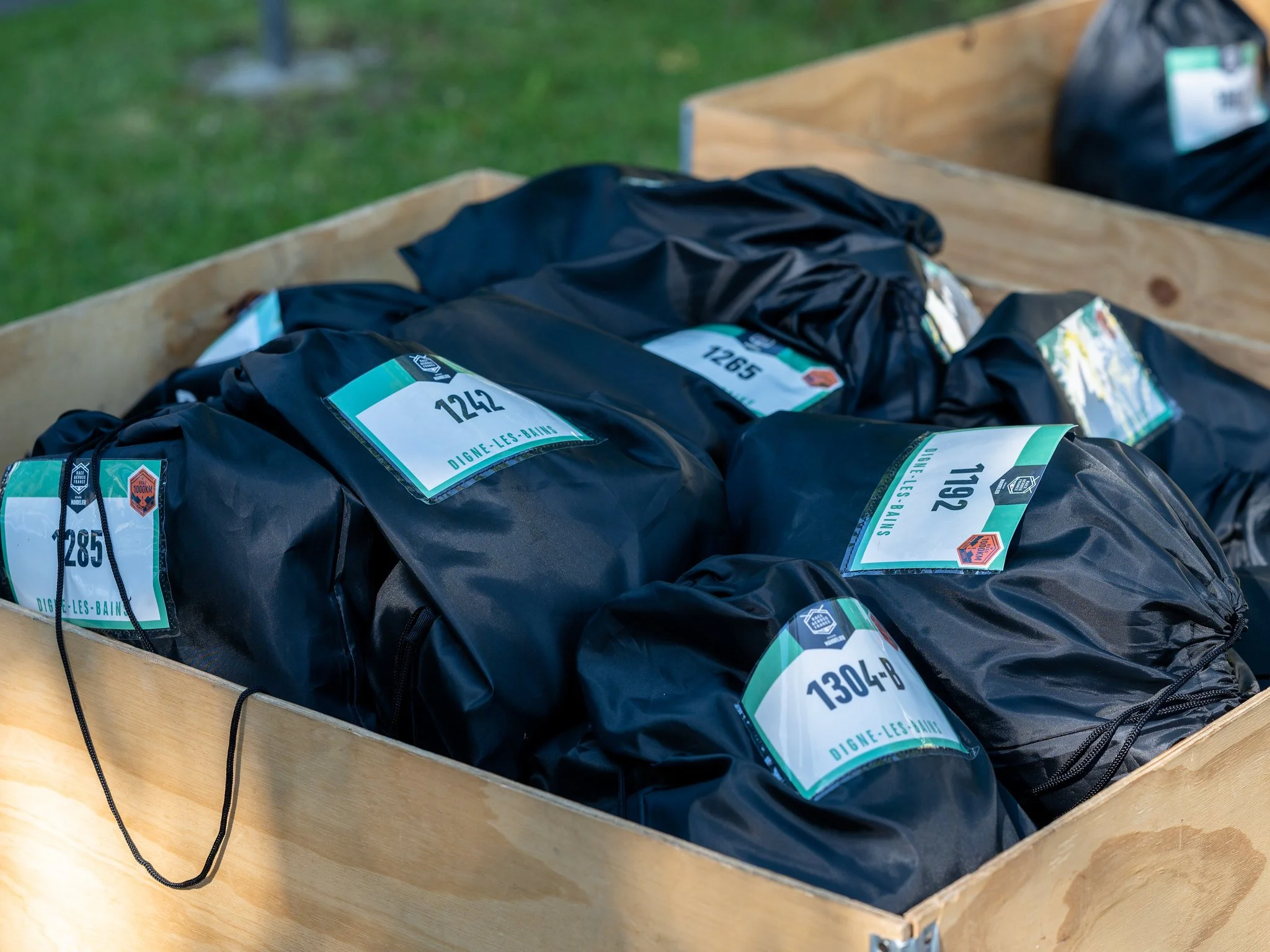
Drop bags on the Race Across, transported from the start to the base camps. Photo: @jennifernguyen
On the 2,500 km route, DROP BAGS are major strategic tools.
👉 Two DROP BAGS are available. They are transported from the starting point to specific base camps.
These bags are there to help you. But you still need to pack them properly.
Why DROP BAGS are essential
They create mental milestones over immense distances.
They enable you to anticipate weather conditions and wear and tear.
They offer real psychological comfort after several hundred kilometers.
How to prepare them properly
A well-designed DROP BAG can hold:
clean and dry clothes,
spare shoes or accessories,
skincare products,
specific foods that you tolerate well,
equipment that you do not need on a permanent basis.
👉 Think of your DROP BAGS not as you are at the start... but as you will be after 500, 750, or 1,000 miles.
6. Food: plan for the long haul
Over 2,500 km, eating becomes a strategy in its own right.
Identify refueling points,
Anticipate opening hours,
Learn to eat often, even without stopping for long periods of time.
Adapt your diet to fatigue.
It's not nutritional perfection that counts, but consistency.
7. Sleep: a safety rule and a performance lever
Contrary to popular belief, sleeping is not a waste of time. In the Race Across France, a sleep rule has been put in place:
👉 A minimum of 4 hours of cumulative breaks per 36-hour period.
This rule aims to:
limit the risk of hallucinations,
prevent accidents,
protect your physical and mental integrity.
But beyond the rules, one reality stands out year after year: those who sleep best perform best.
Micro-naps, short but effective breaks, real sleep time... Sleep is a key factor for success in ultra-distance running.
📹 To learn more about this important topic, we invite you to watch this video dedicated to sleep and performance in ultra-cycling:
8. Surround yourself with the right people: the invisible force
An ultra-cyclist is never alone.
Family, friends, loved ones, support team on Basecamp, community... Their support before, during, and after the race plays a huge role.
A message, a call, or a smile in Basecamp be enough to reignite momentum.
To learn more about balancing ultra-distance running and personal life, check out this article:
👉 Ultra-distance running and life balance: advice from Camille Pic
https://www.raceacrossseries.com/blog/ultra-distance-et-quilibre-de-vie-les-conseils-de-camille-pic
Discover the journey and make concrete plans for the future
Understanding the route, the bases, and the logic of the course is a key step in preparation.
👉 Race Across France 2026: discover the official route
https://www.raceacrossseries.com/blog/race-across-france-2026-dcouvrez-le-parcours-officiel
👉 Race Across Quebec 2026: discover the route illustrations while waiting for details
https://www.raceacrossseries.com/race-across-quebec-2025
To plan ahead is to already start the race.
9. Mandelieu, the city of ultra-distance running. Terrebonne, the epicenter of ultra running in Quebec
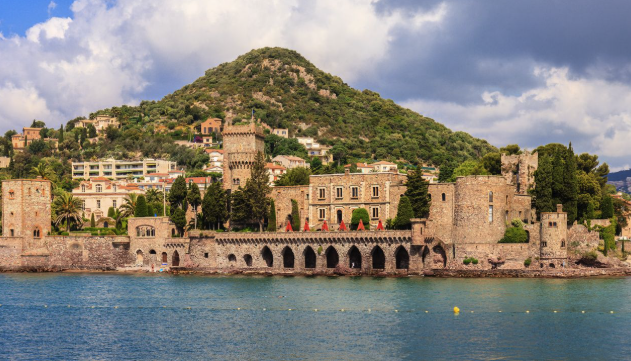
The castle of Mandelieu-la-Napoule
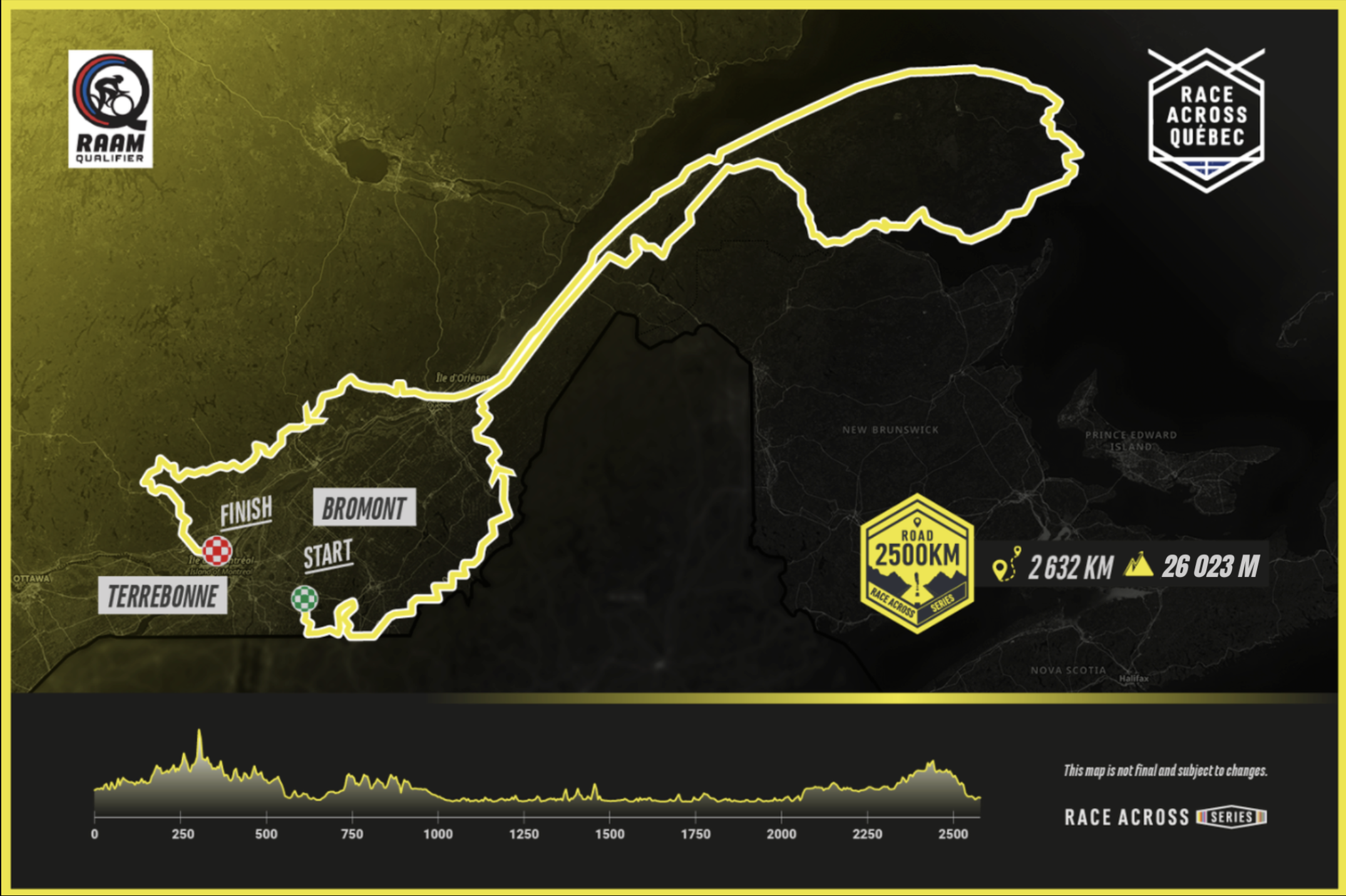
The 2,500 km of Quebec -
Mandelieu marks the end of the journey. After hundreds of kilometers, the Mediterranean finally appears on the horizon. The sea, the spray, the light: this first glimpse in the distance is often charged with emotion, a mixture of relief, pride, and accomplishment. The arrival in Mandelieu-La Napoule is a powerful moment, where all distances come together to form a single celebration. Families, friends, volunteers, and finishers share this great ultra-distance celebration together. This year, the Outdoor Cycling Festival will complete the experience, transforming the finish line into a real hub of activity: bike tests, entertainment, discoveries, and moments of sharing will allow families and the public to extend the adventure well beyond the finish line.
Finally, in Terrebonne, Quebec, this location will be the central point for all Race Across Quebec finishers.
A vibrant, energetic space where the entire Quebec ultra community will gather: families, volunteers, enthusiasts, former finishers, and curious onlookers who have come to cheer on the athletes. This is where stories are told, eyes meet, and emotions explode after thousands of kilometers. Every finish is celebrated—whether fast or slow—with the same respect, intensity, and pride. Terrebonne becomes much more than just a finish line: it is the beating heart of the race, a true meeting point of effort, sharing, and accomplishment.
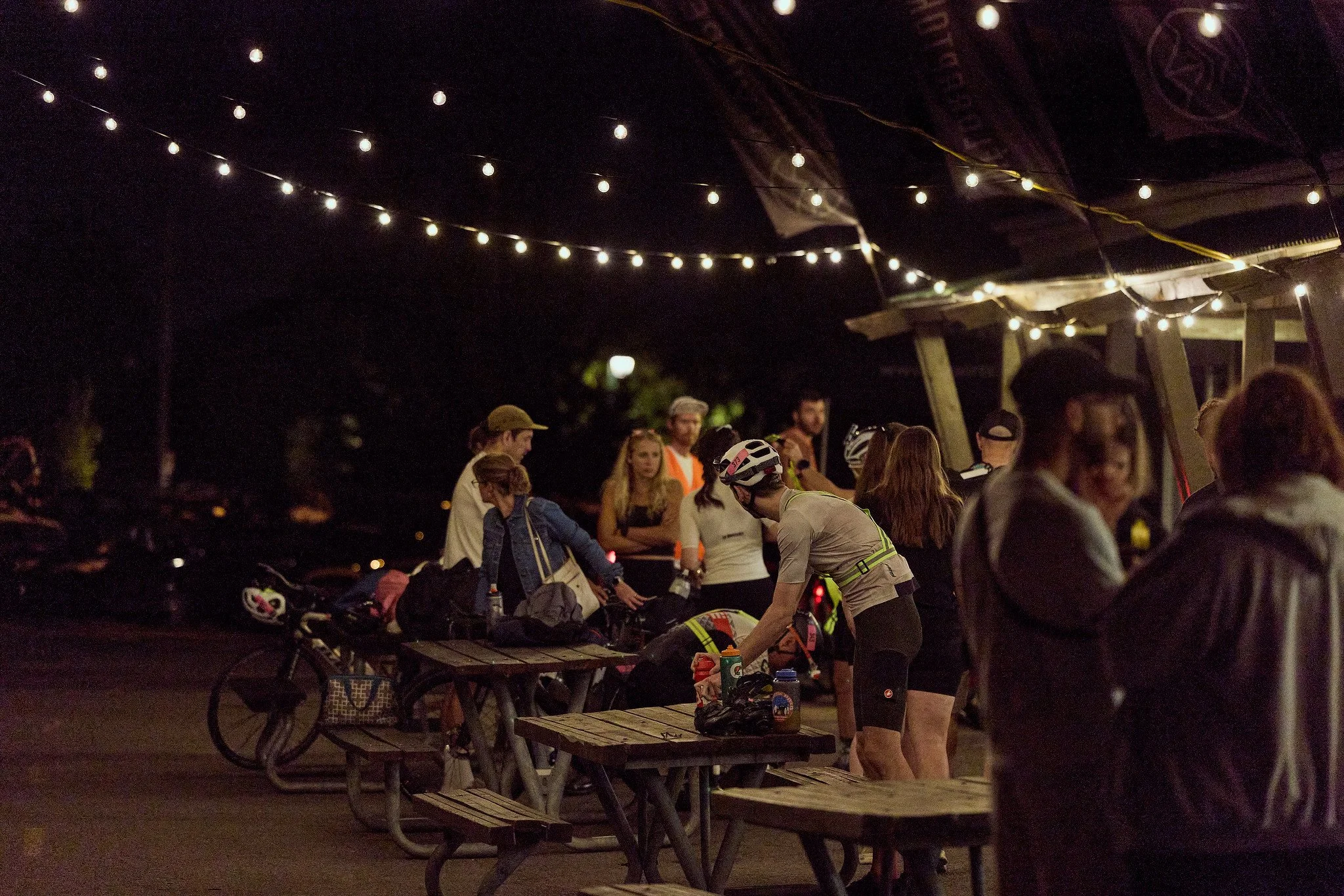
Terrebonne, finish line for the Race Across Quebec
10. So... am I strong enough for the 2,500 km?
The real question is not one of brute force.
The real question is rather:
👉 Am I capable of organizing myself, listening to myself, adapting, and moving forward step by step?
If the answer is yes, then you are probably more ready than you think.
The 2,500 km Race Across France does not require you to be extraordinary. It simply invites you to discover how far you can go.
And often, it is those who doubted the most at the beginning... who experience the arrival most intensely.
Want to go further and register for the Race Across Series? Click here:
